
CDMX. Coyoacán Has Electric Tourist Trams
La implementación de estas unidades a las que se las ha dado el nombre de Diego y Fridaes parte del plan de renovación del corredor turístico de Coyacán de cara al Mundial 2026
The implementation of these units, named Diego and Frida, is part of the renovation plan for the Coyacán tourist corridor in preparation for the 2026 World Cup

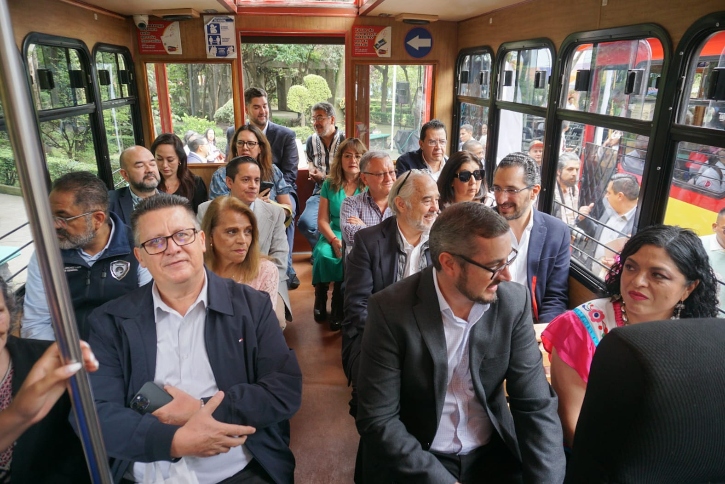
La implementación de estas unidades son parte del plan de renovación del corredor turístico de Coyoacán/The implementation of these units is part of the plan to renew the Coyoacán tourist corridor. Fotos: CORTESÍA
Luam Vázquez/Ciudad de México

En el marco del 25 aniversario del Tranvía Turístico de la Ciudad de México se presentaron en el centro histórico de Coyoacán las unidades Frida y Diego, que fueron reconvertidas a energía eléctrica, un proyecto desarrollado por la empresa mexicana MegaFlux que también ha desarrollado el primer autobús eléctrico Hecho en México, el Taruk.
En la ceremonia de lanzamiento de los tranvías eléctricos participaron Maritza Nandayapa, Directora del Tranvía Turístico de la CDMX; Martha Ferrer, fundadora del Tranvía; Roberto Gottfried, Director General de MegaFlux; Luis Aranda, Director de la Secretaría de Movilidad (SEMOVI) de la capital del país; Roberto Sánchez Lazo, Director General de la Alcaldía Coyoacán y Alejandra Frausto, Secretaria de Turismo de la CDMX, quien encabezó el banderazo de salida de Frida y Diego por las calles llenas de historia de Coyoacán.
La reconversión de estas unidades implicó un proceso de ingeniería avanzada para sustituir el motor de combustión interna que usa gasolina por un sistema 100 por ciento eléctrico, el cual reduce las emisiones contaminantes y moderniza la experiencia turística en el corazón de México.
Maritza Nandayapa señaló que el Tranvía Turístico “hoy forma parte de la identidad turística de la capital al acercar durante un cuarto de siglo la historia, la cultura y las tradiciones de nuestra ciudad a visitantes nacionales y extranjeros”.
“En este aniversario damos un paso histórico hacia el futuro: presentamos con gran orgullo a Frida y Diego, dos de nuestras unidades emblemáticas, que gracias a la colaboración con MegaFlux han sido convertidas de gasolina a eléctricas. Este avance no solo representa innovación tecnológica, sino también un compromiso firme con la sustentabilidad, con el cuidado del medio ambiente y con un turismo más limpio y responsable”, agregó.
Por su parte Roberto Gottfried dijo que «con más de 115 años de experiencia, en MegaFlux reafirmamos nuestro compromiso con la electromovilidad hecha en México. Renovamos tranvías históricos con tecnología limpia y soberana, mostrando que es posible impulsar el turismo y la agenda ambiental del país con innovación, soberanía y talento nacional.»
La Secretaria de Turismo de la Ciudad de México, Alejandra Frausto, sostuvo que “el nuevo tranvía eléctrico es una muestra clara de cómo el turismo puede ser motor de transformación social, cultural y ambiental”.
Al mismo tiempo se congratuló por “celebrar un proyecto que une nuestra memoria e historia con el futuro sostenible; con esta renovación demostramos que tradición e innovación pueden ir de la mano para ofrecer experiencias únicas, responsables y llenas de orgullo”. Finalmente comentó que “Coyoacán es uno de los corredores turísticos que estamos renovando de cara al Mundial 2026.
Queremos recibir a visitantes de todo el mundo mostrando lo mejor de nuestra ciudad: su cultura viva, su diversidad, sus barrios históricos y, al mismo tiempo, su capacidad de innovar en la movilidad y en la sustentabilidad”. El acto culminó con el banderazo de salida acompañado del grupo Colibrí Viajero.
As part of the 25th anniversary of the Mexico City Tourist Tram, the Frida and Diego units were presented in the historic center of Coyoacán. These units were converted to electric power. This project was developed by the Mexican company MegaFlux, which also developed the first electric bus made in Mexico, the Taruk.
The electric trams were also attended by Maritza Nandayapa, Director of the Mexico City Tourist Tram; Martha Ferrer, founder of the tram; Roberto Gottfried, General Director of MegaFlux; Luis Aranda, Director of the Ministry of Mobility (SEMOVI) of the country’s capital; Roberto Sánchez Lazo, General Director of the Coyoacán Mayor’s Office, and Alejandra Frausto, Secretary of Tourism of Mexico City, who led the start of Frida and Diego’s tour through the historic streets of Coyoacán.
The conversion of these vehicles involved an advanced engineering process to replace the gasoline-powered internal combustion engine with a 100 percent electric system, which reduces polluting emissions and modernizes the tourist experience in the heart of Mexico.
Maritza Nandayapa noted that the Tourist Tram «today forms part of the capital’s tourist identity, bringing the history, culture, and traditions of our city closer to national and international visitors for a quarter of a century.»
“On this anniversary, we take a historic step toward the future: we proudly present Frida and Diego, two of our iconic vehicles, which, thanks to the collaboration with MegaFlux, have been converted from gasoline to electric. This advancement not only represents technological innovation, but also a firm commitment to sustainability, environmental care, and cleaner, more responsible tourism,” he added.
For his part, Roberto Gottfried said that “with more than 115 years of experience, at MegaFlux we reaffirm our commitment to electromobility made in Mexico. We refurbish historic trams with clean, sovereign technology, demonstrating that it is possible to boost tourism and the country’s environmental agenda with innovation, sovereignty, and national talent.”
Mexico City’s Secretary of Tourism, Alejandra Frausto, stated that “the new electric tram is a clear example of how tourism can be a driver of social, cultural, and environmental transformation.”
At the same time, he expressed his gratitude for «celebrating a project that unites our memory and history with a sustainable future; with this renovation, we demonstrate that tradition and innovation can go hand in hand to offer unique, responsible, and proud experiences.» Finally, he commented, «Coyoacán is one of the tourist corridors we are renovating in preparation for the 2026 World Cup.
We want to welcome visitors from around the world, showcasing the best of our city: its vibrant culture, its diversity, its historic neighborhoods, and, at the same time, its capacity for innovation in mobility and sustainability.» The event culminated with the flag-waving ceremony, accompanied by the Colibrí Viajero group.



 balsiaproducciones.com.mx