
Compositor/Composer
Entrevista/Interview
“No quiero estar asociado con alguna tradición o círculo de creadores”
“I don’t want to be associated with any tradition or circle of creators.”
Este año la edición XI del Festival de la Canción Nórdica nombró como compositor residente a Benjamin Staern, quien charló para la audiencia de Balsia Producciones sobre las piezas que seleccionó para la ocasión
This year, the 11th edition of the Nordic Song Festival named Benjamin Staern as composer-in-residence, who spoke to the audience of Balsia Producciones about the pieces he selected for the occasion
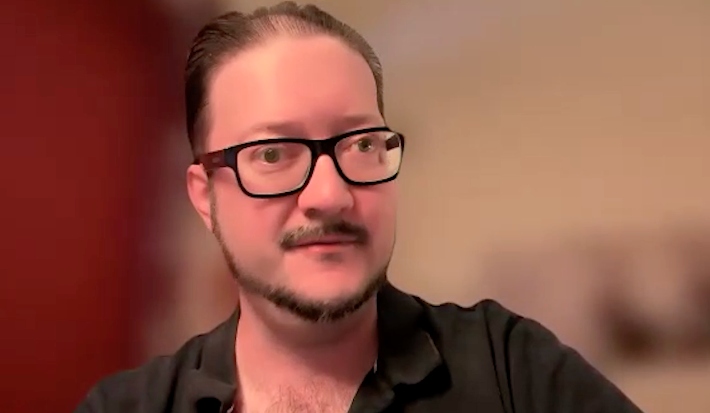
Claudia Andalón y Enrique Vázquez Lozano /Trollhättan

Desde Benjamin Staern, afirma pertenecer a una generación de músicos que ha logrado cierta libertad creativa y trata de encontrar una voz propia entre la tradición y la vanguardia bajo una perspectiva ecléctica en la que confluyen diversos estilos musicales. Además de hablar de sus obras, el músico compartió cuáles son las razones que lo han traido a Trollhättan en el marco de la edición XI del Festival de la Canción Nórdica.
Recién escuché el Concierto para Clarinete y orquesta de su álbum Worried Souls que es una de sus piezas más recientes y gustó mucho a destacados críticos musicales…
La pieza surgió porque la clarinetista Karin Dornbusch que vive en Basilea Suiza me preguntó hace muchos años si me gustaría escribir una pieza para clarinete y en el momento le dije que me gustaría, pero que no tenía idea de cómo comenzar a escribirla porque no me sentía familiarizado con el instrumento… yo fui violonchelista y percusionista, así que… con el tiempo surgió la oportunidad de hacer una pieza comisionada para este instrumento y acepté el reto. Cuando comencé a escribirla me pareció interesante asociar otras ideas como abordar la relación entre el hombre y la máquina, me había inspirado en algunas películas que había visto y en la novela 1984 de George Orwell. Establecí un paralelismo hombre-maquina / melodía-armonía, quise ver qué sucedería si partía de esta alegoría. El resultado fue una pieza en la que la intención es llevar de la mano al escucha a través de un viaje que no tiene fin, un viaje en el que no tienes claro donde inicia y donde termina.
Ahora se encuentra en Trollhättan, ¿qué fue lo que te motivó a estar presente en esta edición XI del Nordic Song Festival?
Siempre me encanta conocer gente de todo tipo, sobre todo jóvenes, eso hizo que aceptara la invitación que me hizo Gitta Maria Sjöberg. Me refiero tanto en el ámbito educativo como cuando se trata de seleccionar intérpretes para mi música. Aunque tengo ya varios años de experiencia como profesor de composición, esta es la primera vez que trabajo con cantantes en este contexto.
Y cuáles obras decidió trabajar con los jóvenes en esta residencia?
Sugerí para el curso trabajar con algunos fragmentos de mis óperas La Reina de las Nieves y también Hilma. Trabajaremos algunas arias de La Reina de las Nieves, me refiero al aria del prólogo, que es la primera entrada del papel principal cuando la reina le pregunta al espejo si sigue siendo bella, y luego resulta que ya no lo es. Luego la reina rompe el espejo y se convierte en añicos, y la astilla golpea el ojo de Kai, en ese momento ella quiere a este chico agradable en un chico muy malo, y Gerda, su hermana interviene para salvarlo y que no se vuelva más malvado. Es un momento en el que puedes presenciar la lucha entre el bien y el mal más o menos. La ópera está basada en el cuento de Hans Christian Andersen.
También pensamos en incluir unas escenas de Hilma, mi ópera que se presentó en el Guggenheim de Nueva York . Una ópera de cámara para soprano, tenor y un trío de piano y electrónica que trata sobre la relación entre Hilma de Klint y Rudolf Steiner. Es una obra que la concebí como una especie de batalla entre religiones, más o menos, me refiero a que Hilma y Steiner representan diferentes visiones estéticas.
Ella escribía y pintaba cuadros, algo así como 50 años antes de Kandinsky y Malevich. Su obra era una especie de pintura experimental, y sus pinturas eran tan impactantes y muy adelantadas a su tiempo, como para mostrarlas a principios del siglo XX, así que tardó mucho tiempo en ser descubierta y aceptada. Además, era mujer, y en esa época no era muy común que las mujeres artistas hicieran obras como esa y ganaran prestigio. Su obra la hizo incluso antes de Frida Kahlo, mucho antes de eso, pero ahora se ha vuelto una pintora muy popular y ha recibido un gran reconocimiento tanto en Estados Unidos como en Brasil, en São Paulo y en otros lugares, de ahí que mi ópera recibió mucha atención cuando se presentó en el Teatro Guggenheim de Nueva York, y fue una experiencia realmente poderosa.
Además de las piezas del curso, veo que se han incluido algunas otras, por ejemplo en el concierto de inauguración…
Sí se trata de una nueva canción que Miah Persson y Mat Jansson interpretan en la inauguración y está basada en un texto de Thomas Transter, autor del Premio Nobel. Se llama «Do Mayor», y trata sobre el silencio entre las palabras que alcanzan la nota Do, así que es para soprano y piano.
En varias de sus piezas puede percibirse la presencia de diversos sistemas musicales, ¿Cabría decir que su estilo es ecléctico?
Sí, se podría decir que sí… hay diferentes estilos e influencias diferentes, quiero decir que es una especie de enfoque modernista, pero es una especie de una relación entre la tradición y la innovación, post-moderna, me siento como siempre, en un punto intermedio para explorar mi propio camino y explorar la música que me gustaría hacer, no quiero estar asociado con alguna tradición o círculo de creadores.
Comencé con Luca Francesconi, quien se formó con Luciano Berio, y en un principio quería enfrascarme en esta tradición de Berio, desde mi propio enfoque y de alguna forma integrar la tradición nórdica. Aunque en esa perspectiva no sabía que esperar, ahora mismo me siento parte de una comunidad internacional de compositores libres que hemos escapado a cierta tradición modernista y de los años 50, me parece que mi música está en la frecuencia de la ópera Florencia en el Amazonas del compositor mexicano Daniel Catán. Cuando la escuché pensé: -Creo que no estoy solo en este planeta en la búsqueda de mi propio camino musical.
Y en el día a día, ¿cómo se concreta este proceso de experimentación constante?
Hay momentos mágicos a la hora de tratar de hacer música, en ocasiones puedes estar en el parque y llega un momento de inspiración o pasar varias horas en el estudio sin que una idea venga a la mente, generalmente las ideas me llegan en forma de un galimatías, trato de escribirlo antes que desaparezca y después con el tiempo lo analizas y eventualmente vas descubriendo si esa idea tomará forma y se convertirá en algo. Siempre pienso: -con suerte escribiré algunas nuevas óperas y obras de teatro, o quizás obras cinematográficas-, sólo Dios lo sabe, pero ya veremos cómo será el futuro, no te lo puedo decir realmente, quiero decir que espero que simplemente suceda.
.
Benjamin Staern claims to belong to a generation of musicians who have achieved a certain creative freedom and strive to find their own voice between tradition and the avant-garde, pursuing an eclectic perspective that blends diverse musical styles. In addition to discussing his work, the musician shared his reasons for coming to Trollhättan as part of the 11th Nordic Song Festival.
I just listened to the Concerto for Clarinet and Orchestra from your album Worried Souls, which is one of your most recent pieces, and prominent music critics really liked it…
The piece came about because clarinetist Karin Dornbusch, who lives in Basel, Switzerland, asked me many years ago if I would like to write a piece for clarinet. At the time, I told her I would like to, but that I had no idea how to begin writing it because I didn’t feel familiar with the instrument… I was a cellist and percussionist, so… eventually, the opportunity arose to do a commissioned piece for this instrument, and I accepted the challenge. When I started writing it, I found it interesting to combine other ideas, such as addressing the relationship between man and machine. I had been inspired by some films I had seen and by George Orwell’s novel 1984. I established a parallel between man and machine / melody and harmony. I wanted to see what would happen if I started from this allegory. The result was a piece whose intention is to take the listener by the hand on a journey that has no end, a journey in which you’re not sure where it begins or ends.
You’re now in Trollhättan. What motivated you to be present at this 11th edition of the Nordic Song Festival?
I always love meeting all kinds of people, especially young people, and that’s why I accepted Gitta Maria Sjöberg’s invitation. I’m referring to both the educational field and when it comes to selecting performers for my music. Although I have several years of experience as a composition teacher, this is the first time I’ve worked with singers in this context.
And which works did you decide to work with the young people in this residency?
I suggested working with excerpts from my operas The Snow Queen and Hilma for the course. We’ll be working on some arias from The Snow Queen—I’m referring to the prologue aria, which is the title role’s first entrance when the queen asks the mirror if she’s still beautiful, and then it turns out she isn’t. Then the queen breaks the mirror, and it shatters, and the splinter hits Kai’s eye. At that moment, she wants this nice boy to become a very bad boy, and Gerda, her sister, intervenes to save him from becoming more evil. It’s a moment where you can witness the struggle between good and evil, more or less. The opera is based on the tale by Hans Christian Andersen.
We also thought about including some scenes from Hilma, my opera that was presented at the Guggenheim in New York. A chamber opera for soprano, tenor, and a piano and electronic trio that deals with the relationship between Hilma de Klint and Rudolf Steiner. It’s a work that I conceived as a kind of battle between religions, more or less. I mean, Hilma and Steiner represent different aesthetic visions.
She was writing and painting, something like 50 years before Kandinsky and Malevich. Her work was a kind of experimental painting, and her paintings were so striking and far ahead of their time that they weren’t really suitable for showing at the beginning of the 20th century, so it took a long time for them to be discovered and accepted. Also, she was a woman, and at that time, it wasn’t very common for female artists to create works like that and gain prestige. Her work was done even before Frida Kahlo, long before that, but now she’s become a very popular painter and has received great recognition both in the United States and in Brazil, in São Paulo, and elsewhere. Hence, my opera received a lot of attention when it was presented at the Guggenheim Theater in New York, and it was a truly powerful experience.
In addition to the pieces from the course, I see that some others have been included, for example in the opening concert…
Yes, it’s a new song that Miah Persson and Mat Jansson are performing at the opening, and it’s based on a text by Thomas Transter, a Nobel Prize-winning author. It’s called «Do Mayor,» and it’s about the silence between words that reach the note C, so it’s for soprano and piano.
In several of your pieces, I can perceive the presence of different musical systems. Could you say your style is eclectic?
Yes, you could say so… there are different styles and influences. I mean, it’s a kind of modernist approach, but it’s a kind of relationship between tradition and innovation, post-modern. I feel, as always, somewhere in between, exploring my own path and exploring the music I’d like to make. I don’t want to be associated with any tradition or circle of creators.
I started with Luca Francesconi, who trained with Luciano Berio, and at first, I wanted to immerse myself in this Berio tradition, from my own perspective, and somehow integrate the Nordic tradition. Although from that perspective, I didn’t know what to expect, right now I feel part of an international community of free composers who have escaped a certain modernist and 1950s tradition. It seems to me that my music is on the frequency of the opera Florence in the Amazon by Mexican composer Daniel Catán. When I heard it, I thought: «I don’t think I’m alone on this planet in the search for my own musical path.»
And on a daily basis, how does this process of constant experimentation take shape?
There are magical moments when trying to make music. Sometimes you can be in the park and a moment of inspiration strikes, or you can spend several hours in the studio without an idea coming to mind. Usually, ideas come to me in the form of gibberish. I try to write it down before it disappears, and then over time, you analyze it and eventually discover if that idea will take shape and become something. I always think: «Hopefully, I’ll write some new operas and plays, or maybe films.» Only God knows, but we’ll see what the future will be like. I can’t really tell you. I mean, I hope it just happens.



 balsiaproducciones.com.mx