
José Guadalupe Flores has a memorable farewell from the stage
Columna de Opinión/Opinion piece
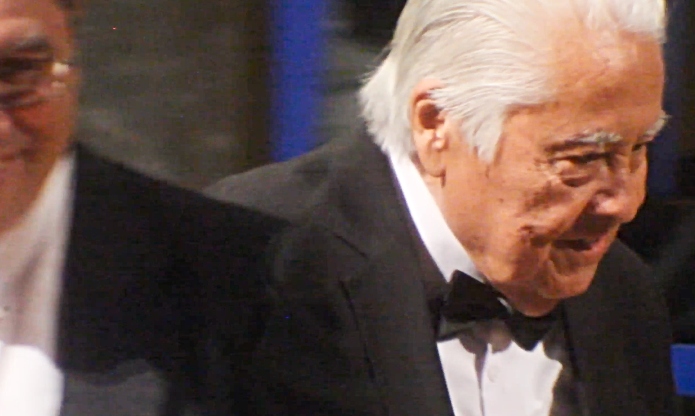
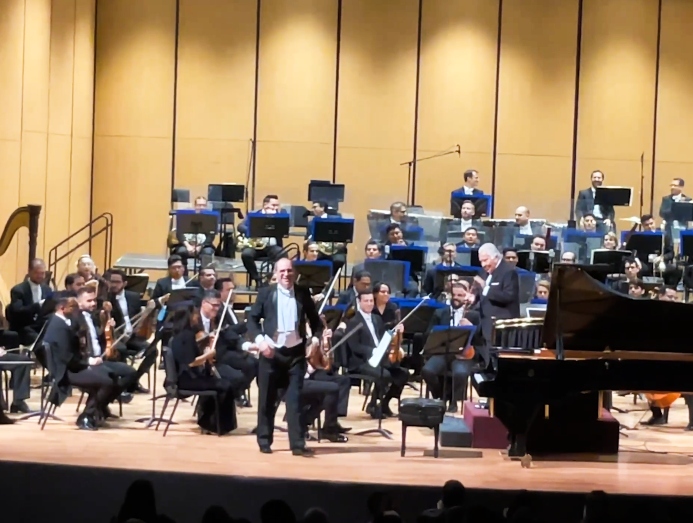
Momentos del concierto de despedida de los escenarios de José Guadalupe Flores con la Orquesta Filarmónica de Jalisco y el pianista Arturo Nieto-Dorantes. Fotos: ENRIQUE VÁZQUEZ
Por Enrique Vázquez Lozano

Guadalajara, Jalisco. 1 de marzo de 2026
La noche del jueves pasado ante un Teatro Degollado que lució medianamente lleno la Orquesta Filarmónica de Jalisco (OFJ) bajo la batuta huésped de José Guadalupe Flores recreó la versión orquestal de El son de la lira de Clemente Aguirre (1828-1900), el Concierto para piano No. 3 de José Francisco Vásquez (1896 -1961) con el cual se recordó su 130 aniversario y la Sinfonía No. 2 de Alexander Borodin.
Se trató de uno de los dos conciertos con los que el director José Guadalupe Flores (Arandas, 1947) ha decidido despedirse de los escenarios tras una vida dedicada a la música y que le ha llevado a desarrollar su oficio en diversos foros de América y Europa. El segundo concierto se realiza hoy domingo 1 de marzo.
Después del momento crítico que el país y principalmente Jalisco vivió el 22 de febrero pasado debido a una gran ola de violencia que desató un grupo delictivo y que se hizo viral a escala mundial. Esta velada musical se antojaba, al menos para mí, como un bálsamo de optimismo y reafirmación de las virtudes que caracterizan a nuestra región y que me parece deben de prevalecer por encima de dichos altercados, tal y como debería prevalecer un ambiente más seguro y pacífico. Espero no perder la objetividad en mis apreciaciones musicales, presa de esta sed de paz y bienestar.
Las tres obras en sí mismas son dignas de una despedida triunfal debido a lo que representan y la forma en cómo fueron concebidas. Por un lado, tenemos el estreno orquestal de El son de la lira, una pieza decimonónica que podríamos considerar como un símbolo de la consolidación musical del México Independiente que integra elementos del son mexicano depurado por un lenguaje académico acorde al romanticismo europeo y que se anticipa de alguna forma al nacionalismo musical que después desarrollarían figuras como Manuel M. Ponce y Carlos Chávez.
Esta versión orquestal captó la atención de los escuchas desde el primer momento debido a la buena calidad interpretativa del conjunto. Esta claridad y precisión interpretativa de cada atrilista y sincronía entre director y colectivo permitió apreciar cómo Aguirre toma en esta obra el modelo del son tradicional estructurado de forma bipartita con repeticiones contrastantes y lo expande a través de una introducción, un desarrollo temático con variaciones rítmicas y una reexposición estilizada con una alta densidad armónica en comparación a los primeros momentos de la pieza. La obra en su conjunto es una muestra didáctica de cómo puede someterse un solo tema principal a diversas transformaciones.
El son de la lira evoca en todo momento una atmósfera bella, es muy disfrutable debido a su base tonal clara, al uso frecuente de modulaciones y tonalidades vecinas y la utilización de un cromatismo que enriquece su textura sin desvirtuar su carácter popular. Además cuenta con una acentuación ágil y con síncopas ligeras. Demuestra que lo popular puede sostener una arquitectura formal compleja.
La obra es vigente si se considera que más allá de un folclor estilizado la fusión entre lo popular y la música de concierto sigue siendo un tema central de la estética latinoamericana contemporánea.
El Concierto para piano No. 3 del también arandense José Francisco Vásquez es una muestra de las diversos influencias a las que estuvo expuesto el músico jalisciense. Debido a la buena interpretación que hicieron Arturo Nieto-Dorantes y la OFJ se pudieron distinguir los pasajes que suenan a una recreación tardía de Saint-Saëns, Chopin y Liszt con pinceladas de la ola de música cinematográfica de los años 30, protagonizada por músicos como Max Steiner, Georges Gershwin o Alfred Newman y que aportan a la obra un equilibrio entre brillantez técnica y lirismo.
El concierto de Vásquez sigue el esquema clásico-romántico tripartita, el primer movimiento Allegro cuenta con una exposición con doble presentación orquesta/solista, un desarrollo virtuosístico con figuraciones arpegiadas y una reexposición con intensificación dinámica. En él se develan las atmósferas bellas, grotescas y sublimes que el escucha puede encontrar a lo largo de la obra.
En el segundo movimiento Lento prevalece el registro medio del piano, y el diálogo entre el piano y la orquesta se reviste de un halo más íntimo. El final brillante es muy rítmico y lleno de episodios contrastantes, coronados por una coda que se expande hasta alcanzar una particular catarsis.
Al final del último movimiento Nieto-Dorantes logró arrancar los aplausos del público gracias a la gran destreza con la que concretó múltiples pasajes de octavas paralelas, arpegios amplios y escalas rápidas sobre todo en registros muy agudos.
Otra de las virtudes de la obra es que cuenta con una orquestación en la que el intercambio temático se da entre varias secciones del conjunto de manera constante, lo cual ayuda a sorprender y mantener la atención del escucha. En diversos momentos, gracias a la buena ejecución de conjuto y solista, puede apreciarse como los motivos secundarios anticipan respuestas del solista. También es muy brillante el uso dramático que hace Vásquez de los metales en momentos culminantes.
Ante la gran y extendida ola de aplausos que el público propinó a Nieto-Dorantes el pianista correspondió con la interpretación del Vals Galante de Manuel M. Ponce, solo al piano que no estaba en el programa. El gesto ocasionó otros minutos de aplausos más antes de que todos se fueran al intermedio.
La segunda parte de la velada director y orquesta concentraron toda su energía en la interpretación de la Sinfonía de Borodín ya mencionada. Conocida como la Sinfonía heróica e inspirada en la rusia medieval. Para diversos críticos, esta obra sintetiza el ideario musical del Grupo de los Cinco (Balákirev, Cui, Músorgski, Rimski-Kórsakov y el propio Borodín). Su sonido épico pleno de elementos sonoros que encontramos en la tradición rusa de la época, la convierten en una obra de temas melódicos que pueden memorizarse con facilidad, llena de pasajes bellos, misteriosos, jocosos, sublimes y provista de un final vigoroso.
De los cuatro movimientos tradicionales, el Allegro cuenta con un tema principal robusto casi épico y una serie de motivos basados en intervalos amplios en donde el desarrollo es más rítmco que armónico. José Guadalupe Flores y los integrantes de la OFJ lograron proyectar todos estos aspectos con claridad y maestría.
El ensamble logró que los espectadores, pudieran apreciar la orquestación exquisita y la métrica irregular del segundo movimiento Scherzo, al igual que el tema principal de registro medio y las armonías modales de corte oriental del tercer movimiento Andante a tal grado que el público aplaudió al final de cada movimiento.
En el Finale, donde puede encontrarse una especie de repaso temático de todos los movimientos anteriores, el conjunto y director hicieron que se disfrutaran las escalas exóticas y los pasajes pasajes de colores cálidos producidos por cuerdas graves que caracterizan este movimiento, así como los fragmentos en los que los metales infringieron con maestría un carácter heróico a la pieza.
El resultado fue una despedida de los escenarios memorable del director José Guadalupe Flores, quien siempre se ha distinguido por estrenar obras de compositores contemporáneos. La repetición del programa, como ya lo mencioné, se realiza este domingo 1 de marzo a las 12:30 horas, en el Teatro Degollado.
Guadalajara, Jalisco. March 1, 2026
.
Last Thursday night, before a moderately full Teatro Degollado, the Jalisco Philharmonic Orchestra (OFJ), under the guest baton of José Guadalupe Flores, performed orchestral versions of Clemente Aguirre’s (1828-1900) El son de la lira, José Francisco Vásquez’s (1896-1961) Piano Concerto No. 3, commemorating its 130th anniversary, and Alexander Borodin’s Symphony No. 2.
This was one of two concerts with which conductor José Guadalupe Flores (Arandas, 1947) has chosen to bid farewell to the stage after a life dedicated to music, which has led him to develop his craft in various venues in the Americas and Europe. The second concert takes place today, Sunday, March 1. After the critical moment that the country, and especially Jalisco, experienced on February 22nd due to a massive wave of violence unleashed by a criminal group that went viral worldwide, this musical evening seemed, at least to me, like a balm of optimism and a reaffirmation of the virtues that characterize our region and that I believe should prevail over such disturbances, just as a safer and more peaceful environment should prevail. I hope I don’t lose objectivity in my musical appreciation, given this thirst for peace and well-being.
The three works themselves are worthy of a triumphant farewell because of what they represent and the way in which they were conceived. On one hand, we have the orchestral premiere of El son de la lira, a 19th-century piece that could be considered a symbol of the musical consolidation of independent Mexico. It integrates elements of Mexican son, refined by an academic language in keeping with European Romanticism, and anticipates, in some ways, the musical nationalism later developed by figures such as Manuel M. Ponce and Carlos Chávez.
This orchestral version captivated the audience from the very first moment due to the ensemble’s high-quality performance. This clarity and precision in each player’s interpretation, along with the synchronicity between conductor and ensemble, allowed the listener to appreciate how Aguirre, in this work, takes the traditional son model, structured in two parts with contrasting repetitions, and expands it through an introduction, a thematic development with rhythmic variations, and a stylized recapitulation with a high harmonic density compared to the piece’s opening sections. The work as a whole is a didactic example of how a single main theme can undergo diverse transformations. The sound of the lyre evokes a beautiful atmosphere throughout, and is highly enjoyable due to its clear tonal foundation, the frequent use of modulations and related keys, and the use of chromaticism that enriches its texture without detracting from its popular character. It also features agile accentuation and light syncopation. It demonstrates that popular music can support a complex formal architecture.
The work remains relevant, considering that beyond stylized folklore, the fusion between popular and concert music continues to be a central theme of contemporary Latin American aesthetics.
The Piano Concerto No. 3 by José Francisco Vásquez, also from Arandas, is an example of the diverse influences to which the Jalisco-born musician was exposed. Thanks to the excellent performance by Arturo Nieto-Dorantes and the OFJ, one could distinguish passages that sound like a late reinterpretation of Saint-Saëns, Chopin, and Liszt, with touches of the 1930s film music wave, spearheaded by composers such as Max Steiner, George Gershwin, and Alfred Newman, lending the work a balance between technical brilliance and lyricism.
Vásquez’s concerto follows the tripartite Classical-Romantic structure. The first movement, Allegro, features an exposition with a double presentation of orchestra/soloist, a virtuosic development with arpeggiated figurations, and a recapitulation with dynamic intensification. It unveils the beautiful, grotesque, and sublime atmospheres that the listener can expect throughout the work.
In the second movement, Lento, the piano’s middle register predominates, and the dialogue between the piano and the orchestra takes on a more intimate character. The brilliant finale is highly rhythmic and full of contrasting episodes, crowned by a coda that expands to achieve a unique catharsis.
At the end of the last movement, Nieto-Dorantes elicited applause from the audience thanks to the great skill with which he executed multiple passages of parallel octaves, expansive arpeggios, and rapid scales, especially in the very high registers.
Another of the work’s virtues is its orchestration, in which thematic exchange occurs constantly between various sections of the ensemble, which helps to surprise and maintain the listener’s attention. At several points, thanks to the excellent performance of both the ensemble and the soloist, one can appreciate how secondary motifs anticipate the soloist’s responses. Vásquez’s dramatic use of the brass instruments in climactic moments is also brilliant.
Faced with the great and sustained wave of applause that the audience gave to Nieto-Dorantes, the pianist responded with a solo piano performance of Manuel M. Ponce’s Vals Galante, a piece not on the program. This gesture elicited several more minutes of applause before everyone went to the intermission. In the second part of the evening, conductor and orchestra focused all their energy on the performance of Borodin’s aforementioned Symphony. Known as the Heroic Symphony and inspired by medieval Russia, this work, according to various critics, synthesizes the musical ideals of The Five (Balakirev, Cui, Mussorgsky, Rimsky-Korsakov, and Borodin himself). Its epic sound, full of sonic elements found in the Russian tradition of the period, makes it a work of easily memorized melodic themes, filled with beautiful, mysterious, playful, and sublime passages, and featuring a vigorous ending.
Of the four traditional movements, the Allegro has a robust, almost epic main theme and a series of motifs based on wide intervals where the development is more rhythmic than harmonic. José Guadalupe Flores and the members of the OFJ projected all these aspects with clarity and mastery. The ensemble allowed the audience to appreciate the exquisite orchestration and irregular meter of the second movement, Scherzo, as well as the main theme in the middle register and the oriental-tinged modal harmonies of the third movement, Andante, to such an extent that the audience applauded at the end of each movement.
In the Finale, which offers a kind of thematic review of all the previous movements, the ensemble and conductor made the audience enjoy the exotic scales and passages of warm colors produced by the low strings that characterize this movement, as well as the fragments in which the brass masterfully lent a heroic character to the piece.
The result was a memorable farewell performance for conductor José Guadalupe Flores, who has always been known for premiering works by contemporary composers. The program will be repeated this Sunday, March 1st, at 12:30 pm at the Teatro Degollado.
El contenido y las opiniones expresadas en este texto son responsabilidad exclusiva



 balsiaproducciones.com.mx