
ART. MUSA Hosts The Intimate Nature of Life: Ernst Saemisch (1902-1984)
La muestra que puede visitarse hasta el 23 de agosto incluye más de 200 piezas entre collage, dibujo y pintura que han sido curadas por Eugenio Caballero
The exhibition, which runs until August 23, includes more than 200 pieces, including collages, drawings, and paintings, curated by Eugenio Caballero.
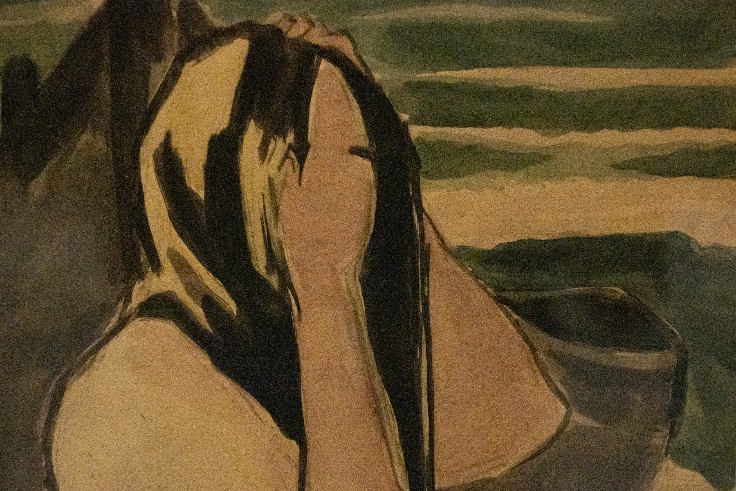
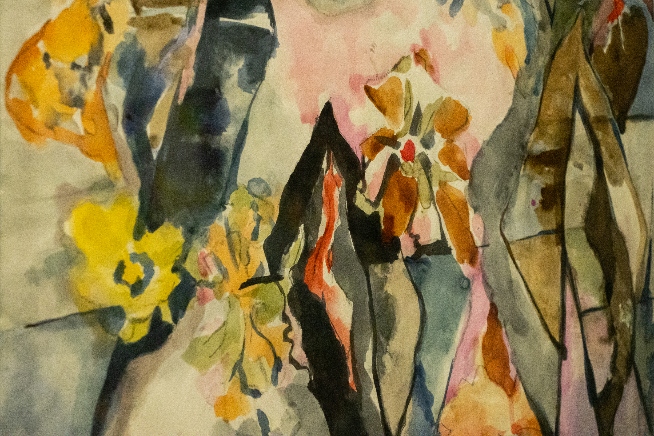
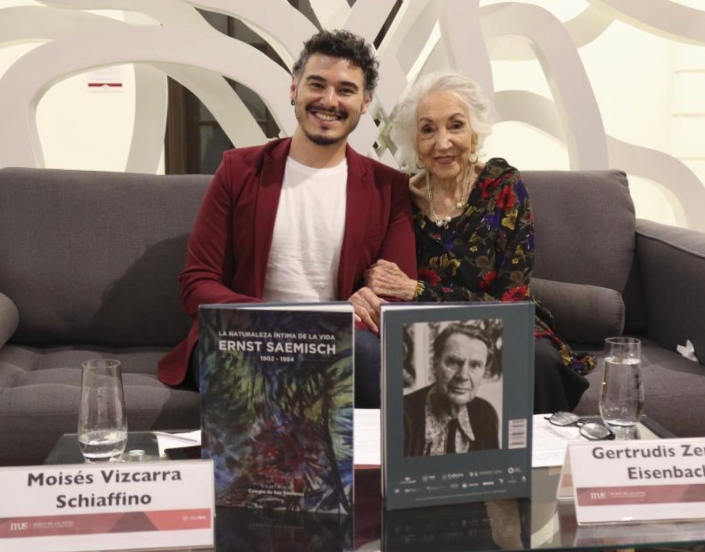
Algo de la obra que se puede apreciar en la muestraLa naturaleza íntima de la vida. Ernst Saemisch (1902-1984). Moisés Schiaffino y Gertrudis Zenzes /Some of the work that can be seen in the exhibition The Intimate Nature of Life. Ernst Saemisch (1902-1984). Moisés Schiaffino and Gertrudis Zenzes. Fotos. CORTESÍA
Claudia Andalón / Guadalajara

La naturaleza íntima de la vida. Ernst Saemisch (1902-1984), es el título de la exposición curada por Eugenio Caballero que se puede apreciar hasta el 23 de agosto en el Museo de las Artes de la Universidad de Guadalajara (UdeG).
Ernst Saemisch es un artista que nació en Europa pero que encontró en México una gran inspiración según dijo Eugenio Caballero, quien agregó que este creador desarrolló un lenguaje visual que transita entre la abstracción y lo figurativo, con colores y texturas que le permitieron plasmar las experiencias que vivió en su natal Alemania y en otros países, todo entre sucesos de transcendencia global, lo que a la vez acerca su trabajo a una especie de registro histórico que puede llegar a ser identificado por cada espectador en lo particular.
La muestra incluye más de 200 piezas entre collage, pintura y dibujo, del pintor que perteneció a la corriente del expresionismo alemán y reforzó dicha relación en el contexto de la posguerra.
Por ello destacan las escenas con temáticas propias de la época, con narrativas e historias que incluyen la desolación entre rostros y paisajes urbanos, mismos que enfrentaron posteriormente una transformación y dieron origen a nuevas composiciones bajo el influjo de la Bauhaus, con su aporte revolucionario y vanguardista.
Saemisch estudió en la prestigiosa Escuela de Arte de Kassel, que luego abandonó debido a su tradicionalismo, para optar por la recién fundada Bauhaus. Su experiencia en ella, al formarse con artistas como Klee, Gropius y Feininger, marcó profundamente su estilo y su visión, lo que le permitió explorar el espacio entre la figuración y la abstracción.
Además de su carrera artística, Saemisch se desempeñó como marinero, escritor y periodista y llegó a dirigir la Sección Extranjera de la Wolffs Telegraphisches Bureau-WTB. Su compromiso con la objetividad periodística lo llevó a enfrentarse al régimen nazi; defendió la libertad de prensa y resistió sus políticas autoritarias, hasta que su oposición al gobierno lo llevó a buscar refugio en el frente finlandés. Después de la guerra, su obra reflejó el dolor tras las atrocidades cometidas por el fascismo alemán.
Años después, luego de su llegada a México en 1964, el pintor quedó cautivado por los distintos elementos presentes en el entorno natural de Veracruz y de Valle de Bravo; por la Ciudad de México, por el simbolismo de la serpiente y por las figuras prehispánicas. Enseñó a jóvenes pintores en Tepito y dedicó sus últimos años a la creación hasta su fallecimiento en 1984. Él consideraba su labor como un acto de valentía y resistencia y así lo expresó: «Cada día pintar es un salto al abismo».
Como parte de la inauguración se realizó una charla previa a la inauguración encabezada por la señora Gertrudis Zenzes, viuda del pintor, escritor y periodista alemán, Ernest Saesmisch y Moisés Vizcarra Schiaffino director del MUSA, titulada Ernst en la memoria de Gertrudis. Mayor información en el sitio https://www.musaudg.mx/
The Intimate Nature of Life: Ernst Saemisch (1902-1984) is the title of the exhibition curated by Eugenio Caballero, which can be seen until August 23 at the Museum of Arts of the University of Guadalajara (UdeG).
Ernst Saemisch is an artist born in Europe who found great inspiration in Mexico, according to Eugenio Caballero, who added that this artist developed a visual language that moves between abstraction and figuration, with colors and textures that allowed him to capture the experiences he lived in his native Germany and in other countries, all amidst events of global significance. This, in turn, brings his work closer to a kind of historical record that can be identified by each viewer individually.
The exhibition includes more than 200 pieces, including collages, paintings, and drawings, by the artist who belonged to the German Expressionist movement and reinforced this connection in the postwar context.
Therefore, scenes with themes typical of the era stand out, with narratives and stories that include desolation in faces and urban landscapes, which later underwent a transformation and gave rise to new compositions under the influence of the Bauhaus, with its revolutionary and avant-garde contributions.
Saemisch studied at the prestigious Kassel School of Art, which he later left due to its traditionalism, opting instead for the newly founded Bauhaus. His experience there, training with artists such as Klee, Gropius, and Feininger, profoundly influenced his style and vision, allowing him to explore the space between figuration and abstraction.
In addition to his artistic career, Saemisch worked as a sailor, writer, and journalist, eventually heading the Foreign Section of the Wolffs Telegraphisches Bureau-WTB. His commitment to journalistic objectivity led him to confront the Nazi regime; he defended freedom of the press and resisted its authoritarian policies, until his opposition to the government forced him to seek refuge on the Finnish front. After the war, his work reflected the pain following the atrocities committed by German fascism.
Years later, after arriving in Mexico in 1964, the painter was captivated by the diverse elements present in the natural environment of Veracruz and Valle de Bravo. He was influenced by Mexico City, the symbolism of the serpent, and pre-Hispanic figures. He taught young painters in Tepito and dedicated his final years to his art until his death in 1984. He considered his work an act of courage and resilience, expressing it thus: «Every day, painting is a leap into the abyss.»
As part of the inauguration, a pre-inauguration talk was held, led by Mrs. Gertrudis Zenzes, widow of the German painter, writer and journalist, Ernest Saesmisch, and Moisés Vizcarra Schiaffino, director of MUSA, entitled «Ernst in Gertrudis’s memory.» Mayor información en el sitio https://www.musaudg.mx/



 balsiaproducciones.com.mx