MUSIC. Bayreuth Festival 2026 celebrates 150 years
Con sede en el emblemático Festspielhaus, conocido como la Colina Verde y considerado como el mayor santuario dedicado a la obra de Richard Wagner, el programa de este encuentro se realiza del 25 de julio al 26 de agosto
Based in the emblematic Festspielhaus, known as the Green Hill and considered the largest sanctuary dedicated to the work of Richard Wagner, the program of this meeting takes place from July 25 to August 26
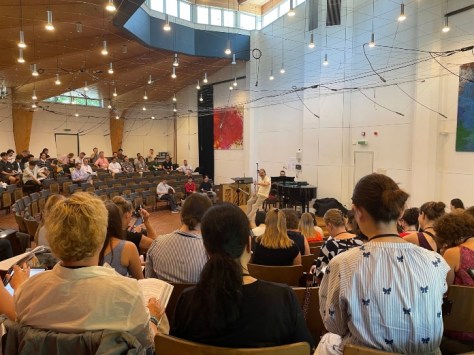
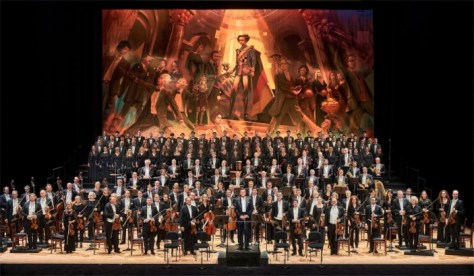
La Orquesta del Festival de Bayruth y algunas de las actividades previas a esta edición 2026. Fotos: CORTESÍA
Enrique Vázquez Lozano / Agencias

El Festival de Bayreuth celebra en 2026 el 150 aniversario de su fundación con una edición histórica que se desarrolla del 25 de julio al 26 de agosto en el emblemático Festspielhaus, conocido como la Colina Verde, en Bayreuth, Alemania. Considerado el mayor santuario dedicado a la obra de Richard Wagner, el encuentro conmemorativo combina tradición, innovación tecnológica y un intenso debate sobre el legado cultural del compositor.
La principal controversia de esta edición surgió con la nueva versión semiescenificada de la tetralogía El anillo del nibelungo, dirigida musicalmente por Christian Thielemann. Por primera vez en la historia del festival se empleó un sistema de inteligencia artificial para generar proyecciones visuales en tiempo real, sustituyendo la escenografía convencional. La propuesta dividió al público: mientras la orquesta y el elenco recibieron prolongadas ovaciones, el equipo responsable de los efectos visuales fue abucheado tras el estreno de El ocaso de los dioses, debido a un collage de imágenes históricas que incluyó referencias al ex canciller Helmut Kohl y a los atentados del 11 de septiembre.
En contraste, uno de los mayores triunfos artísticos ha sido el rescate de Rienzi, la primera gran ópera de Wagner y una obra tradicionalmente excluida del repertorio oficial por decisión del propio compositor. Bajo la dirección de Nathalie Stutzmann y con el tenor Andreas Schager en el papel principal, la producción se ha convertido en una de las revelaciones del festival, cosechando elogios de la crítica y del público.
La inauguración también estuvo cargada de simbolismo. En lugar de abrir con una ópera, el festival celebró su aniversario con la Novena Sinfonía de Beethoven, interpretada por Christian Thielemann, evocando el concierto que el propio Wagner dirigió en 1872 para conmemorar la colocación de la primera piedra del teatro. A la ceremonia asistieron destacadas figuras políticas, entre ellas el canciller alemán Friedrich Merz, la ex canciller Angela Merkel y el ministro presidente de Baviera, Markus Söder.
La conmemoración ha reavivado además el debate sobre la relación histórica del festival con el nacionalsocialismo y el antisemitismo de Wagner. Uno de los momentos más comentados fue la participación del filósofo e intelectual Michel Friedman, quien finalmente ofreció una conferencia dedicada a las voces silenciadas por el régimen nazi y a la necesidad de revisar críticamente ese pasado.
En el plano musical, la edición reúne a algunas de las voces más prestigiosas de la ópera internacional. Además de Christian Thielemann y Nathalie Stutzmann, participan los directores Pablo Heras-Casado y Oksana Lyniv, junto a un elenco encabezado por Andreas Schager, Michael Volle, Klaus Florian Vogt, Camilla Nylund, Asmik Grigorian, Piotr Beczała, Georg Zeppenfeld y Elza van den Heever.
El ambiente del aniversario también ha atraído a personalidades del cine, la televisión y la música, como los actores Francis Fulton-Smith y Udo Wachtveitl, el cantante Johnny Logan y los humoristas Volker Heißmann, Martin Rassau y Michl Müller, habituales invitados a la tradicional alfombra roja del festival.
Tras concluir la temporada en Bayreuth, la prestigiosa Orquesta del Festival de Bayreuth iniciará una gira por España del 29 de agosto al 6 de septiembre, dirigida por Pablo Heras-Casado, con presentaciones en el Palau de la Música Catalana, el Festival Internacional de Santander, el Teatro de la Maestranza de Sevilla y el Teatro Real de Madrid. Con una programación que equilibra el respeto por la tradición y la búsqueda de nuevos lenguajes escénicos, el Festival de Bayreuth 2026 reafirma su lugar como una de las grandes citas de la ópera y la música clásica a nivel mundial. Mayor información en el sitio https://www.bayreuther-festspiele.de/en/
The Bayreuth Festival celebrates the 150th anniversary of its founding in 2026 with a historic edition that takes place from July 25 to August 26 at the emblematic Festspielhaus, known as the Green Hill, in Bayreuth, Germany. Considered the largest sanctuary dedicated to the work of Richard Wagner, the commemorative meeting combines tradition, technological innovation and an intense debate about the composer’s cultural legacy.
The main controversy of this edition arose with the new semi-staged version of the tetralogy The Ring of the Nibelung, musically directed by Christian Thielemann. For the first time in the history of the festival, an artificial intelligence system was used to generate visual projections in real time, replacing conventional scenography. The proposal divided the audience: while the orchestra and cast received prolonged ovations, the team responsible for the visual effects was booed after the premiere of The Twilight of the Gods, due to a collage of historical images that included references to former chancellor Helmut Kohl and the September 11 attacks.
In contrast, one of the greatest artistic triumphs has been the rescue of Rienzi, Wagner’s first great opera and a work traditionally excluded from the official repertoire by decision of the composer himself. Under the direction of Nathalie Stutzmann and with tenor Andreas Schager in the lead role, the production has become one of the revelations of the festival, garnering praise from critics and the public.
The inauguration was also full of symbolism. Instead of opening with an opera, the festival celebrated its anniversary with Beethoven’s Ninth Symphony, performed by Christian Thielemann, evoking the concert that Wagner himself conducted in 1872 to commemorate the laying of the theater’s first stone. The ceremony was attended by prominent political figures, including German Chancellor Friedrich Merz, former Chancellor Angela Merkel and Bavarian Minister President Markus Söder.
The commemoration has also revived the debate about the historical relationship of the festival with National Socialism and Wagner’s anti-Semitism. One of the most talked about moments was the participation of the philosopher and intellectual Michel Friedman, who finally offered a conference dedicated to the voices silenced by the Nazi regime and the need to critically review that past.
On a musical level, the edition brings together some of the most prestigious voices in international opera. In addition to Christian Thielemann and Nathalie Stutzmann, the directors Pablo Heras-Casado and Oksana Lyniv participate, along with a cast led by Andreas Schager, Michael Volle, Klaus Florian Vogt, Camilla Nylund, Asmik Grigorian, Piotr Beczała, Georg Zeppenfeld and Elza van den Heever.
The anniversary atmosphere has also attracted personalities from film, television and music, such as the actors Francis Fulton-Smith and Udo Wachtveitl, the singer Johnny Logan and the comedians Volker Heißmann, Martin Rassau and Michl Müller, regular guests on the festival’s traditional red carpet.
After concluding the season in Bayreuth, the prestigious Bayreuth Festival Orchestra will begin a tour of Spain from August 29 to September 6, directed by Pablo Heras-Casado, with performances at the Palau de la Música Catalana, the Santander International Festival, the Teatro de la Maestranza in Seville and the Teatro Real in Madrid. With a program that balances respect for tradition and the search for new scenic languages, the Bayreuth Festival 2026 reaffirms its place as one of the great events of opera and classical music worldwide. More information at the website https://www.bayreuther-festspiele.de/en/