
Pharmacies in Guadalajara Hospitals, 16th to 18th Centuries.
Entre la carencia, caridad y devoción.
Between Scarcity, Charity, and Devotion.
COLUMNA DE OPINIÓN
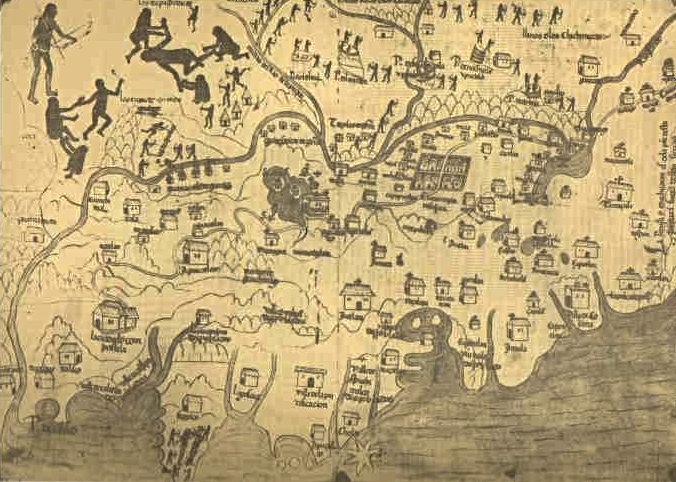
Por el historiador Jesús Asdrúbal Ruiz Alcalá/By historian Jesús Asdrúbal Ruiz Alcalá

A partir del asentamiento definitivo de la actual ciudad de Guadalajara en 1542 se trataron de asegurar los servicios de salud, para ello, como era de esperarse, comenzaron la fundación de los primeros hospitales con su respectiva botica como una alternativa válida y necesaria para la curación de las enfermedades de los pobladores de la reciente localidad, sumándose con ello, a ciertas tareas médicas y farmacéuticas de algunos religiosos principalmente franciscanos, que ya despachaban algunos medicamentos predominantemente herbolarios a través de las boticas conventuales.
La creación de un modelo de atención médica de tipo hospitalario es comprensible cuando se toma en consideración el antecedente, de que los españoles heredaron conocimientos médicos de los griegos por vía de los árabes, pero también fue heredada la tradición hospitalaria. Era común, en los hospitales árabes que se levantaron en la península ibérica, enseñar medicina y divulgar las obras de sus máximos exponentes como Rhazes y Avicena, que a su vez estaban influenciados por Hipócrates, Galeno y Aristóteles.
Con tal precedente, los establecimientos hospitalarios en la Nueva Galicia durante la colonia se fundaron y funcionaron bajo la égida religiosa, adoptando el modelo de institución médica europea que se definió como “el hospital convento”.
Fue así, que, a lo largo del periodo colonial, Guadalajara contó prácticamente con dos hospitales convento que albergaban a diferentes grupos étnicos, éstos son: el hospital de San Juan de Dios y el hospital Real de San Miguel, ambos con su respectiva botica.
Por el año de 1551 se concluyó la capilla de Vera Cruz a instancias del obispo Pedro Gómez de Maraver, donde a su lado, también se construyó a petición de la ciudad un hospital llamado de la Vera Cruz, que posteriormente sería conocido con el nombre de San Juan de Dios, ya que fue administrado por la Orden de San Juan de Dios a partir de 1606 en sustitución de los cofrades de la sangre de cristo, “siendo el primer hospital que funcionó de manera permanente en la ciudad”.
Sin embargo, la austeridad económica fue la característica que rigió normalmente a dicho hospital, reflejándose también en la calidad de servicios y productos que pudo tener su botica. El historiador José R. Benítez ya ha comentado, que su estado en que se encontraba así lo indicaba, en ese tiempo estaba regido por Fr. José de Medrano, segundo de los priores juaninos, y en cuestión de medicinas, decía que, se reducían a “un bote de ungüento de acar, unos polvos llamados sandalinos para hacer ungüento sandalino y un poco de ungüento llamado ejiciaco [sic]; cuando necesitaban otras medicinas se ocurría a comprarlas a las casa del Lic. Rodríguez, con excepción de los jarabes, lamedores, leches, sueros, sudoríficos y bebidas que se hacían en el mismo hospital”.
Considerando el informe de Fr. José de Medrano, es notorio que los productos en existencia de la botica del hospital de San Juan de Dios, que se reducían a unos cuantos polvos, ungüentos y líquidos, tal vez, no satisfacían las necesidades prioritarias ni aun de los mismos internos.
Por otra parte, el hospital de San Miguel, fue erigido el 20 de septiembre de 1587 por el obispo Fr. Domingo de Arzola, era en esos momentos el segundo hospital de la ciudad, instalado en el convento de las monjas dominicas de Santa María de Gracia que hoy es el lugar que ocupa el mercado Corona.
En su descripción geográfica de la Nueva Galicia, escrito a inicios del siglo XVII por el obispo y cronista Alonso de la Mota y Escobar, señaló que, el hospital de San Miguel contaba desde sus inicios con una botica. No obstante, las condiciones del hospital no parecían encontrarse siempre en buenas condiciones, pues se decía que, sus funciones estaban a merced de la abundancia o la escasez.
Sin embargo, años más tarde, con la llegada de los betlemitas al hospital de San Miguel en 1706 se gesta una nueva etapa de prosperidad, incluso, el recinto hospitalario se llamaría en adelante Real Hospital de San Miguel de Belén.
El historiador José R. Benítez, ya ha señalado, que, una referencia que permite considerar su mejoría tanto en el hospital como en su botica, es el informe elaborado por el Dr. D. Pedro Camarena y el Prior de San Juan de Dios Fr. Leoncio Alranzón, que en su visita que por reales órdenes hicieron en el año de 1771 señalaron que: “la botica estaba tan bien surtida, que en marzo de 1769 en que se había hecho cargo el prefecto Fr. Joaquín de Santa Ana, que todavía lo gobernaba, se estimaban las medicinas y demás muebles de la botica en $8,031 4rs. suma importante para la época. Allí acudía el público también a comprarlas por módico precio y se les daba gratuitamente a las mujeres pobres […]”.
Poco años después a instancias del Obispo Fray Antonio alcalde se decidió construir de nuevo el Hospital Real de San Miguel de Belén en las afueras de la ciudad, fue así, que en mayo de 1794 se trasladó del antiguo sitio al edificio nuevo, que hoy en día conocemos como hospital civil. Josefina Muriel, en su libro sobre los hospitales de la Nueva España, ha mencionado que fue en ese entonces “el más hermoso y funcional de los edificios hospitalarios que hubo en esos años en la Nueva España. Su planta fue radial […] todas las salas quedaban separadas por jardines […] tenía siete salas […] ropería […] sala de autopsias […]” y por supuesto, contaba con su respectiva botica, que se puede notar estuvo surtida y bien conformada.
A manera de corolario, es posible asumir, que las boticas de hospitales en una primera etapa de consolidación de la ciudad de Guadalajara en los siglos XVI y XVII carecieron de regularidad, calidad y surtido en su atención al público interno o externo de los nosocomios, reflejando un carácter funcional más paliativo que curativo; no obstante, su función social nunca dejó de tener un enfoque caritativo para el doliente que se encontraba o que acudía a sus recintos. Y no es, sino, hasta el siglo XVIII, que la mejora tanto de la atención hospitalaria como de su botica es más notoria. Y lo que parece siempre estuvo vigente, es que religiosos de distintas órdenes siguieron constituyendo el personal que atendía a los enfermos, y podría decirse, que pudieron estar encargados o al menos ayudando en la operación de las boticas hospitalarias.
From the definitive settlement of the present-day city of Guadalajara in 1542, efforts were made to ensure healthcare services. To this end, as expected, the first hospitals were founded, each with its own pharmacy, as a valid and necessary alternative for treating the illnesses of the inhabitants of the newly established town. This complemented the medical and pharmaceutical work already being done by some religious orders, primarily Franciscans, who were dispensing some medicines, mainly herbal remedies, through convent pharmacies.
The creation of a hospital-based model of medical care is understandable when one considers the fact that the Spanish inherited medical knowledge from the Greeks via the Arabs, but they also inherited the tradition of hospitality. It was common in the Arab hospitals built on the Iberian Peninsula to teach medicine and disseminate the works of its leading figures, such as Rhazes and Avicenna, who were themselves influenced by Hippocrates, Galen, and Aristotle.
With this precedent, the hospital establishments in New Galicia during the colonial period were founded and operated under religious auspices, adopting the European medical institution model known as the «hospital-convent.»
Thus, throughout the colonial period, Guadalajara had practically two hospital-convents serving different ethnic groups: the Hospital of San Juan de Dios and the Royal Hospital of San Miguel, both with their respective pharmacies. Around 1551, the Vera Cruz chapel was completed at the behest of Bishop Pedro Gómez de Maraver. Next to it, at the city’s request, a hospital called Vera Cruz was also built, later known as San Juan de Dios, as it was administered by the Order of Saint John of God from 1606 onwards, replacing the members of the Confraternity of the Blood of Christ. It was «the first hospital to operate permanently in the city.»
However, economic austerity was the defining characteristic of this hospital, which was also reflected in the quality of services and products offered by its pharmacy. The historian José R. Benítez has already commented that its condition indicated this. At that time, it was governed by Fr. José de Medrano, the second of the Juanine priors, and regarding medicines, he said that they were limited to “a jar of acar ointment, some powders called sandalinos to make sandalino ointment, and a little ointment called ejiciaco [sic]; when other medicines were needed, they resorted to buying them from the house of Lic. Rodríguez, with the exception of syrups, laxatives, milks, serums, sudorifics, and drinks, which were made in the hospital itself.”
Considering Fr. José de Medrano’s report, it is clear that the products in stock at the pharmacy of the Hospital of San Juan de Dios, which were limited to a few powders, ointments, and liquids, perhaps did not satisfy the priority needs, not even of the patients themselves. On the other hand, the San Miguel Hospital was erected on September 20, 1587, by Bishop Domingo de Arzola. At that time, it was the second hospital in the city, located in the convent of the Dominican nuns of Santa María de Gracia, which is now the site of the Corona Market.
In his geographical description of New Galicia, written at the beginning of the 17th century, Bishop and chronicler Alonso de la Mota y Escobar noted that the San Miguel Hospital had a pharmacy from its inception. However, the hospital’s conditions did not always seem to be good, as it was said that its operations depended on abundance or scarcity.
Nevertheless, years later, with the arrival of the Bethlehemites at the San Miguel Hospital in 1706, a new era of prosperity began. The hospital would then be called the Royal Hospital of San Miguel de Belén. The historian José R. Benítez has already pointed out that a reference that allows us to consider the improvement in both the hospital and its pharmacy is the report prepared by Dr. Pedro Camarena and the Prior of San Juan de Dios, Friar Leoncio Alranzón, who, in their visit carried out by royal orders in 1771, noted that: “the pharmacy was so well stocked that in March 1769, when the prefect Friar Joaquín de Santa Ana, who was still governing it, had taken charge, the medicines and other furnishings of the pharmacy were valued at $8,031 4rs, a significant sum for the time. The public also came there to buy them at a modest price, and they were given free of charge to poor women […]”.
A few years later, at the behest of Bishop Fray Antonio Alcalde, it was decided to rebuild the Royal Hospital of San Miguel de Belén on the outskirts of the city. Thus, in May 1794, it was moved from the old site to the new building, which we know today as the Civil Hospital. Josefina Muriel, in her book on the hospitals of New Spain, mentions that it was at that time “the most beautiful and functional of the hospital buildings that existed in those years in New Spain. Its floor plan was radial […] all the wards were separated by gardens […] it had seven wards […] a linen room […] an autopsy room […]” and, of course, it had its own pharmacy, which was clearly well-stocked and organized.
As a corollary, it is possible to assume that hospital pharmacies in the early stages of Guadalajara’s consolidation during the 16th and 17th centuries lacked regularity, quality, and a sufficient selection in their service to both inpatients and outpatients, reflecting a more palliative than curative function. However, its social function never ceased to have a charitable focus on the suffering patients who were in or came to its premises. It wasn’t until the 18th century that the improvement of both hospital care and its pharmacy became more noticeable. And what seems to have always remained the case is that religious members of various orders continued to make up the staff who cared for the sick, and it could be said that they were in charge of, or at least assisted in, the operation of the hospital pharmacies.
El contenido de esta columna de opinión es responsabilidad única del autor





 balsiaproducciones.com.mx