Archivo de la categoría: LITERATURE

LETRAS. La FIL Guadalajara celebrará Día Mundial del Libro con Pedro Páramo de Juan Rulfo


Este 23 de abril, el encuentro literario organizado por la Universidad de Guadalajara iniciará los festejos de su 40 aniversario con la realización de su tradicional maratón de lectura en diversas sedes de Jalisco con la lectura de una de las novelas que transformó profundamente la narrativa latinoamericana

Algo de la obra que se puede apreciar en la muestraLa naturaleza íntima de la vida. Ernst Saemisch (1902-1984). Moisés Schiaffino y Gertrudis Zenzes /Some of the work that can be seen in the exhibition The Intimate Nature of Life. Ernst Saemisch (1902-1984). Moisés Schiaffino and Gertrudis Zenzes. Fotos. CORTESÍA

Luam Vázquez / Guadalajara

La Feria Internacional del Libro de Guadalajara (FIL Guadalajara) dedicará este año su tradicional maratón de lectura con el cual Celebra el Día Mundial del libro el 23 de abril a Pedro Páramo de Juan Rulfo (1917-1986).
La actividad será posible gracias a la colaboración que los organizadores han realizado con la familia del autor y la Editorial RM. La lectura se realizará en, la explanada del edificio de Rectoría General de la Universidad de Guadalajara (UdeG) y la Biblioteca Pública del Estado de Jalisco (BPEJ) “Juan José Arreeola” , así como todos los planteles del Sistema de Educación Media Superior (SEMS) y sedes del Sistema Universitario de Bibliotecas Públicas. La lectura central se llevará a cabo este 23 de abril, en la explanada del edificio de Rectoría General (avenidas Juárez y Enrique Díaz de León), de 10:00 a 17:00 horas, donde quienes participen recibirán, como marca la tradición catalana de Sant Jordi, una rosa y un ejemplar de la novela.
Al finalizar la jornada tendrá lugar una mesa de diálogo en la que participarán Juan Carlos y Pablo Rulfo, además de Marisol Schulz Manaut, quienes revelarán al Juan Rulfo más íntimo y sus distintos intereses, como la literatura, el cine y la fotografía. Este año, la BPEJ será la segunda sede oficial, mientras que gracias al apoyo del SEMS el festejo se extenderá a todo Jalisco.


El maratón de lectura de Pedro Páramo en el Día Mundial del Libro marcará el inicio de los festejos por los 40 años de la FIL de Guadalajara, así como el comienzo de las actividades con las que la feria recordará a Rulfo a cuatro décadas de su fallecimiento, y que culminarán en la próxima edición de la feria, a realizarse del 28 de noviembre al 6 de diciembre en Expo Guadalajara.


Instaurado en 1995 por la Organización de las Naciones Unidas para la Educación, la Ciencia y la Cultura (Unesco), el Día Mundial del Libro es una celebración que la FIL de Guadalajara realiza desde 2002 mediante una lectura pública en voz alta en la que, además de la capital jalisciense, preparatorias del SEMS y muchos municipios se suman con lecturas espejo.
En ediciones anteriores, las obras de los autores Juan José Arreola, Gabriel García Márquez, Jane Austen, Fernando del Paso, Mary Shelley, Ray Bradbury, Rosario Castellanos y José Saramago, entre otras y otros, han protagonizado este festejo.

Juan Rulfo fue un escritor, guionista y fotógrafo mexicano cuya obra transformó profundamente la narrativa latinoamericana. Fue autor del volumen de cuentos El llano en llamas (1953) y de Pedro Páramo (1955), una de las novelas más importantes del siglo XX, en la que se narra el viaje de Juan Preciado al pueblo de Comala en busca de su padre.


Además de su labor literaria, Rulfo tuvo una destacada trayectoria como fotógrafo y dejó un importante legado visual y editorial del México rural e indígena durante su labor como director de publicaciones en el entonces Instituto Nacional Indigenista, por más de dos décadas, hasta su fallecimiento.

The Guadalajara International Book Fair (FIL Guadalajara) will dedicate this year’s traditional reading marathon, celebrating World Book Day on April 23, to Juan Rulfo’s Pedro Páramo (1917-1986).

The event is made possible thanks to the collaboration between the organizers, the author’s family, and RM Publishing. The reading will take place on the esplanade of the General Rectorate building of the University of Guadalajara (UdeG) and the Juan José Arreola State Public Library of Jalisco (BPEJ), as well as at all campuses of the High School Education System (SEMS) and branches of the University System of Public Libraries. The main reading will be held on April 23rd on the esplanade of the General Rectorate building (Juárez and Enrique Díaz de León avenues), from 10:00 a.m. to 5:00 p.m., where participants will receive, as is the Catalan tradition of Sant Jordi, a rose and a copy of the novel.
At the end of the day, a panel discussion will be held with Juan Carlos and Pablo Rulfo, as well as Marisol Schulz Manaut, who will reveal the more intimate side of Juan Rulfo and his diverse interests, such as literature, film, and photography. This year, the BPEJ (Biblioteca Pública de Jalisco) will be the second official venue, while thanks to the support of the SEMS (Sistema de Educación Superior de Jalisco – State High School System), the celebration will extend throughout Jalisco.

The Pedro Páramo reading marathon on World Book Day will mark the beginning of the celebrations for the 40th anniversary of the Guadalajara International Book Fair (FIL), as well as the start of the activities with which the fair will commemorate Rulfo four decades after his death, culminating in the next edition of the fair, to be held from November 28 to December 6 at Expo Guadalajara.

Established in 1995 by the United Nations Educational, Scientific and Cultural Organization (UNESCO), World Book Day is a celebration that the Guadalajara International Book Fair has held since 2002 through a public reading aloud in which, in addition to the capital of Jalisco, SEMS high schools and many municipalities participate with parallel readings. In previous editions, the works of authors such as Juan José Arreola, Gabriel García Márquez, Jane Austen, Fernando del Paso, Mary Shelley, Ray Bradbury, Rosario Castellanos, and José Saramago, among others, have been featured in this celebration.

Juan Rulfo was a Mexican writer, screenwriter, and photographer whose work profoundly transformed Latin American narrative. He was the author of the short story collection El llano en llamas (1953) and Pedro Páramo (1955), one of the most important novels of the 20th century, which tells the story of Juan Preciado’s journey to the town of Comala in search of his father.
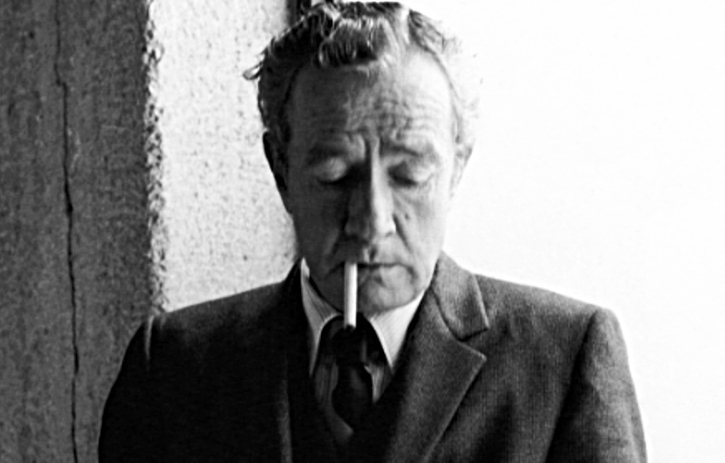
In addition to his literary work, Rulfo had a distinguished career as a photographer and left an important visual and editorial legacy of rural and indigenous Mexico during his more than two decades as director of publications at the then National Indigenous Institute, until his death.

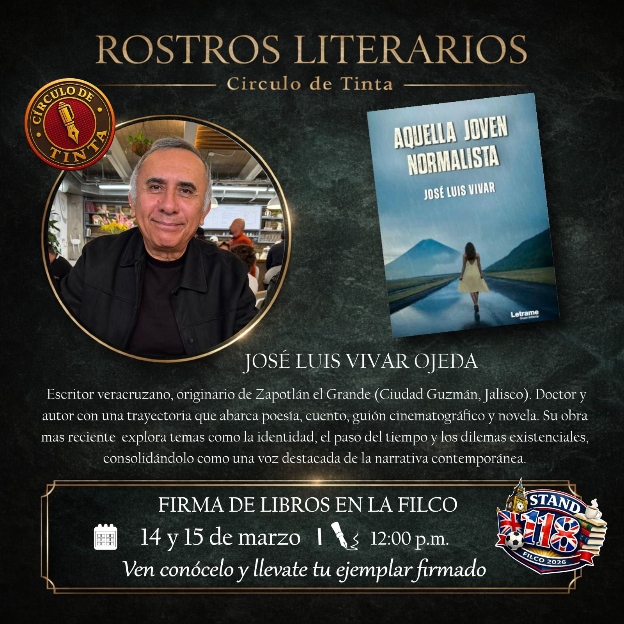
LETRAS. José Luis Vivar presenta en FILCO su novela Aquella Normalista


El escritor firmará ejemplares el 14 y 15 de marzo como parte del programa Rostros Literarios, Círculo de Tinta en el encuentro literario que se realiza en la CDMX

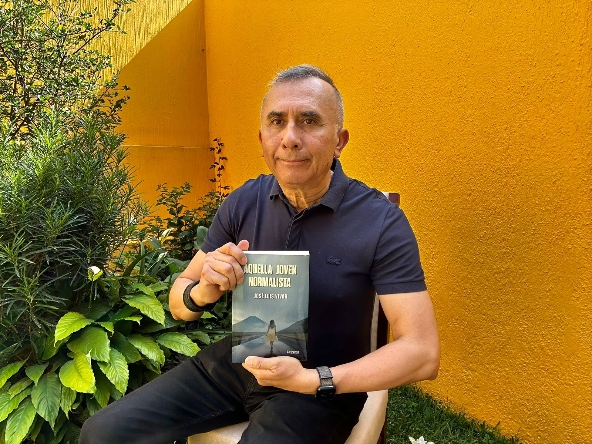
José Luis Vivar y su libro Aquella Normalista. Fotos. CORTESÍA

Enrique Vázquez Lozano/ Guadalajara

Como parte del programa de Rostros Literarios Círculo de Tinta en la Feria Internacional del Libro de Coyoacán (FILCO) este 14 y 15 de marzo a las 12:00 horas, el escritor José Luis Vivar firmará ejemplares en el estand 118 de su más reciente novela titulada Aquella Normalista publicada bajo el sello Létrame Grupo Editorial.

Vivar compartió: “La historia surgió por la inquietud de poder hablar sobre la idea de un viaje en el tiempo. El germen surgió hace muchos años, era una idea que estaba ahí dormida. En el Centro Regional de Educación Normal (CREN), donde trabajé 30 años, cada aniversario colocaban unas mamparas con fotos de los alumnos de cada generación, recuerdo que en 2010 se celebraba el 40 aniversario de la institución. Al ver esas fotos me llamó mucho la atención como cambiaban los peinados de las personas, según la época en que fueron tomadas dichas fotos.
Me llamó la atención la fotografía de una muchacha de los años 60, muy bonita. Cuando la estaba observando alguien me dijo: -Está muy bonita ¿verdad? Lástima que esté muerta-. A mí se me ocurrió la idea de contar una historia de esa muchacha en la que ella en lugar de morir, se traslada 57 años hacia el futuro, de 1966 a 2023. Enseguida me di cuenta que tenía la semilla de una novela”.

El escritor veracruzano afincado ya desde 1991 en Zapotlán El Grande detalló: “La historia cuenta entonces que el 24 de julio de 1966, un día domingo Georgina, despierta y debe arreglarse para ir a una boda. Durante el día, es asediada por su ex novio, el lector puede ver diversas intenciones que delatan al sujeto como su secuestrador. De repente ella no aparece, y los indicios que encuentran señalan que le hizo daño y luego tiró su cuerpo a la laguna de Zapotlán, que es famosa por ser muy fangosa y peligrosa, quien cae ahí tiene muy pocas probabilidades de salvarse. Ha habido casos que contratan buzos de Manzanillo para buscar cuerpos. Lo que el lector se da cuenta es que Georgina realmente se traslada a 2023 a través de un portal que se encuentra en el Kiosco de la Plaza Principal”.

De acuerdo con el también colaborador de BALSIA PRODUCCIONES, en lo sucesivo el lector comienza a descubrir dos subtramas, la historia de Georgina y la historia del kiosco como portal hacia otras épocas. Ya en 2023, quienes conocen a Georgina, la ven tan joven que no creen que se haya trasladado en el tiempo y comienzan aparecer personajes que tratan de ganarse su confianza para que les confíe sus secretos para permanecer joven . Su caso llega a llamar la atención de especialistas en biogenética y de personas que se hacen miles de cirugías para no envejecer.

“Me inspiré en novelas como El Anacronópete (1887) de Enrique Gaspar y Rimbau que se escribió ocho años antes que La máquina del tiempo (1895) de H. G. Wells, claro también en esas historias de túneles el tiempo y películas como Volver al futuro y programas como La Dimensión Desconocida. No quise involucrar en mi novela una máquina porque me parecía que era una idea muy trillada, quise crear un fenómeno extraño. Tampoco quise que se volviera una novela de Ciencia Ficción, preferí que mis personajes permanecieran suspendidos en un bucle, guiado mucho por la idea de Jung, de cómo en ocasiones hay personas que quieren regresar al paraíso de su infancia y evaden la realidad, en este caso es un bucle entre 1966 y 2023. En todo momento mis personajes están en ese estado psíquico. Por otro lado, creo que es también un homenaje a Zapotlán como una Ciudad Eterna. La idea de hablar de viajes en el tiempo también vino de una vez que estuvimos en un taller con Artemio González cuando hice un cuento que se tituló Ayer se volvió mañana, en donde narro un suceso en el que el personaje principal está hospedado en el Hotel Zapotlán y cuando sale se encuentra una ciudad en plena guerra cristera, de repente quiere regresar a su habitación y es apresado por soldados”.

El autor ha cultivado la Literatura y el Periodismo Cultural al margen de su labor profesional como Odontólogo y Maestro de Enseñanza Media y Nivel Superior. Aunque se considera un autodidacta en el campo de las Letras, reconoce a cuatro maestros que en diferentes momentos lo supieron orientar en su vocación como escritor. Menciona de Veracruz, al Poeta Jaime G. Velázquez; y de Jalisco a los escritores Artemio González García (QEPD), Ricardo Sigala y Fernando de León.

Vivar compartió que ya se encuentra trabajando en tres novelas más. Otros de sus títulos son Nebulosidades (Poesía), Salón Apolo (Teatro), Disolvencia de Imágenes (Guiones Cinematográficos), Travesía Intramarina (Poesía), Dankard (Novela, Premio SEJ 1999), Desengaños (Guion Cinematográfico, Premio mejor Guion, Festival Contraluz, 2001), Doncella del Palacio (Cuento), Lipstick Tequila (Novela), Niña Translúcida (Novela), Barcos de Lejana Memoria (Novela, Mención Honorífica, Premio Nacional de Ensayo y Novela Generoso Gómez Cañizo, 2015)

Mayor información puede consultarse en sus redes sociales. Puedes leer un fragmento de Aquella Normalista AQUÍ.

As part of the Literary Faces Circle of Ink program at the Coyoacán International Book Fair (FILCO) on March 14 and 15 at 12:00 pm, writer José Luis Vivar will be signing copies at stand 118 of his most recent novel titled Aquella Normalista published under the Létrame Grupo Editorial label.

Vivar shared: “The story arose from a desire to explore the idea of ​​time travel. The seed was planted many years ago; it was an idea that had been dormant. At the Regional Center for Teacher Training (CREN), where I worked for 30 years, every anniversary they would put up displays with photos of students from each graduating class. I remember that in 2010 they celebrated the institution’s 40th anniversary. When I saw those photos, I was struck by how people’s hairstyles changed depending on the era in which the photos were taken.
I was particularly drawn to a photograph of a very beautiful young woman from the 1970s. As I was looking at it, someone said to me, ‘She’s very pretty, isn’t she? It’s a shame she’s dead.’ The idea came to me to tell a story about that young woman in which, instead of dying, she travels 57 years into the future, from 1966 to 2023. I immediately realized I had the seed of a novel.”

The writer from Veracruz, who has lived in Zapotlán El Grande since 1991, explained: “The story goes that on July 24, 1966, a Sunday, Georgina wakes up and has to get ready for a wedding. During the day, she is harassed by her ex-boyfriend; the reader can see various intentions that betray the man as her kidnapper. Suddenly, she disappears, and the clues found indicate that he harmed her and then threw her body into the Zapotlán lagoon, which is famous for being very muddy and dangerous; anyone who falls in has very little chance of survival. There have been cases where divers from Manzanillo are hired to search for bodies. What the reader realizes is that Georgina actually travels to 2023 through a portal located in the kiosk in the main square.”

According to the BALSIA PRODUCCIONES collaborator, the reader then begins to discover two subplots: Georgina’s story and the story of the kiosk as a portal to other eras. By 2023, those who know Georgina see her as so young that they don’t believe she has traveled through time, and characters begin to appear trying to gain her trust so she will share her secrets to staying young. Her case attracts the attention of biogenetic specialists and people who undergo thousands of surgeries to avoid aging.

“I was inspired by novels like Enrique Gaspar y Rimbau’s El Anacronópete (1887), which was written eight years before H.G. Wells’s The Time Machine (1895), and of course, by stories about time tunnels and films like Back to the Future and shows like The Twilight Zone. I didn’t want to include a machine in my novel because it seemed like a very overused idea; I wanted to create a strange phenomenon. I also didn’t want it to become a science fiction novel; I preferred that my characters remain suspended in a loop, guided largely by Jung’s idea of ​​how sometimes people want to return to the paradise of their childhood and evade reality. In this case, it’s a loop between 1966 and 2023. My characters are in that psychological state at all times. On the other hand, I think it’s also a tribute to Zapotlán as an Eternal City. The idea of ​​talking about time travel also came from a workshop we were in with Artemio González when I wrote a story entitled Yesterday Became Tomorrow, in which I narrate an event in which the main character is staying at the Hotel Zapotlán and when he goes out he finds a city in the middle of the Cristero War, suddenly he wants to return to his room and is arrested by soldiers.”

The author shared that he is already working on three more novels. More information can be found on his social media.

The author has cultivated Literature and Cultural Journalism alongside his professional work as a dentist and teacher at the secondary and university levels. Although he considers himself self-taught in the field of Letters, he acknowledges four mentors who, at different times, guided him in his vocation as a writer. He mentions the poet Jaime G. Velázquez from Veracruz; and the writers Artemio González García (RIP), Ricardo Sigala, and Fernando de León from Jalisco.

Vivar shared that he is already working on three more novels. Other titles by her include Nebulosidades (Poesía), Salón Apolo (play script), Disolvencia de Imágenes (Screenplay), Travesía Intramarina (Poesía), Dankard (Novel, Prize SEJ 1999), Desengaños (Guion Cinematográfico, Prize better screenplay, Festival Contraluz, 2001), Doncella del Palacio (short story), Lipstick Tequila (Novela), Niña Translúcida (Novela), Barcos de Lejana Memoria (Novel, Honorable Mention, Generoso Gómez Cañizo National Essay and Novel Prize, 2015).

More information can be found on their social media. You can read an excerpt from Aquella Normalista HERE.