Archivo de la categoría: LIBROS

LETRAS. Mi maestro, mi amigo Jaime G. Velázquez


Columna de Opinión

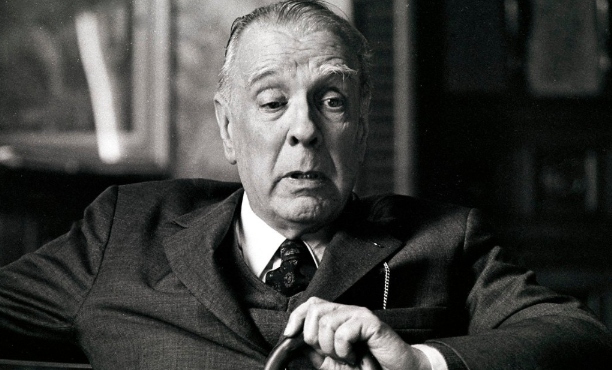
Jaime G. Velázquez. Foto: ESPECIAL

Por José Luis Vivar, escritor

Ciudad Guzmán
28 de abril de 2026

Primero, intento rastrear en mi memoria el momento preciso cuando quise convertirme en escritor, cuando consideré que quería escribir para publicar libros. No lo recuerdo. Pero tengo muy claro que fue antes de titularme como Cirujano Dentista, cuando realizaba mi Servicio Social, primero en esa clínica del IMSS de Uman, una pequeña población a escasos minutos de la blanca Mérida, y luego en mi tierra natal, Veracruz.

Consideré la poesía como única opción. En esos días pasaba horas leyendo a Machado, Neruda, Lorca, los Contemporáneos. Pero quien de verdad me atraían eran Octavio Paz, sobre todo por Pasado en Claro y Libertad Bajo Palabra. Asimismo, José Luis Rivas con Tierra Baldía. Y desde luego Sabines con Los Amorosos y Tarumba. En fin, me aferraba a la lírica como forma de expresión.

Había una revista en particular llamada Vuelta que cada mes adquiría. Además de poesía, el contenido era una miscelánea de autores y temas que me abrían un panorama diferente, cosmopolita, universal. La revista la dirigía Octavio Paz y era mi preferida junto con otras como Nexos y Proceso, que en ese entonces era semanal.

Sucedió entonces que una mañana llamaron a mi puerta y era un vecino al que yo veía con regularidad afuera de su casa, media cuadra adelante en la misma calle. Un señor alto, delgado y de abundante barba que se presentó como Jaime. Así, sin apellido. Hablaba con voz suave, con timidez. Me comentó que me había visto en la televisión local, con el grupo Clave de Sol. Quería saber si podíamos tocar en la Casa Salvador Díaz Mirón, sede de su taller literario, por la finalización de los cursos.

Fui, pero sin mis amigos. Ninguno pudo porque era entre semana y tenían compromisos. Me acompañó mi guitarra y con ella interpreté algunas canciones. No recuerdo cuáles, pero debieron ser del folclor latinoamericano. A todos los integrantes del taller les gustó, entre ellos a mi amigo el poeta Ignacio García. Desde esa ocasión también entablé amistad con otro poeta Juan Joaquín Pérez-Tejada y el narrador Gabriel Fuster.

Y desde luego Jaime Gerardo Velázquez, quien se convirtió en mi maestro sin asistir a las sesiones de su taller. Por él conocí nuevos autores, nuevas corrientes literarias tanto poéticas como narrativas. Su generosidad me permitía cuestionarlo, y pese a mi ingenuidad, jamás se burló. Entendía que ese joven era nuevo en esos terrenos.

Más grande fue mi sorpresa cuando Juan Joaquín me hizo saber que el maestro tenía poco de haber llegado de la ciudad de México, donde se desempeñaba como editor de la revista Vuelta. Sí, la que yo compraba mes con mes. Saber que revisaba y corregía textos del mismísimo Octavio Paz, Enrique Krauze, Salvador Elizondo, Julieta Campos, Juan Goytisolo, Carlos Monsiváis y otros no menos importantes, me hizo ver que estaba frente alguien grande, aunque siempre se mostró humilde y rara vez hablaba de su labor en esa canónica publicación.

Jaime trabajaba en el IVEC (Instituto Veracruzano de la Cultura), donde se desempeñaba como editor. Su labor activó las letras veracruzanas. En poco tiempo rescató autores desconocidos u otros que permanecían en el olvido. Muchos de ellos, ya de edad avanzada, vieron por primera vez sus textos en libros formales. La misión de Jaime rendía frutos en esos años ochenta.

Creó con sus alumnos del taller una revista llamada Galeón, donde me publicó uno de mis poemas, detalle que le agradecí, porque fuera del periódico El Dictamen, no había otro espacio donde publicar. Fue así como me animé a escribir una historia que con mucha timidez le mostré, no en el taller sino ¡en su casa!

Ciudad Guzmán
April 28, 2026

So, what is a teacher, really? Someone who teaches, someone who guides, someone who strives to impart their knowledge, someone who is an example both inside and outside the classroom. And even more: someone who seeks the best for their students, while also caring for and defending them. The answers could number in the hundreds, and perhaps we would never finish. This isn’t the case here. Let’s take it one step at a time.

First, I try to trace back in my memory the precise moment when I wanted to become a writer, when I decided I wanted to write to publish books. I don’t remember. But I’m very clear that it was before I graduated as a Dental Surgeon, when I was doing my social service, first at that IMSS clinic in Umán, a small town just minutes from the white city of Mérida, and then in my home state of Veracruz.

I considered poetry as my only option. In those days, I spent hours reading Machado, Neruda, Lorca, and the Contemporáneos. But the ones who truly captivated me were Octavio Paz, especially for Pasado en Claro and Libertad Bajo Palabra. Likewise, José Luis Rivas with Tierra Baldía. And of course Sabines with Los Amorosos and Tarumba. In short, I clung to lyric poetry as a form of expression.

There was a particular magazine called Vuelta that I bought every month. Besides poetry, the content was a miscellany of authors and themes that opened up a different, cosmopolitan, universal panorama for me. The magazine was edited by Octavio Paz and was my favorite, along with others like Nexos and Proceso, which at that time was a weekly publication.

Then one morning, there was a knock at my door, and it was a neighbor I regularly saw outside his house, half a block away on the same street. A tall, thin man with a full beard who introduced himself as Jaime. Just like that, no last name. He spoke in a soft, shy voice. He told me he had seen me on local television with the group Clave de Sol. He wanted to know if we could play at the Casa Salvador Díaz Mirón, the headquarters of his literary workshop, for the end of the courses.

I went, but without my friends. None of them could make it because it was a weekday and they had other commitments. I brought my guitar and played a few songs. I don’t remember which ones, but they must have been Latin American folk songs. Everyone in the workshop enjoyed it, including my friend, the poet Ignacio García. From that time on, I also became friends with another poet, Juan Joaquín Pérez-Tejada, and the writer Gabriel Fuster.

And of course, Jaime Gerardo Velázquez, who became my mentor even though I never attended his workshop sessions. Through him, I discovered new authors and new literary movements, both poetic and prose. His generosity allowed me to ask him questions, and despite my naiveté, he never made fun of me. He understood that this young man was new to these fields.

My surprise was even greater when Juan Joaquín told me that the professor had recently arrived from Mexico City, where he worked as an editor for the magazine Vuelta. Yes, the one I bought every month. Knowing that he reviewed and corrected texts by Octavio Paz himself, Enrique Krauze, Salvador Elizondo, Julieta Campos, Juan Goytisolo, Carlos Monsiváis, and other equally important figures, made me realize I was in the presence of someone great, although he always remained humble and rarely spoke about his work at that prestigious publication.

Jaime worked at IVEC (Veracruz Institute of Culture), where he was an editor. His work revitalized Veracruz literature. In a short time, he rescued unknown authors and others who had been forgotten. Many of them, already elderly, saw their work published in formal books for the first time. Jaime’s mission bore fruit in those 1980s.

He and his workshop students created a magazine called Galeón, where he published one of my poems, a gesture I appreciated, because outside of the newspaper El Dictamen, there was no other place to publish. That’s how I got the courage to write a story, which I timidly showed him, not in the workshop, but at his house!

The sessions weren’t scheduled; they could last half an hour, sometimes longer. But with each visit, I gradually learned the craft of storytelling. Because I realized in time that I could write verses, but I wasn’t a poet, like Jaime himself, like Ignacio García, or Juan Joaquín. Nobody had to tell me that; you’re born with that gift.

In 2002, he came to Zapotlán as a judge for that year’s Floral Games. His wife accompanied him. They stayed for a few days. We had to move them from the Hotel Zapotlán to the house of my friend, the philosopher Hugo Gutiérrez, so they would be more comfortable. After their participation, they said goodbye, promising to return to the land of their teacher, Juan José Arreola, who taught them at UNAM. But that was no longer possible.

The greatest virtue of any good teacher is that their teaching methods go unnoticed, yet their students learn. That was Jaime. And I was able to acknowledge this a few years ago in Veracruz when I went to present my novel, Ships of Distant Memory. He was visibly saddened when I expressed my admiration, gratitude, and respect.

On April 16th, Dr. Daniel Domínguez Cuenca informed me from Veracruz of his passing in Mexico City. He would have turned 75 this year. I am left with some of his books, with his lessons that continue to inspire my admiration for Octavio Paz, with his teachings, his anecdotes, but above all, with the honor of having had him as a teacher and as a friend.

Rest in peace, dear Jaime G. Velázquez.

El contenido y las opiniones expresadas en este texto son responsabilidad exclusiva

LETRAS. El Congreso Internacional de Escritores Bellas Artes de Caguas llegó a su tercera edición


En este marco, se rindió homenaje a Luis Rafael Sánchez por su impacto en las letras y la defensa del idioma español

Imágenes de diversos momentos del Congreso. Fotos: CORTESÍA

Luam Vázquez Rodríguez / Caguas, Puerto Rico

La tercera edición del Congreso Internacional de Escritores Bellas Artes de Caguas en Puerto Rico, se celebró del 23 al 25 de abril de 2026 bajo el lema “El poder de las palabras”, con la presencia de más de 60 librerías y editoriales puertorriqueñas.

Entre las actividades más destacadas, se rindió un emotivo homenaje al reconocido escritor puertorriqueño Luis Rafael Sánchez, cuya fue celebrada por su impacto en las letras y la defensa del idioma español.

Durante el cierre, se anunció la entrega oficial de la Caja Emblemática del autor al Instituto Cervantes de Madrid.

Entre los invitados destacó también la presencia de Luis García Montero, director de dicho instituto, Magali G. Ramis, Javier Cercas, Ignacio Ferrando, William Ospina, Juan gabriel Vásquez, Claudia Piñeiro, Juan Carlos Méndez Guédez, Rey Andújar, Mayra Santos Febres, Ana Teresa Toro, Mayra Montero, Wilnelia Merced, Ana María Fuster, Mara pastor, José Rabelo, Tina Casanova, Pabsi Livmar, Elidio la Torre Lagares, Manolo Núñez Negrón, Israel Rolón Barada, colaborador de BALSIA PRODUCCIONES y José Manuel Fajardo, organizador y fundador de esta encuentro literario. Rolón Barada firmó ejemplares de su libro Sara Montiel. La mujer y la estrella más allá del mito el 24 de abril.

El programa incluyó dialogos, presentaciones de libros y talleres literarios.


El congreso coincidió con la celebración de la Quinta Feria Anual del Libro en la Sala de Convenciones Carmita Jiménez del mismo recinto. Otras sedes fueron la Sala Felipe La Voz Rodríguez y el Moneró Café Teatro Bar.

The third edition of the International Congress of Writers at the Fine Arts Center of Caguas at Puerto Rico, was held from April 23 to 25, 2026, under the theme «The Power of Words,» with the participation of more than 60 Puerto Rican bookstores and publishing houses.

Among the most notable activities was a moving tribute to the renowned Puerto Rican writer Luis Rafael Sánchez, whose impact on literature and his defense of the Spanish language were celebrated.

During the closing ceremony, the official handover of the author’s Emblematic Box to the Cervantes Institute in Madrid was announced.

Among the guests were Luis García Montero, director of the institute; Magali G. Ramis; Javier Cercas; Ignacio Ferrando; William Ospina; Juan Gabriel Vásquez; Claudia Piñeiro; Juan Carlos Méndez Guédez; Rey Andújar; Mayra Santos Febres; Ana Teresa Toro; Mayra Montero; Wilnelia Merced; Ana María Fuster; Mara Pastor; José Rabelo; Tina Casanova; Pabsi Livmar; Elidio la Torre Lagares; Manolo Núñez Negrón; Israel Rolón Barada, a collaborator with BALSIA PRODUCCIONES; and José Manuel Fajardo, organizer and founder of this literary gathering. Rolón Barada signed copies of his book, Sara Montiel: The Woman and the Star Beyond the Myth, on April 24.

The program included dialogues, book presentations, and literary workshops.

The congress coincided with the Fifth Annual Book Fair, held in the Carmita Jiménez Convention Hall at the same venue. Other venues included the Felipe La Voz Rodríguez Hall and the Moneró Café Teatro Bar.

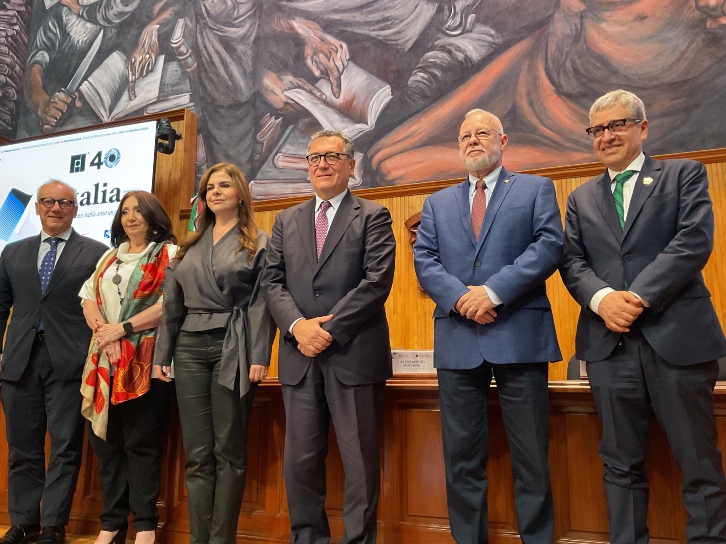
William E. Miranda Torres, alcalde del municipio de Caguas Puerto Rico, Luis García Montero, director del Instituto Cervantes, Wilnelia Merced, Magali O. Ramis e Israel Rolón Barada. FOTOS: IRB.