
HERITAGE. Memory that fades away in silence
LA NOTA BREVE
Columna de Opinión
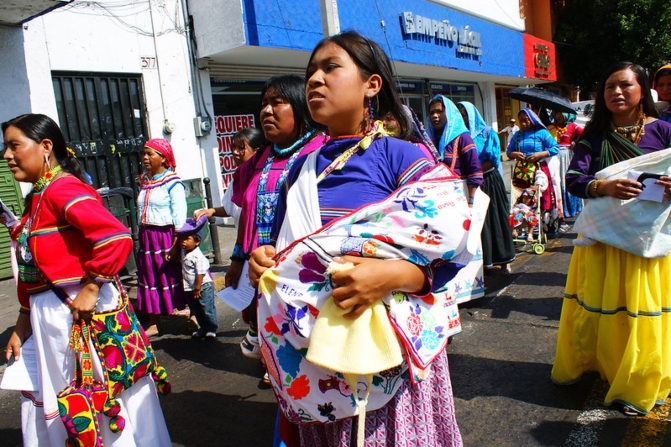
Madres Wixaritari, de Jalisco. Foto: ESPECIAL
Por Enrique Vázquez Lozano

Guadalajara, Jalisco
27 de febrero 2026
A propósito del 21 de febrero, Día Internacional de la Lengua Materna, hay una estadística que debería ocupar las primeras planas con la misma urgencia que el cambio climático o la pérdida de biodiversidad: cada dos semanas desaparece una lengua en el mundo.
No es una metáfora ni una exageración. Es una realidad documentada por la UNESCO y respaldada por bases de datos lingüísticas como Ethnologue, que desde hace décadas registran el estado de salud de los idiomas del planeta.
Cuando una lengua deja de hablarse, no desaparecen únicamente palabras. Se extingue una forma de comprender la realidad. Se apaga una memoria colectiva construida durante siglos y, con ella, una manera irrepetible de nombrar el universo.
Hoy se calcula que existen entre 6,900 y 7,200 lenguas vivas en el mundo. De ese universo lingüístico, alrededor de 4,000 a 4,500 corresponden a lenguas indígenas u originarias, mientras que el resto pertenece a lenguas nacionales, regionales o mayoritarias como el español, el inglés, el árabe, el hindi o el chino mandarín.
Conviene aclarar un concepto que suele prestarse a confusión. Una lengua materna no constituye una categoría distinta de idioma; es, sencillamente, la primera lengua que una persona aprende durante la infancia. En consecuencia, hablar de lenguas maternas es hablar de todas las lenguas vivas del planeta, porque cada una representa la primera voz de alguien, el idioma del hogar, de la familia y de la identidad.
Sin embargo, detrás de esta riqueza lingüística se esconde una fragilidad creciente.
La UNESCO estima que más del 40% de las lenguas del mundo se encuentra en peligro de desaparición. Si se toma como referencia un universo cercano a las siete mil lenguas vivas, significa que alrededor de tres mil idiomas atraviesan distintos niveles de riesgo, desde la vulnerabilidad hasta la extinción inminente.
No es un problema menor ni exclusivo de comunidades remotas. Es una transformación global que ocurre frente a nuestros ojos.
La diversidad humana tampoco puede entenderse únicamente a partir de los Estados nacionales. Paralelamente a las fronteras políticas existen miles de pueblos originarios que conservan historias, territorios y sistemas lingüísticos propios. Las estimaciones utilizadas por organismos internacionales, entre ellos Naciones Unidas y diversas instituciones especializadas en estudios etnolingüísticos, calculan la existencia de entre 4,000 y 6,000 pueblos indígenas en el planeta, con un promedio cercano a 5,000 grupos culturalmente diferenciados.
Pero lengua y pueblo no siempre significan lo mismo.
Un pueblo puede hablar varias lenguas. Distintas comunidades pueden compartir un mismo idioma. Incluso una sola lengua puede presentar variantes tan diferentes que sus hablantes apenas logran comprenderse entre sí. La realidad lingüística nunca ha obedecido a clasificaciones rígidas; es un entramado dinámico moldeado por migraciones, intercambios culturales y procesos históricos que abarcan siglos.
Lo verdaderamente preocupante es que ese entramado comienza a romperse.
Las causas son múltiples y responden a procesos estructurales de alcance mundial. La globalización ha fortalecido el predominio de unas cuantas lenguas utilizadas en la economía, la ciencia y la tecnología. Los sistemas educativos de numerosos países privilegiaron durante décadas una sola lengua oficial, relegando los idiomas locales. La televisión, internet y las redes sociales amplifican los contenidos producidos en idiomas mayoritarios, mientras las lenguas minoritarias apenas encuentran espacios de difusión.
A ello se suma la migración hacia las ciudades, donde muchas familias abandonan su lengua de origen para facilitar la integración social o laboral. Quizá el factor más determinante sea la ruptura de la transmisión intergeneracional: cuando los hijos dejan de aprender el idioma de sus padres y abuelos, la lengua entra en un proceso de desaparición que puede consumarse en apenas una o dos generaciones.
Durante mucho tiempo, además, numerosos pueblos indígenas enfrentaron políticas de asimilación que asociaban sus idiomas con el atraso o la falta de oportunidades. El estigma social aceleró un abandono que hoy resulta extremadamente difícil revertir.
Guadalajara, Jalisco
February 27, 2026
A propósito del 21 de febrero, Día Internacional de la Lengua Materna, hay una estadística que debería ocupar las primeras planas con la misma urgencia que el cambio climático o la pérdida de biodiversidad: cada dos semanas desaparece una lengua en el mundo.
This is not a metaphor or an exaggeration. It is a reality documented by UNESCO and supported by linguistic databases such as Ethnologue, which have been recording the state of the world’s languages for decades.
When a language ceases to be spoken, it is not just words that disappear. A way of understanding reality is extinguished. A collective memory built over centuries fades away, and with it, a unique way of naming the universe.
Today, it is estimated that there are between 6,900 and 7,200 living languages in the world. Of that linguistic universe, around 4,000 to 4,500 correspond to indigenous or native languages, while the rest belong to national, regional, or majority languages such as Spanish, English, Arabic, Hindi, or Mandarin Chinese.
It is important to clarify a concept that is often misunderstood. A mother tongue does not constitute a distinct category of language; it is simply the first language a person learns during childhood. Consequently, to speak of mother tongues is to speak of all the living languages of the planet, because each one represents someone’s first voice, the language of home, family, and identity.
However, behind this linguistic richness lies a growing fragility.
UNESCO estimates that more than 40% of the world’s languages are in danger of disappearing. If we take as a reference point a universe of nearly seven thousand living languages, this means that around three thousand languages face varying levels of risk, from vulnerability to imminent extinction.
This is not a minor problem, nor is it exclusive to remote communities. It is a global transformation unfolding before our very eyes.
Human diversity cannot be understood solely through the lens of nation-states. Alongside political borders, thousands of Indigenous peoples exist, preserving their own histories, territories, and linguistic systems. Estimates used by international organizations, including the United Nations and various institutions specializing in ethnolinguistic studies, calculate the existence of between 4,000 and 6,000 Indigenous peoples on the planet, with an average of nearly 5,000 culturally distinct groups.
But language and people do not always mean the same thing.
A people can speak several languages. Different communities can share the same language. Even a single language can have such distinct variants that its speakers can barely understand each other. Linguistic reality has never adhered to rigid classifications; it is a dynamic framework shaped by migrations, cultural exchanges, and historical processes spanning centuries.
What is truly worrying is that this framework is beginning to unravel.
The causes are multiple and stem from structural processes of global scope. Globalization has strengthened the dominance of a few languages used in the economy, science, and technology. For decades, the education systems of many countries privileged a single official language, relegating local languages. Television, the internet, and social media amplify content produced in majority languages, while minority languages find little space for dissemination.
Added to this is migration to cities, where many families abandon their native language to facilitate social or professional integration. Perhaps the most decisive factor is the breakdown of intergenerational transmission: when children stop learning the language of their parents and grandparents, the language enters a process of disappearance that can be completed in just one or two generations.
For a long time, moreover, many Indigenous peoples faced assimilation policies that associated their languages with backwardness or a lack of opportunities. The social stigma accelerated an abandonment that is now extremely difficult to reverse.
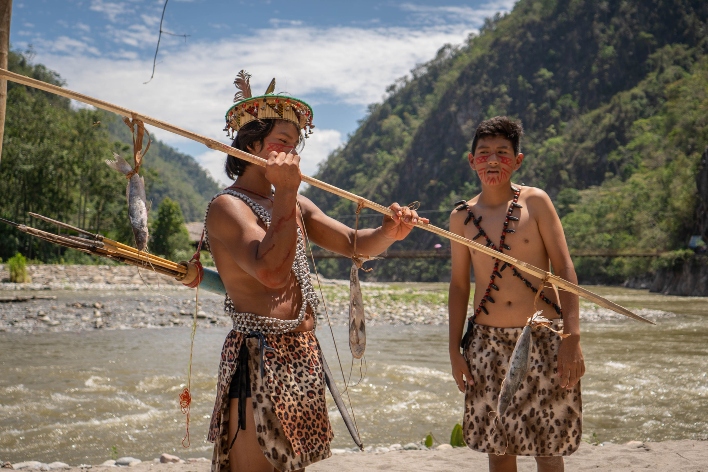
REDUCIR UNA LENGUA A UN DICCIONARIO SERIA UN ERROR DE ENORMES PROPORCIONES
Cada idioma contiene conocimientos ecológicos acumulados durante siglos, formas particulares de interpretar la naturaleza, sistemas de parentesco, tradiciones orales, memoria histórica y conceptos que no siempre encuentran equivalencias en otras lenguas. Existen pueblos capaces de distinguir con precisión decenas de especies vegetales, ciclos climáticos o comportamientos de los animales mediante palabras imposibles de traducir sin perder parte de su significado.
Por ello, la desaparición de una lengua constituye también una pérdida para la ciencia, la historia y el conocimiento ambiental.
Los casos críticos se multiplican en todos los continentes. Entre las lenguas cuya supervivencia enfrenta escenarios extremos se encuentran el ainu, en Japón; el yuchi, en Estados Unidos; el eyak, en Alaska; el N|uu, en Sudáfrica; el chamicuro, en Perú; el kawésqar y el yagán, en el extremo sur de Chile.
América Latina concentra buena parte de esta emergencia lingüística. Idiomas como el resígaro, el muniche, el aikanã, el ofayé, el xetá o el sápara cuentan hoy con un número reducido de hablantes y dependen de programas de revitalización para evitar su desaparición.
México representa uno de los mayores patrimonios lingüísticos del continente y, al mismo tiempo, uno de los escenarios donde la conservación resulta más desafiante. Lenguas como el ayapaneco, el kiliwa, el paipai, algunas variantes del otomí, del chinanteco, del zoque, del chontal de Oaxaca y del tepehua figuran entre aquellas que requieren acciones urgentes para garantizar su continuidad.
La paradoja resulta inevitable. Nunca antes la humanidad había contado con tantas herramientas para comunicarse y, sin embargo, nunca había sido tan acelerado el proceso de homogeneización lingüística.
El verdadero patrimonio de una lengua no reside únicamente en su gramática, sino en la experiencia humana que resguarda. En cada idioma sobreviven canciones, rituales, técnicas agrícolas, medicina tradicional, relatos fundacionales, formas de convivencia y maneras distintas de responder preguntas esenciales: quiénes somos, de dónde venimos y cómo entendemos nuestro lugar en el mundo.
La desaparición de una lengua no empobrece solamente a la comunidad que la hablaba. Nos empobrece a todos. Reduce el repertorio de ideas con las que la humanidad interpreta la realidad y limita la extraordinaria capacidad del ser humano para imaginar el mundo desde perspectivas distintas.
La UNESCO insiste en que proteger las lenguas implica proteger el patrimonio cultural inmaterial de la humanidad. No se trata de conservar piezas de museo, sino de garantizar que millones de personas puedan seguir transmitiendo a sus hijos el idioma en el que aprendieron a nombrar la vida.
En un tiempo dominado por la velocidad, la tecnología y la uniformidad cultural, quizá la mayor forma de resistencia continúe siendo la más antigua: hablar la lengua de los abuelos. Porque mientras una lengua siga viva, también seguirá viva una manera única e irrepetible de entender el mundo.
REDUCING A LANGUAGE TO A DICTIONARY WOULD BE A COLOSSAL MISTAKE
Each language contains ecological knowledge accumulated over centuries, unique ways of interpreting nature, kinship systems, oral traditions, historical memory, and concepts that don’t always have equivalents in other languages. Some peoples are able to precisely distinguish dozens of plant species, climatic cycles, or animal behaviors using words that are impossible to translate without losing part of their meaning
Therefore, the disappearance of a language also constitutes a loss for science, history, and environmental knowledge.
Critical cases are multiplying on every continent. Among the languages whose survival faces extreme scenarios are Ainu in Japan; Yuchi in the United States; Eyak in Alaska; Nuuu in South Africa; Chamicuro in Peru; and Kawésqar and Yagán in southern Chile.
Latin America is home to a significant portion of this linguistic crisis. Languages such as Resígaro, Muniche, Aikanã, Ofayé, Xetá, and Sápara have a small number of speakers today and depend on revitalization programs to prevent their disappearance.
Mexico represents one of the continent’s greatest linguistic heritages and, at the same time, one of the places where conservation is most challenging. Languages such as Ayapaneco, Kiliwa, Paipai, some variants of Otomi, Chinantec, Zoque, Oaxacan Chontal, and Tepehua are among those that require urgent action to guarantee their continuity.
The paradox is unavoidable. Never before has humanity had so many tools to communicate, and yet the process of linguistic homogenization has never been so rapid.
The true heritage of a language lies not only in its grammar but also in the human experience it safeguards. In every language survive songs, rituals, agricultural techniques, traditional medicine, foundational stories, ways of living together, and distinct ways of answering essential questions: who are we, where do we come from, and how do we understand our place in the world?
The disappearance of a language doesn’t just impoverish the community that spoke it. It impoverishes us all. It reduces the repertoire of ideas with which humanity interprets reality and limits the extraordinary human capacity to imagine the world from different perspectives.
UNESCO insists that protecting languages means protecting the intangible cultural heritage of humanity. It’s not about preserving museum pieces, but about ensuring that millions of people can continue to pass on to their children the language in which they learned to name life.
In a time dominated by speed, technology, and cultural uniformity, perhaps the greatest form of resistance remains the oldest: speaking the language of our ancestors. Because as long as a language lives on, so too will a unique and irreplaceable way of understanding the world.
El contenido y las opiniones expresadas en este texto son responsabilidad exclusiva