
Músico y escritor/Musician and Writer
Entrevista/Interview
“El arte es lo que nos redime y salva como seres humanos”
Art is what redeems and saves us as human beings
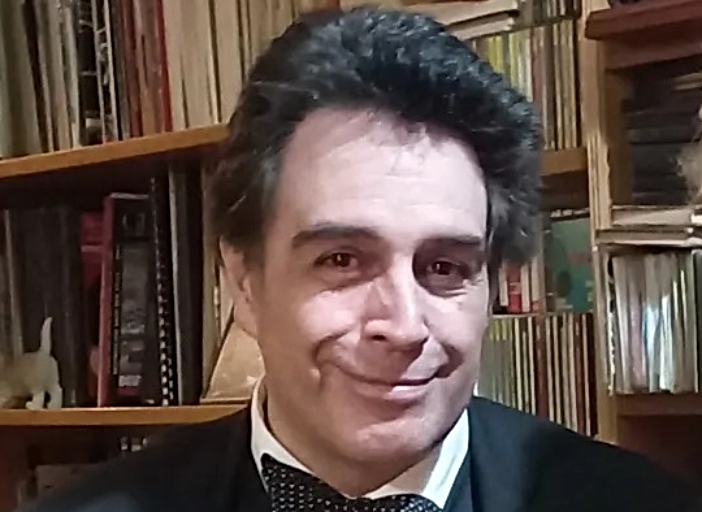
El Instituto Cultural México-Israel A. C rindió un homenaje el pasado 26 de noviembre de 2025 en su sede de la Ciudad de México al Compositor, escritor y director de orquesta Sergio Berlioz
The Mexico-Israel Cultural Institute paid tribute on November 26, 2025, at its headquarters in Mexico City to composer, writer, and conductor Sergio Berlioz.
Enrique Vázquez Lozano /Guadalajara

Sergio Berlioz, compositor, escritor y director de orquesta charló con este medio sobre sus más recientes proyectos y la satisfacción de compartir el homenaje que le rindió el Instituto Cultural México-Israel A. C por su trayectoria docente y que incluyó la interpretación de un puñado de obras de cámara escritas en diversos periodos de su trayectoria.
¿Cómo se siente con este homenaje que le rinde ahora el Instituto Cultural México-Israel A. C?
Soy escritor y compositor, esa es la esencia neutral de mi producción artística. Soy la abeja que va llenando panales de miel, ese néctar que extraigo de mi experiencia, de los viajes que he tenido. Entonces, aunque el receptáculo está en mi producción artística, en el camino se me dio la oportunidad de compartir el conocimiento desde muy joven, cuando era un adolescente de secundaria que ya tocaba como solista en una orquesta y en el colegio en el que estaba no había maestro de música. El director se quedó maravillado con lo que hacía y me invitó. Siempre he considerado que esa decisión fue algo improvisada y tal vez imprudente de su parte, pero me pareció muy bello que confiara en mí. Nunca falté a clases ni como maestro, ni como alumno. Di clases de Música, Apreciación Artística, luego comencé a dar conferencias de Literatura, Historia y diversas materias. Hoy agradezco mucho ese gesto porque así inicié una trayectoria docente que en realidad he conservado ya durante más de 50 años. En esta institución que me otorga este reconocimiento son 30 años, pero he dado clases, conferencias y charlas en muchas otras instituciones, tanto en México como en varios países de América y Europa.
¿Fue entonces esta incursión como docente que le llevó también a destacar como comunicador y obtener el Premio Nacional de Periodismo en 1989?
Sí, de alguna forma, porque cuando me explico las cosas, las explico para los demás y cuando las explico para los demás me lo explico para mí. Aunque el detonante hacia el periodismo considero que fue en el momento en que quise emular al director Jorge Velazco que escribía las notas introductorias de los conciertos que dirigía. Me pareció muy buena idea y comencé a hacer lo mismo. En ese deseo de que el público se enterara de las obras que yo dirigía, de repente esas notas ya no quedaban sólo en el programa de mano de los conciertos. En cierto momento ya estaba escribiendo colaboraciones para El Universal y Excélsior. Luego ya no eran notas sólo de música, ya abordaba otros temas, incluso de política internacional en Medio Oriente y Europa del Este porque conozco bien esos países, porque he vivido ahí, en temporadas. Luego vino una faceta de 18 años de hacer radio en las extintas Radio Red y Radio Mil al lado de Verónica Medina y Mario Méndez Acosta. Era un programa semanal en el que los tres dábamos vida a un programa de dos horas y hablábamos de todo: Arte, Biología, Matemáticas, Historia.
¿Cómo escogió las piezas que se interpretaron en este homenaje?
En este reconocimiento participaron varias personas que deseaban hablar de las diversas facetas de mi trabajo como la escritora Sophie Goldberg, el crítico musical y mi biógrafo, Hugo Roca Joglar y el periodista y director de la Revista Etcétera, Marco Levario Turcott. Para la ocasión escogí el Décimo quinto Cuarteto de cuerdas “Viaje a Guernsey”, Opus. 87 (2025), lleva este título por que Guernsey es el lugar de exhilio de Victor Hugo, ahí escribió Los Miserables, huyendo del autogolpe de estado que se dio Napoleón III. Recordemos que Victor Hugo tuvo que salir huyendo porque era enemigo de esas ideas. Esta obra es un viaje interior en el que reflexiono sobre el exilio. Tarde o temprano, en la vida los excrementos terminan cayendo, las cosas buenas no sé si se vayan al cielo, pero son más ligeras. Esta pieza está dedicada a Turcott, que para mí es un punto de referencia importante en el ámbito periodístico de México. La interpretación corrió a cargo del Cuarteto Fundamental integrado por Carlos Gándara, en el Violín I, Alma Osorio en el Violín II, Erika Ramírez en la Viola y Mónica del Águila en el violonchelo.
En lo que se refiere a Temor a la nostalgia” para oboe solo, Opus. 34 (2007) y “Other echoes inhabit the garden” (Otros ecos habitan el jardín) Fantasía para corno inglés solo, Opus. 54 (2011) interpretadas por Carlos Santos, son obras que escribí hace diez años. Para mí escribir un cuarteto de cuerdas es como elaborar un colorido lienzo al óleo, mientas que escribir obra para estos instrumentos solos, es como mostrar dibujos.
Por otro lado están Tres postales para oboe y doble orquesta de cuerdas, Opus. 2 (2000-01). (En el aeropuerto de Frankfort, En el tren rumbo a Budapest y En el café Kafka, en Praga), escritas hace casi 25 años. Las tres obras representan de alguna manera una retrospectiva de mi producción musical de obras de cámara porque la temporalidad en que fueron elaboradas. Me entusiasma que se van a filmar y que se puedan compartir porque como dijo Einstein: “El valor de un hombre se mide, no por lo que es capaz de recibir, sino por lo que es capaz de dar. Siempre he compartido lo que tengo con otras personas.
¿Cómo ha cambiado su forma de hacer música a lo largo de todos estos años?
Después de estar con Pierre Boulez en Nueva York, tuve una gran amistad con Penderecki y fui asistente de Leonard Bernstein. También conocí a Carlos Chávez siendo un chamaco, todos ellos han influido de una u otra forma en mi noción de lo que es componer. Cuando conocí a Boulez escribí varias piezas de vanguardia. Conforme creaba y creaba en esa vertiente llegó el momento en que al escuchar mi música me recorría un sudor frío en la espalda. El golpe final vino en 1989 cuando estrené un noneto para cuerdas en la Ciudad de México e invité al concierto a mi amigo Gabriel García Márquez. Al terminar el concierto, me felicitó, pero le ví la cara y vi algo extraño. Me apartó de los demás y me dijo: Felicidades buen esfuerzo pero, no eres tú. Tu eres un hombre muy cálido, muy simpático y esta música no refleja nada de lo que eres. En esa pieza me parece que hay puro cerebro, no es mi amigo Berlioz, él no está aquí. Gabo era un enamorado de la música de concierto, por él conocí la música de Leoš Janáček. En múltiples ocasiones hablamos de la muerte de Mozart y diversos temas musicales siempre. Después pasó el tiempo y en 1995 la Universidad Metropolitana me pidió que escribiera una obra sobre El holocausto. Se cumplían 50 años, me comisionó la obra y escribí el Cuarteto de cuerdas Izkor. Ahí ya no era escribir cosas locas. A los 20 años escribí Poliespejismos Tetracórdicos, que digamos no significan nada. Cuando me enfrenté a escribir este cuarteto era hablar de una cosa muy tensa, de algo que le había pasado a mi familia. Mi tendencia vanguardista, se aclaró y decidí ser más honesto y comenzó a fluir un discurso musical en donde mezclaba lenguaje tonal, modal, rico en colores, con guiños vanguardistas. Desde entonces creo, escribo exactamente como quiero escribir. Tal vez me acusen de conservador… Que digan lo que quieran, ahora compongo lo que a mí me gustaría escuchar como me enseñaron Eduardo Mata y Mario Lavista”.
¿Por qué seguir creando’
Mi naturaleza es así. Lo que hago es importante. Decía el gran poeta francés René Char, solo nos queda un recurso ante la muerte, hacer arte antes que ella. Promuevo el arte porque es una forma de conocimiento, de esperanza, de libertad, es un paquete en donde está todo lo que es la esencia del ser humano. Hacer arte es llevar luz como Prometeo, aunque lo encadenen para devorarle las entrañas las águilas. Prometeo sabiendo que enfurecería a los dioses trayendo el fuego a los mortales, lo hizo. Yo lo que hago como compositor e intérprete es tratar de crear belleza, no basura. Decir la verdad hasta donde puedo. En ocasiones me he equivocado y he dicho mentiras como todos. Trato de no equivocarme tanto. En mi música es el lugar donde trato de mostrarme como soy. En estos momentos oscuros de incertidumbre por los que pasa el mundo. El arte es lo que nos redime y salva como seres humanos. Hay tres razones por las que no me perdería en la nada, por voluntad propia: Los miserables de Víctor Hugo, la Capilla Sixtina de Miguel Ángel y la Novena Sinfonía de Beethoven. Cada quien es libre de escoger su salvavidas, lo que le mantiene a flote en la vida y le da una razón para seguir adelante.
.
Sergio Berlioz, composer, writer, and conductor, spoke with this publication about his most recent projects and his satisfaction in sharing the tribute paid to him by the Mexico-Israel Cultural Institute for his teaching career, which included the performance of a selection of chamber works written at various periods of his career.
How do you feel now about this tribute from the Mexico-Israel Cultural Institute?
I am a writer and composer; that is the neutral essence of my artistic output. I am the bee that fills honeycombs, that nectar I extract from my experience, from the journeys I have taken. So, although the vessel is in my artistic production, along the way I was given the opportunity to share knowledge from a very young age, when I was a high school student already playing as a soloist in an orchestra, and the school I attended didn’t have a music teacher. The principal was amazed by what I did and invited me to join. I have always considered that decision somewhat improvised and perhaps imprudent on his part, but I found it very kind of him to trust me. I never missed a class, neither as a teacher nor as a student. I taught Music, Art Appreciation, and then I began giving lectures on Literature, History, and various other subjects. Today I am very grateful for that gesture because that’s how I began a teaching career that I have actually maintained for more than 50 years. I have been with this institution that is giving me this recognition for 30 years, but I have given classes, lectures and talks at many other institutions, both in Mexico and in several countries in America and Europe.
Was it then this foray into teaching that also led you to excel as a communicator and win the National Journalism Prize in 1989?
Yes, in a way, because when I explain things to myself, I explain them to others, and when I explain them to others, I explain them to myself. Although I think the catalyst for my move into journalism was when I wanted to emulate conductor Jorge Velazco, who wrote the introductory notes for the concerts he conducted. I thought it was a great idea and started doing the same. In that desire for the public to learn about the works I was conducting, those notes suddenly stopped being just in the concert programs. At a certain point, I was already writing articles for El Universal and Excélsior. Then they weren’t just about music anymore; I started covering other topics, even international politics in the Middle East and Eastern Europe, because I know those countries well, having lived there for periods of time. Then came an 18-year stint in radio at the now-defunct Radio Red and Radio Mil, alongside Verónica Medina and Mario Méndez Acosta. It was a weekly program in which the three of us brought to life a two-hour show and talked about everything: Art, Biology, Mathematics, History.
How did you choose the pieces performed in this tribute?
This recognition was attended by several people who wanted to talk about the various facets of my work, such as the writer Sophie Goldberg, the music critic and my biographer, Hugo Roca Joglar, and the journalist and director of Etcétera Magazine, Marco Levario Turcott. For the occasion, I chose the Fifteenth String Quartet, “Voyage to Guernsey,” Opus. 87 (2025). It bears this title because Guernsey is the place of exile for Victor Hugo, where he wrote Les Misérables, fleeing the self-coup staged by Napoleon III. Let us remember that Victor Hugo had to flee because he was an enemy of those ideas. This work is an inner journey in which I reflect on exile. Sooner or later, in life, the dregs eventually fall to the ground; I don’t know if the good things go to heaven, but they are lighter. This piece is dedicated to Turcott, who for me is an important point of reference in the field of journalism in Mexico. The performance was given by the Cuarteto Fundamental, composed of Carlos Gándara on Violin I, Alma Osorio on Violin II, Erika Ramírez on Viola, and Mónica del Águila on cello.
Regarding «Fear of Nostalgia» for solo oboe, Opus. 34 (2007) and «Other Echoes Inhabit the Garden,» a Fantasy for solo English horn, Opus. 54 (2011), performed by Carlos Santos, these are works I wrote ten years ago. For me, writing a string quartet is like creating a colorful oil painting, while writing works for these instruments alone is like showing drawings.
On the other hand, there are Three Postcards for Oboe and Double String Orchestra, Opus. 2 (2000-01). (At Frankfurt Airport, On the Train to Budapest, and At Kafka Café in Prague), written almost 25 years ago. The three works represent, in a way, a retrospective of my musical output of chamber works because of the time in which they were composed. I’m thrilled that they’re going to be filmed and shared because, as Einstein said, «A man’s worth is measured not by what he is capable of receiving, but by what he is capable of giving.» I’ve always shared what I have with others.
How has your approach to making music changed over all these years?
After being with Pierre Boulez in New York, I became great friends with Penderecki and was Leonard Bernstein’s assistant. I also met Carlos Chávez when I was just a kid; all of them have influenced my understanding of composition in one way or another. When I met Boulez, I wrote several avant-garde pieces. As I continued to create in that vein, there came a point when listening to my own music would send a cold sweat down my back. The final blow came in 1989 when I premiered a nonet for strings in Mexico City and invited my friend Gabriel García Márquez to the concert. After the concert, he congratulated me, but I looked at his face and saw something strange. He took me aside and said, «Congratulations, good effort, but it’s not you. You’re a very warm, very charming man, and this music doesn’t reflect anything about you. In that piece, it seems to me there’s only brainpower; it’s not my friend Berlioz, he’s not here.» Gabo was a lover of concert music; it was through him that I discovered the music of Leoš Janáček. We often talked about Mozart’s death and various other musical topics. Then, in 1995, the Metropolitan University asked me to write a work about the Holocaust. It was the 50th anniversary. They commissioned the work, and I wrote the Izkor String Quartet. By then, it wasn’t about writing crazy things anymore. When I was 20, I wrote Tetracordic Polymirisms, which, let’s say, don’t mean anything. When I faced writing this quartet, it was about addressing a very tense matter, something that had happened to my family. My avant-garde tendencies became clearer, and I decided to be more honest. A musical discourse began to flow, blending tonal and modal language, rich in color, with avant-garde touches. Since then, I believe I write exactly as I want to write. Perhaps they’ll accuse me of being conservative… Let them say what they want; now I compose what I would like to hear, as Eduardo Mata and Mario Lavista taught me.»”Eduardo Mata and Mario Lavista taught me.»
Why continue creating?
This is my nature. What I do is important. As the great French poet René Char said, we only have one recourse in the face of death: to make art before it comes. I promote art because it is a form of knowledge, of hope, of freedom; it is a package that contains everything that is the essence of being human. To make art is to bring light like Prometheus, even if he is chained up to be devoured by eagles. Prometheus, knowing that he would anger the gods by bringing fire to mortals, did it anyway. What I do as a composer and performer is try to create beauty, not garbage. To tell the truth as far as I can. Sometimes I have made mistakes and told lies, like everyone else. I try not to make too many mistakes. My music is the place where I try to show myself as I am, especially in these dark and uncertain times the world is going through. Art is what redeems and saves us as human beings. There are three reasons why I wouldn’t lose myself in nothingness of my own free will: Victor Hugo’s Les Misérables, Michelangelo’s Sistine Chapel, and Beethoven’s Ninth Symphony. Everyone is free to choose their lifeline, what keeps them afloat in life and gives them a reason to keep going.





 balsiaproducciones.com.mx