Archivo de la categoría: art

Nueva exposición artística contemporánea apoya la cultura indígena en los EEUU


Columna de Opinión

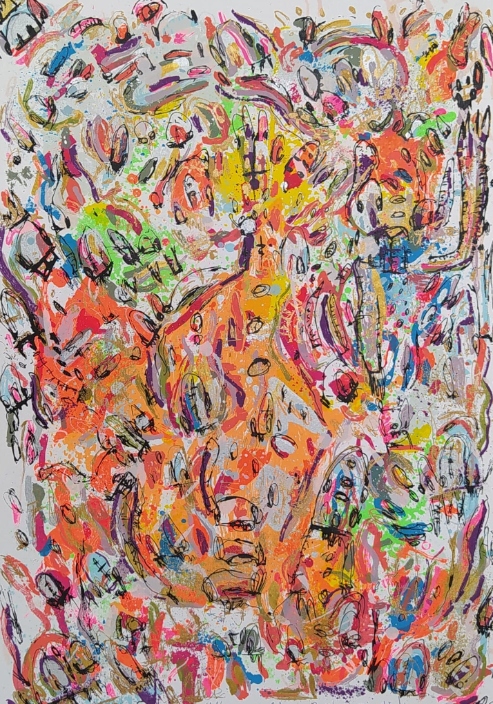
FICHA TÉCNICA DE LA OBRA DE GEORGE MORRISON
George Morrison. Ojibwe; nació en Chippewa City, Minnesota, en 1919; falleció en Red Rock, Minnesota, en 2000. Sin título, 1962. Óleo sobre lienzo. Colección de Barbara Pereyma-Farrara. «Pasé por una época en la que usaba pintura espesa… Esto le daba más inmediatez a la pintura… mostrando el espesor y el movimiento del pigmento… Esta era mi versión de la pintura gestual, similar a la que practicaban otros expresionistas abstractos como (Jackson) Pollock y (Willem) de Kooning. Puede que haya una sugerencia de temática… pero el fenómeno de la pintura era lo que realmente representaba la pintura». George Morrison / George Morrison. Ojibwe; born 1919 in Chippewa City, MN; died 2000 in Red Rock, MN. Untitled, 1962. Oil on canvas. Collection of Barbara Pereyma-Farrara. “I went through a period of using thick paint… This gave more immediacy to the painting… showing the thickness and movement of the pigment… This was my version of gestural painting, which the other abstract expressionists like (Jackson) Pollock and (Willem) de Kooning were doing. There might be a suggestion of subject matter… but the phenomenon of paint was what the painting was really about”. George Morrison. Foto: ISRAEL ROLÓN BARADA

Por Israel Rolón Barada.

Boston, 8 de octubre de 2025

Tan innovadora en tantos sentidos, Boston fue la creadora del primer tranvía subterráneo, primer sistema de calefacción, entre tantas otras cosas, en los EEUU, hoy da comienzo en uno de sus más preciosos museos, el INSTITUTO DE ARTE CONTEMPORÁNEO / BOSTON (con las siglas de ICA) a una nueva e innovadora colección con el título de “UNA PRESENCIA INDÍGENA”.

La exposición artística ha sido inspirada en un libro, homónimo, titulado precisamente “AN INDIGENOUS PRESENT”, editado y publicado por el curador Jeffrey Gibson en 2023. Alejándose de una perspectiva histórica, en palabras del propio Gibson: “la colección que el museo presenta a sus visitantes está basada principalmente en artistas como MARY SULLY y GEORGE MORRISON, y el legado abstracto de ambos maestros.

Entonces, aunque en esta ocasión presentan un recorrido de varias décadas de producción artística, incluyendo diferentes voces y acercamientos de gran valor en el universo del arte y las culturas indígenas norteamericanas contemporáneas, como por ejemplo, Caroline Monnet, Sky Hopinka o Jenelle Porter, quienes intentan y persiguen conectar e integrar su presencia artística a través de su arte y sus diferentes trasfondos ancestrales dentro del arte moderno contemporáneo estadounidense, la preciosa y colorida exposición se enfoca en el legado de Sully y Morrison. La muestra integra la obra de 15 artistas.

La artista autodidacta MARY SULLY nació en Dakota del Sur en 1896, y su colega GEORGE MORRISON nació en la ciudad de Chippewa, en 1919.

El magistral evento cultural y artístico que el Instituto de Arte Contemporáneo de Boston presenta al público en esta ocasión, se extiende desde mañana, 9 de octubre de este año, hasta el 8 de marzo de 2026.

Por medio del apoyo de varias instituciones, el museo procura apoyar, promover, y dar a conocer la conexión del trasfondo histórico y las raíces culturales de diferentes grupos y sociedades indígenas dentro de los EEUU desde cientos de años atrás.

Además de la preciosa colección, desde sus modernas instalaciones, el museo ofrece una vista espectacular a la bahía, difícil de encontrar en otros museos norteamericanos. Una gran experiencia multicultural en todos los sentidos. El ICA de Boston, una vez más, establece las pautas, la novedad, y un buen ejemplo a seguir para el resto de las comunidades artísticas e intelectuales dentro de la gran diversidad sociocultural contemporánea que ofrecen las principales ciudades norteamericanas.

Philadelphia, September 23th, 2025

Innovative in so many ways, Boston was the creator of the first underground cable car, the first heating system, among many other things, in the US. Today, one of its most beautiful museums, the INSTITUTE OF CONTEMPORARY ARTS / BOSTON (ICA), opens a new and innovative collection entitled «AN INDIGENOUS PRESENCE.»

The art exhibition was inspired by a book of the same name, titled “AN INDIGENOUS PRESENT,” edited and published by curator Jeffrey Gibson in 2023. Moving away from a historical perspective, in Gibson’s own words: “The collection that the museum presents to its visitors is based primarily on artists such as MARY SULLY and GEORGE MORRISON, and the abstract legacy of both masters.”

So, although on this occasion they present a journey through several decades of artistic production, including different voices and approaches of great value in the universe of contemporary North American Indigenous art and cultures, such as Caroline Monnet, Sky Hopinka, and Jenelle Porter, who attempt to connect and integrate their artistic presence through their art and their different ancestral backgrounds within contemporary American modern art, the beautiful and colorful exhibition focuses on the legacy of Sully and Morrison. The exhibition includes the work of 15 artists.

The self-taught artist MARY SULLY was born in South Dakota in 1896, and her colleague GEORGE MORRISON was born in Chippewa City, in 1919.

The masterful cultural and artistic event that the Institute of Contemporary Art Boston presents to the public on this occasion runs from tomorrow, October 9th of this year, until March 8th, 2026.

Through the support of several institutions, the museum seeks to support, promote, and raise awareness of the connection between the historical background and cultural roots of different Indigenous groups and societies within the United States for hundreds of years.

In addition to its precious collection, the museum offers a spectacular view of the bay from its modern facilities, difficult to find in other North American museums. A great multicultural experience in every sense. The ICA Boston, once again, sets the standard, is innovative, and a good example to follow for the rest of the artistic and intellectual communities within the great contemporary sociocultural diversity offered by major North American cities.

Otras imágenes del catálogo de la exposición AN INDIGENOUS PRESENT y aspectos exteriores del paisaje en el que está enclavado el recinto / Other images from the catalogue of the exhibition AN INDIGENOUS PRESENT and exterior aspects of the landscape in which the site is located. Fotos: IRB

El contenido y las opiniones expresadas en este texto son responsabilidad exclusiva

CONSULTA AQUÍ OTRAS COLUMNAS DE ISRAEL ROLÓN BARADA

Arte. El MUSA exhibe Fábulas Fantásticas


Esta versión de la exhibición que se presentó por primera vez en la Casa de México en España en 2010, tiene un particular acento jalisciense, contiene siete piezas inéditas del acervo del MAM que no se habían mostrado antes y puede apreciarse del 29 de agosto al 6 de enero en Juárez 975

Enrique Vázquez Lozano / Guadalajara

El Museo de las Artes de la Universidad de Guadalajara (MUSA de la UdeG), exhibe desde el 29 de agosto y hasta el 4 de enero de 2026, la muestra Fábulas Fantásticas que se compone de cerca de 70 piezas de 40 artistas de la colección del Museo de Arte Moderno (MAM) de la Ciudad de México, entre collage, dibujo, esculturas, estampas, fotografías, impresiones y pinturas y una instalación.

Carlos Segoviano, curador asociado del MAM compartió que esta exhibición se estrenó en la Casa de México en España en Madrid en 2010 , después se presentó en 2023 en el MAM y este año comenzó en abril una itinerancia regional. Primero se presentó en el marco del Festival Cultural de Zacatecas en el Antiguo Templo de San Agustín y ahora está en el MUSA hasta enero, con la idea de trasladarla después al Museo de Arocena en Torreón.   

“Nos interesa que una colección como la nuestra que se compone de más de 3 mil piezas pueda ser vista por el mayor número de público en México  ya que es un legado para todos quienes vivimos en este país”, dijo Segoviano  quien añadió que la muestra está dividida en tres núcleos: “Es en el primer núcleo donde se observan imágenes del Día de Muertos, por ejemplo, como en un cuadro de Cordelia Urueta donde la muerte acompaña a una niña hacia el final de sus días. Otra sección alude a la magia de los hechizos, donde conviven los ritos, los sacerdotes y el pensamiento metafísico con los chamanes, brujos, magas y astrónomas, quienes alcanzan una visión más allá de la realidad común…Uno más alberga seres y figuras que rebasan lo real, mismos que son percibidos como experiencias presentes y acompañantes en distintos planos y como parte de una existencia que parece un camino hacia lo distinto. Como ejemplo, están los personajes de Francisco Toledo, entre lo zoomorfo y lo humano, así como las imágenes de José Luis Cuevas, entre otras y otros”.

En la perspectiva de Segoviano “cada una de las muestras ha tenido cambios y transformaciones en este caso quisimos darle peso a los artistas locales como Juan Soriano, Lola Álvarez Bravo, Sofía Echeverri, Carlos Orozco Romero, Jesús Guerrero Galván y Javier Kutz. La muestra abre con una donación de una pieza de Raúl Anguiano, una pieza que no se ha mostrado aún en el MAM y por eso curatorialmente decidí que esta pieza recibiera a los visitantes al inicio, también porque establece un diálogo con obras de Goya. Además de esta pieza hay otra más que donó la familia Anguiano y otras cinco de varios artistas que fueron donadas por la familia del crítico de arte Luis Carlos Emerich, recién fallecido y que se exhiben por primera vez”.

Segoviano subrayó que cada lugar en la que ha estado esta exhibición exige una museografía particular. “Por ejemplo aquí en el MUSA, los espacios son mucho más angostos comparados con las salas de la Ciudad de México y Zacatecas en las que ya ha estado la exposición. Otra característica del MUSA es que tiene unos muros muy altos, de manera que decidimos subir las obras de Ricardo Martínez más allá del promedio y el resultado fue que les da una presencia fabulosa porque son cuadros que se aprecian mejor a una distancia mayor. Otra situación es que las salas de la 11 a la 14 que son más íntimas, permiten que convivan mejor las esculturas con las pinturas”.

Esta muestra la realiza el MUSA en colaboración con Secretaría de Cultura del Gobierno de México, el Instituto Nacional de Bellas Artes y Literatura y el Museo de Arte Moderno. El MUSA de la UdeG se encuentra en avenida Juárez 975. Mayor información puede consultarse el sitio https://www.musaudg.mx/.

.

The Museum of Arts of the University of Guadalajara (MUSA at the UdeG) is exhibiting Fantastic Fables from August 29 to January 4, 2026. This exhibition is comprised of nearly 70 pieces by 40 artists from the collection of the Museum of Modern Art (MAM) in Mexico City, including collages, drawings, sculptures, prints, photographs, prints, paintings, and an installation.

Carlos Segoviano, associate curator at MAM, shared that this exhibition premiered at the Casa de México en España in Madrid in 2010, then was presented at MAM in 2023, and this year began a regional tour in April. It was first presented as part of the Zacatecas Cultural Festival at the Ancient Temple of San Agustín and is now at MUSA until January, with the plan to later move it to the Arocena Museum in Torreón.

“We are interested in ensuring that a collection like ours, which consists of more than 3,000 pieces, can be seen by the widest possible audience in Mexico, as it is a legacy for all of us who live in this country,” said Segoviano, who added that the exhibition is divided into three sections: “The first section displays images of the Day of the Dead, for example, in a painting by Cordelia Urueta where death accompanies a girl toward the end of her days. Another section alludes to the magic of spells, where rituals, priests, and metaphysical thought coexist with shamans, witches, sorceresses, and astronomers, who achieve a vision beyond common reality… Another section houses beings and figures that transcend reality, perceived as present and accompanying experiences on different levels and as part of an existence that seems a path toward something different. For example, there are Francisco Toledo’s figures, between the zoomorphic and the human, as well as the images of José Luis Cuevas, among others.”

In Segoviano’s view, «each of the exhibitions has undergone changes and transformations. In this case, we wanted to highlight local artists such as Juan Soriano, Lola Álvarez Bravo, Sofía Echeverri, Carlos Orozco Romero, Jesús Guerrero Galván, and Javier Kutz. The exhibition opens with a donation of a piece by Raúl Anguiano, a piece that has not yet been shown at the MAM, and that is why, curatorially, I decided to welcome visitors to this piece at the beginning, also because it establishes a dialogue with works by Goya. In addition to this piece, there is another piece donated by the Anguiano family and five others by various artists that were donated by the family of the recently deceased art critic Luis Carlos Emerich and are being exhibited for the first time.»

Segoviano emphasized that each location where this exhibition has been held requires a specific museography. “For example, here at MUSA, the spaces are much narrower compared to the galleries in Mexico City and Zacatecas where the exhibition has already been held. Another characteristic of MUSA is that it has very high walls, so we decided to place Ricardo Martínez’s works higher than average, and the result was that it gives them a fabulous presence because they are paintings that are best appreciated from a greater distance. Another issue is that the more intimate galleries 11 to 14 allow the sculptures to coexist better with the paintings.”

This exhibition is being organized by MUSA in collaboration with the Ministry of Culture of the Government of Mexico, the National Institute of Fine Arts and Literature, and the Museum of Modern Art. The MUSA at the UdeG is located at 975 Juárez Avenue. More information can be found at https://www.musaudg.mx/