
ART. The MUSA of the University of Guadalajara presents Correspondences: Orozco-Eisenstein
La muestra que puede visitarse del 27 de marzo al 2 de agosto se realiza en el marco de la edición 41 del Festival Internacional de Cine de Guadalajara (FICG)
The exhibition, which can be visited from March 27 to August 2, is part of the 41st Guadalajara International Film Festival (FICG).
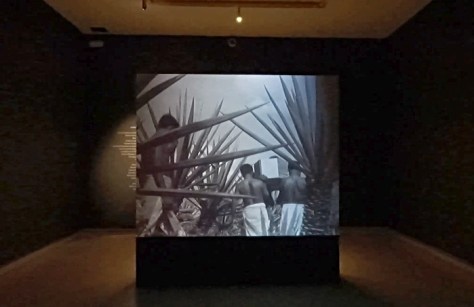
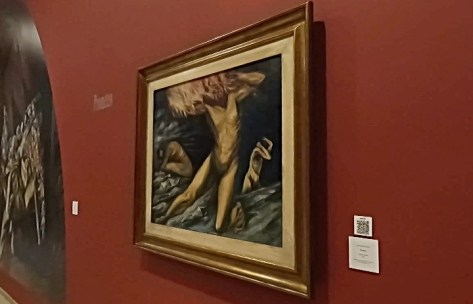
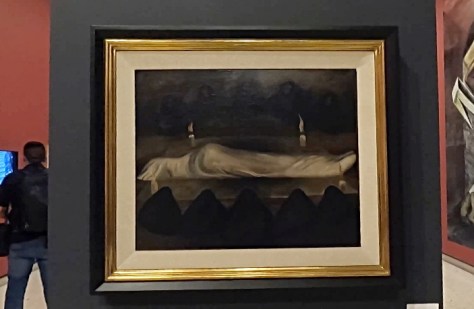
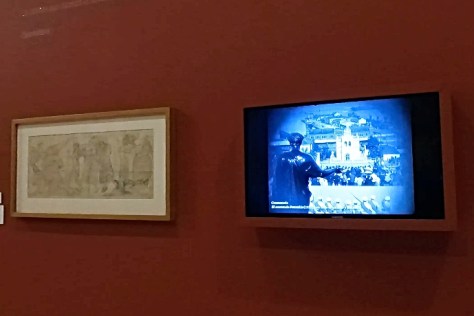
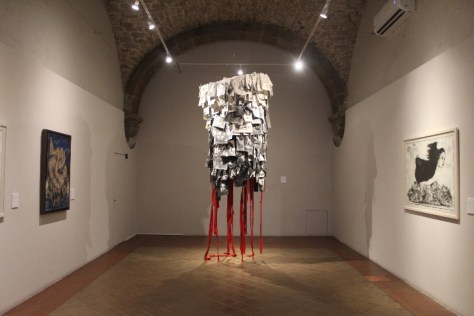
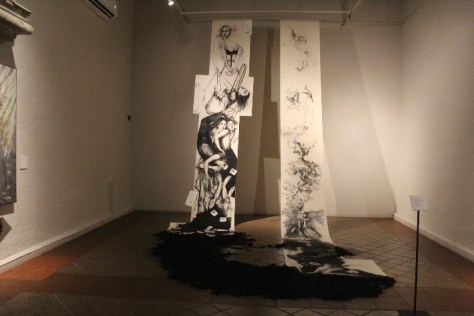
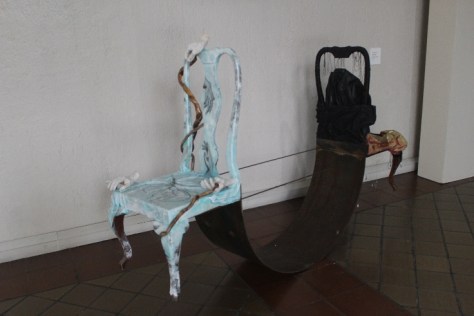
Algunas de las piezas de la muestra Fotos. CLAUDIA ANDALÓN
Enrique Vázquez Lozano / Guadalajara

Correspondencias: Orozco-Eisenstein, es el nombre de la exposición curada por Laura Ayala que el Museo de las Artes de la Universidad de Guadalajara (MUSA de la UdeG) exhibe del 27 de marzo al 2 de agosto y que es una actividad más que se desarrolla en el marco de la edición 41 del Festival Internacional de Cine de Guadalajara (FICG).
La muestra plantea al espectador un recorrido entre coincidencias temporales y creativas que resaltan, en lo individual y en conjunto, las experiencias del muralista jalisciense José Clemente Orozco (1883-1949) y del cineasta soviético Sergei Eisenstein (1898-1948), quienes en determinado momento de su vida se establecieron fuera de sus países de origen durante periodos marcados por cambios y nuevos inicios.
Entre la serie de Dibujos, fotogramas, fragmentos cinematográficos, libros autobiográficos y de teoría del arte y obra pictórica que integran la muestra, destaca la proyección permanente de la película ¡Que viva México!, de Eisenstein la película ¡Que viva México! . También se llevarán a cabo proyecciones de este material en el Cineforo de la Universidad de Guadalajara.
“A Orozco siempre hay que revisarlo. Ahora me ayudó Einseinstein, esta muestra nos da un punto de vista de la obra de Orozco a partir de la mirada de un gran cineasta, una persona con una formación estética solidísima, polifacética, es una muy buena oportunidad. Me parece también una gran oportunidad de oro acercar a los jóvenes a sucesos que pasaron hace cien años y poner a su alcance reproducciones de murales en viniles de gran formato de gran resolución, que de otra forma sólo van a ver en libros y en estampas, creo que la dimensión es muy importante para que puedan ver el trazo. Es el producto de una investigación que he realizado desde 2019, dijo Ayala quien agrego: “El punto de partida de esta investigación fueron las cartas, yo hago una revisión iconográfica de los dos artistas. Mi enfoque es a partir de la Historia del Arte. Además de los textos se enviaban fotos, imágenes, encontramos una admiración mutua, Eisenstein desde México y Orozco desde Nueva York. El objetivo es revelar sus puntos de encuentro, tanto estéticos como ideológicos, explorados desde la disciplina y el sentido del humor tan particular que define a cada uno”.
Ayala detalló que las piezas de la exhibición pertenecen a diversas colecciones del del Museo de Arte Carrillo Gil y del Museo Cabañas, así como reproducciones de murales del Antiguo Colegio de San Ildefonso, del Archivo Estatal Ruso de Literatura y Arte, y del Film Study Center-MoMA, destacó que todo fue posible gracias al apoyo del Fideicomiso educativo Pyrrha Gladys Grodman, que gestiona la University of Guadalajara Foundation USA.
Durante la inauguración Estrella Araiza, drectora del FICG, Estrella Araiza, compartió: “Es muy interesante ver cómo dos artistas de las antípodas, provenientes de lados opuestos del mundo, pudieron realmente congeniar en cuanto a ideas creativas. Porque las ideas creativas son lo más difícil de poner, justo por eso existe la figura del director. Ver este tipo de influencias mutuas es muy hermoso”. En el acto inaugural también estuvieron Moisés Vizcarra Schiaffino, director del recinto y Aleksandr Batadeev, ministro consejero de la Embajada de Rusia en México.
Correspondences: Orozco-Eisenstein is the name of the exhibition curated by Laura Ayala, which the Museum of Arts of the University of Guadalajara (MUSA of the University of Guadalajara) is presenting from March 27 to August 2. It is one of the activities taking place within the framework of the 41st Guadalajara International Film Festival (FICG).
The exhibition invites viewers on a journey through temporal and creative coincidences that highlight, both individually and collectively, the experiences of the Jalisco muralist José Clemente Orozco (1883-1949) and the Soviet filmmaker Sergei Eisenstein (1898-1948), both of whom at certain points in their lives lived outside their countries of origin during periods marked by change and new beginnings.
Among the series of drawings, film stills, film fragments, autobiographical books, works on art theory, and paintings that comprise the exhibition, the permanent screening of Eisenstein’s film ¡Que viva México! stands out. Screenings of this material will also be held at the Cineforo of the University of Guadalajara.
“Orozco always needs to be revisited. Now, Eisenstein has helped me; this exhibition gives us a perspective on Orozco’s work from the point of view of a great filmmaker, a person with a very solid aesthetic background, multifaceted—it’s a very good opportunity. I also think it’s a golden opportunity to bring young people closer to events that happened a hundred years ago and to make available to them high-resolution, large-format vinyl reproductions of murals, which they would otherwise only see in books and prints. I think the size is very important so they can see the brushstrokes. It’s the product of research I’ve been conducting since 2019,” said Ayala, who added: “The starting point for this research was the letters; I’m doing an iconographic review of the two artists. My approach is based on Art History. In addition to the texts, they sent photos and images; we found a mutual admiration, Eisenstein from Mexico and Orozco from New York.” The goal is to reveal their points of convergence, both aesthetic and ideological, explored through the discipline and unique sense of humor that define each of them.”
Ayala explained that the pieces in the exhibition belong to various collections of the Carrillo Gil Art Museum and the Cabañas Museum, as well as reproductions of murals from the Antiguo Colegio de San Ildefonso, the Russian State Archive of Literature and Art, and the Film Study Center-MoMA. She emphasized that everything was made possible thanks to the support of the Pyrrha Gladys Grodman Educational Trust, managed by the University of Guadalajara Foundation USA.
During the opening, Estrella Araiza, director of the FICG, shared: “It’s very interesting to see how two artists from opposite ends of the world were truly able to connect in terms of creative ideas. Because creative ideas are the most difficult thing to bring to life, that’s precisely why the role of the director exists.” “Seeing this kind of mutual influence is very beautiful.” Also present at the opening ceremony were Moisés Vizcarra Schiaffino, director of the venue, and Aleksandr Batadeev, Minister Counselor of the Russian Embassy in Mexico.




 balsiaproducciones.com.mx