
LITERATURE. Alberto Chimal Explores Las máquinas enfermas in Nine Stories
El autor se inspiró en la IA para crear este libro editado por Páginas de Espuma
The author was inspired by AI to create this book, published by Páginas de Espuma

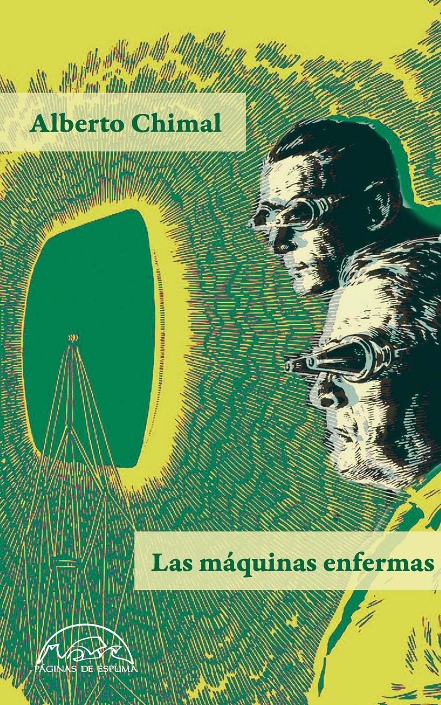
Las máquinas enfermas de Alberto Chimal están en Editorial Páginas de Espuma / Alberto Chimal’s Las máquinas enfermas are published by Editorial Páginas de Espuma. Foto: ENRIQUE VÁZQUEZ
Enrique Vázquez Lozano / Guadalajara

Las máquinas enfermas es el nombre del último libro de relatos de Alberto Chimal editado por Páginas de espuma. Se trata de nueve cuentos que según el autor “hablan de las obsesiones de los seres humanos con la tecnología, particularmente con la IA. Son Historias donde se muestran diferentes escenarios donde la tecnología y estos modelos generativos, programas, aplicaciones se meten en la vida humana, hasta suplir nuestra capacidad de pensar, nuestras actividades sino también en la mente y nuestra vida”.
Chimal compartió que decidió escribir este libro cuando se enteró del surgimiento de Chat GPT. “Un amigo me dijo, -ya no tendrás que escribir, existe un programa que lo hace por ti-. Como no me hizo gracia, me puse averiguar y por razones que no vienen al caso, sucede que ya había investigado lo que era la IA en otras épocas. En la teoría de la información que se escribía en los años 60 ya encontramos este término, no es una disciplina nueva, sin embargo, lo que se consideraba en esa época IA, no es lo que conocemos hoy. La IA actual son modelos de lenguaje a gran escala que no son inteligentes. Carecen de intención, no tienen conciencia, ni poder de decisión. Se trata de un software muy poderoso que mezcla datos a grandisima escala y los estructura de acuerdo con un lenguaje, escrito, audiovisual, pero no tiene inteligencia. Estos cuentos surgieron a partir de ese escepticismo de ver cómo los años subsecuentes nos hemos aventado como cultura, en esa superstición de una tecnología que no es lo que nos dicen”.
El escritor agregó: “También consideré las obsesiones que despiertan en los seres humanos estos software. Somos expertos en proyectar nuestra humanidad hacia afuera, por eso le hablamos a la televisión, de ahí que les damos vida a objetos inanimados, le gritamos a la pata de la cama cuando nos pegamos o construimos ídolos y los adoramos. En esa investigación que realicé traté de ir lo más lejos que pude sobre cómo funcionan los algoritmos con los que operan, que sabemos que son secretos industriales, traté de comprender la filosofía de los magnates que son dueños de esta tecnología. Cada texto está elaborado con diversas técnicas literarias. En ese sentido cada cuento es distinto de otros, para darle variedad al conjunto y para explorar diferentes aspectos de las implicaciones que tiene la técnia de la escritura. Por ejemplo Lilith, habla de una conciencia que se expande como contagio a través de seres humanos y este tema de la despernsonalización y el rasgo de quienes han sido contagiados es que, no pueden hablar de sí mismos en tercera persona. Eso en sentido técnico me obliga a contar la historia de manera particular, no sólo desde la tercra persona. Toda esta serie de retos técnicos trato que quien los lee se de cuenta de ello sin que sea un aspecto que lo distraiga y pueda adentrarse a la historia”.
Las máquinas enfermas is the title of Alberto Chimal’s latest book of short stories, published by Páginas de Espuma. It consists of nine stories that, according to the author, «address human obsessions with technology, particularly AI. They are stories that depict different scenarios where technology and these generative models, programs, and applications infiltrate human life, even replacing our capacity to think, our activities, and our minds and lives.»
Chimal shared that he decided to write this book when he learned about the emergence of Chat GPT. “A friend told me, ‘You won’t have to write anymore, there’s a program that does it for you.’ Since I wasn’t amused, I started investigating, and for reasons that aren’t relevant here, it turns out I had already researched what AI was in other eras. We find this term in the information theory written in the 1960s; it’s not a new discipline. However, what was considered AI back then isn’t what we know today. Current AI consists of large-scale language models that aren’t intelligent. They lack intention, consciousness, and decision-making power. It’s very powerful software that mixes data on a massive scale and structures it according to a language—written, audiovisual—but it doesn’t have intelligence. These stories arose from that skepticism of seeing how, in subsequent years, we as a culture have succumbed to this superstition about a technology that isn’t what we’re told.”
The writer added: “I also considered the obsessions these software programs awaken in human beings. We are experts at projecting our humanity outward; that’s why we talk to the television, why we give life to inanimate objects, why we yell at the bedpost when we bump into something, or why we build idols and worship them. In my research, I tried to delve as deeply as possible into how the algorithms they operate with work—algorithms we know are trade secrets—and I tried to understand the philosophy of the magnates who own this technology. Each text is crafted using diverse literary techniques. In that sense, each story is different from the others, to give variety to the collection and to explore different aspects of the implications of writing technique. For example, ‘Lilith’ speaks of a consciousness that spreads like a contagion through human beings, and this theme of depersonalization and the characteristic of those who have been infected is that they cannot speak of themselves in the third person. In a technical sense, this forces me to tell the story in a particular way, not only from the perspective of the protagonist.” third person. I try to ensure that the reader is aware of all these technical challenges without it being a distracting aspect, so they can delve into the story.”



 balsiaproducciones.com.mx