Suscríbete para seguir leyendo
Suscríbete para obtener acceso al contenido íntegro de esta entrada y demás contenido exclusivo para suscriptores.

Suscríbete para obtener acceso al contenido íntegro de esta entrada y demás contenido exclusivo para suscriptores.
PERFORMING ARTS. Cirque du Soleil to Bring ECHO to Mexico
El espectáculo que cuenta con un gran despliegue que reúne inspirado en la tecnología, la naturaleza y la acrobacia contará con temporadas en Guadalajara, Querétaro y la Ciudad de México del 3 de septiembre al 20 de diciembre
This spectacular production—inspired by technology, nature, and acrobatics—will run in Guadalajara, Querétaro, and Mexico City from September 3 to December 20.
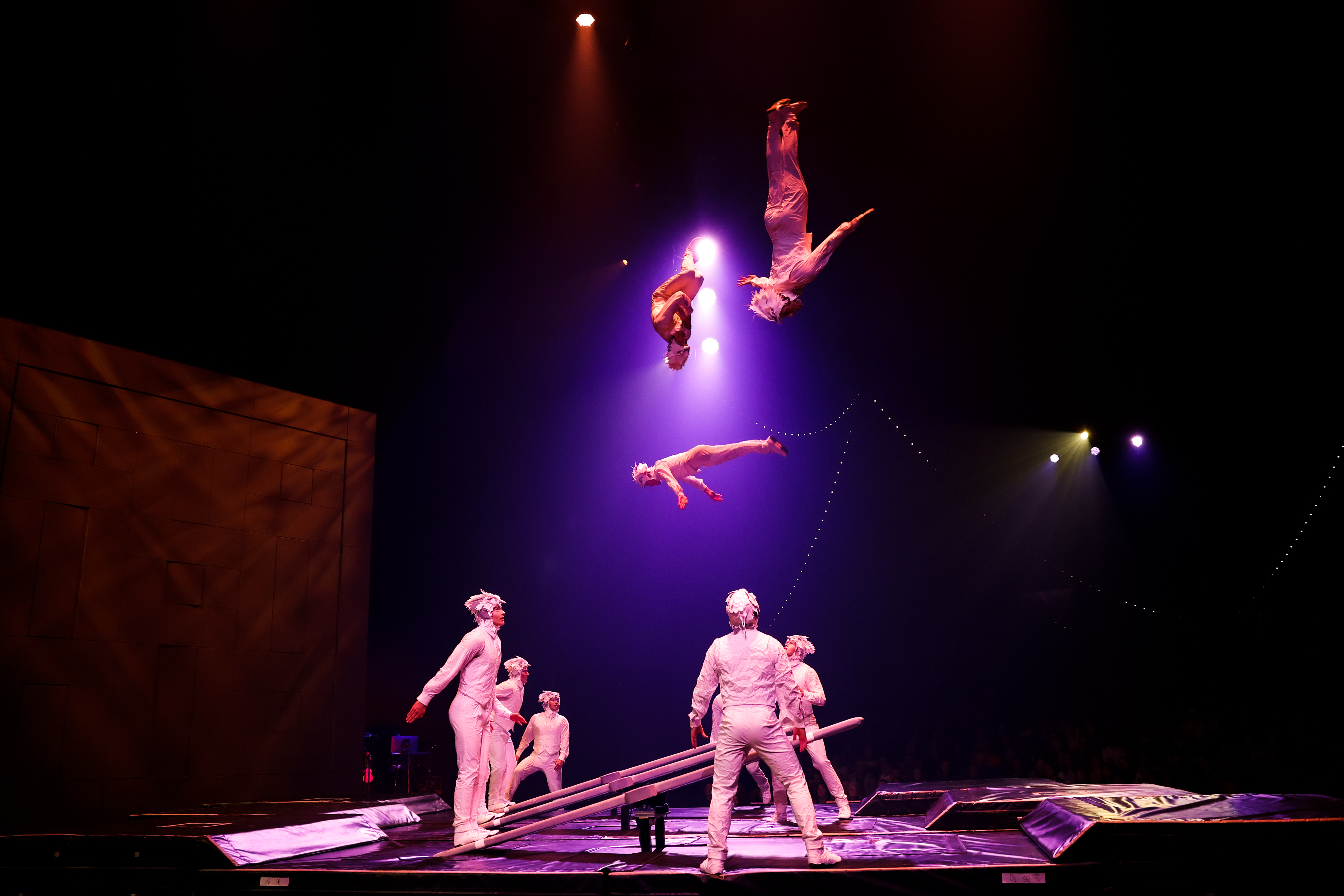
Imágenes del espectáculo ECHO: CORTESÍA
Claudia Andalón Delgadillo / Guadalajara

Guadalajara se prepara para recibir por primera vez ECHO, la producción más reciente de Cirque du Soleil, que llegará a la ciudad del 8 de octubre al 1 de noviembre de 2026, frente a Plaza Patria. La temporada, extendida por su éxito en taquilla, forma parte de la gira nacional que también contempla Querétaro y Ciudad de México.
La vigésima producción de la compañía canadiense bajo el formato de la Gran Carpa Soleil propone una experiencia que va más allá de la acrobacia. ECHO combina talento humano, música original interpretada en vivo, diseño escénico, ingeniería, iluminación y tecnología multimedia para construir un universo visual inspirado en la conexión entre los seres humanos, los animales y la naturaleza.
La historia sigue a FUTURE, una joven curiosa que, acompañada por su mejor amigo, EWAI EL PERRO, descubre un misterioso CUBO. A partir de ese encuentro, ambos se adentran en un mundo de fantasía donde sus acciones tienen la capacidad de transformarlo. La obra explora conceptos como la empatía, la esperanza, el cambio y las relaciones simbióticas, con un mensaje que plantea que la colaboración puede ayudar a construir el mundo que queremos habitar.
Uno de los protagonistas visuales del espectáculo es precisamente el enorme CUBO, una estructura de siete metros por lado, dos pisos de altura y aproximadamente 12 toneladas de peso, diseñada por la artista Es Devlin. A través de mecanismos móviles y avanzados sistemas de proyección, la estructura cambia, se abre y se transforma durante la función, convirtiéndose en una parte activa de la narrativa.
La tecnología también interviene en la iluminación. Un sistema de rastreo especialmente diseñado permite seguir en tiempo real los movimientos de los artistas, integrando luz, imagen y acción para modificar constantemente el espacio. De esta manera, la escenografía deja de ser un elemento estático y se convierte en parte fundamental de la experiencia.
ECHO reúne a 53 artistas de 19 nacionalidades y presenta actos acrobáticos creados específicamente para esta producción. Entre ellos destaca la participación de la mexicana Danira Quintanar, quien regresa a México como parte del elenco y participa en el acto de suspensión capilar “Las luciérnagas”.
Con una duración de 125 minutos, incluido un intermedio de 25, el espectáculo está dirigido a público de todas las edades. Para quienes han disfrutado producciones como Alegría, KOOZA, KURIOS o LUZIA, ECHO representa una nueva oportunidad para acercarse al universo creativo de Cirque du Soleil desde una perspectiva contemporánea.
La gira mexicana comenzará en Querétaro, donde se presentará del 3 al 27 de septiembre en el Infield del Autódromo de Querétaro. Posteriormente llegará a Guadalajara y concluirá en Ciudad de México, del 12 de noviembre al 20 de diciembre, en la Gran Carpa Santa Fe.
Los boletos para Guadalajara están disponibles a través de Ticketmaster. Tras esta gira, Cirque du Soleil no contempla presentaciones en México durante 2027, de acuerdo con información de los promotores.
Más que un espectáculo de acrobacias, ECHO invita al público a entrar en un universo donde el escenario se transforma, la tecnología cobra vida y cada elemento —desde la música hasta el movimiento de los artistas— forma parte de una misma historia. Es una propuesta que busca mostrar hasta dónde puede llegar el entretenimiento en vivo bajo la Gran Carpa Soleil.
Para más información, consulta el sitio oficial de Cirque du Soleil y escucha el álbum de ECHO en las principales plataformas de streaming.
Guadalajara is preparing to host ECHO—Cirque du Soleil’s latest production—for the first time. The show arrives in the city from October 8 to November 1, 2026, at a site opposite Plaza Patria. The run, extended due to box-office success, is part of a national tour that also includes stops in Querétaro and Mexico City.
The Canadian company’s twentieth production under the «Big Top» format offers an experience that transcends mere acrobatics. ECHO combines human talent, original live music, set design, engineering, lighting, and multimedia technology to create a visual universe inspired by the connection between humans, animals, and nature.
The story follows FUTURE, a curious young woman who, accompanied by her best friend—EWAI the dog—discovers a mysterious CUBE. Following this encounter, the pair enters a fantasy world where their actions have the power to transform their surroundings. The show explores themes such as empathy, hope, change, and symbiotic relationships, conveying a message that collaboration can help build the world we wish to inhabit.
A key visual element of the show is the massive CUBE itself—a structure measuring seven meters on each side, standing two stories tall, and weighing approximately 12 tons—designed by artist Es Devlin. Through moving mechanisms and advanced projection systems, the structure shifts, opens, and transforms during the performance, becoming an active part of the narrative.
Technology also plays a pivotal role in the lighting design. A specially designed tracking system follows the performers’ movements in real time, integrating light, imagery, and action to constantly reshape the performance space. In this way, the set design ceases to be a static element and becomes a fundamental part of the experience.
ECHO brings together 53 artists of 19 nationalities and features acrobatic acts created specifically for this production. Notable among them is Mexican artist Danira Quintanar, who returns to Mexico as part of the cast, performing in the hair-suspension act «The Fireflies.»
With a runtime of 125 minutes—including a 25-minute intermission—the show is designed for audiences of all ages. For those who have enjoyed productions such as Alegría, KOOZA, KURIOS, or LUZIA, ECHO offers a new opportunity to experience the creative universe of Cirque du Soleil from a contemporary perspective.
The Mexican tour will begin in Querétaro, where it will run from September 3 to 27 at the Querétaro Autodrome Infield. It will subsequently travel to Guadalajara and conclude in Mexico City—running from November 12 to December 20—at the Gran Carpa Santa Fe.
Tickets for Guadalajara are available via Ticketmaster. According to the promoters, Cirque du Soleil has no plans for performances in Mexico during 2027 following this tour.
More than just an acrobatic show, ECHO invites the audience into a universe where the stage transforms, technology comes to life, and every element—from the music to the artists’ movements—is part of a unified story. It is a production that seeks to showcase the possibilities of live entertainment under the Big Top.
For more information, visit the official Cirque du Soleil website and listen to the ECHO album on major streaming platforms.