
ANIMATION. Alejandra Wichers Works on Two of Her Own Series
La artista tapatía que reside actualmente en Vancouver, es una de las mentes creativas de Dispatch el videojuego nominado a los nominado a Best Debut Indie Game for The Game Awards 2025
The Guadalajara-born artist, currently residing in Vancouver, is one of the creative minds behind Dispatch, the video game nominated for Best Debut Indie Game at The Game Awards 2025.
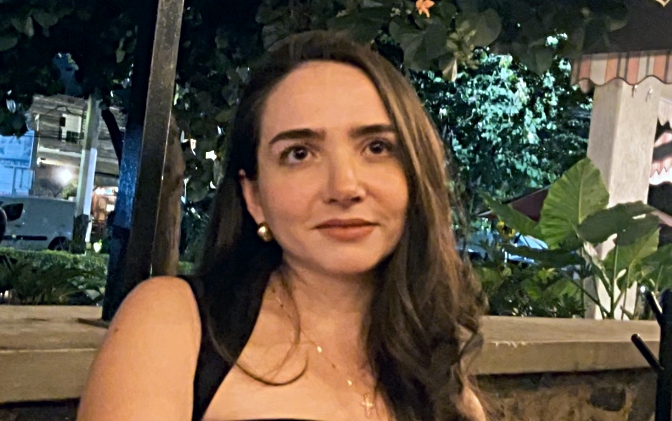
Alejandra Wichers. Foto: ENRIQUE VÁZQUEZ
Enrique Vázquez Lozano / Guadalajara

Alejandra Wichers, animadora tapatía, es una de las mentes creativas detrás de Dispatch el videojuego, que ha sido recientemente ha sido nominado a los nominado a Best Debut Indie Game for The Game Awards 2025 y alcanzó un millón de unidades vendidas durante los primeros diez días de su lanzamiento.
La también supervisora de la Serie Barbie Mysteries, y storyboards seniors de Los octonautas y Megamente 2 compartió con este medio, en una reciente visita que hizo a Guadalajara, que uno de los proyectos que más le ha dado satisfacciones hasta hoy ha sido precisamente Dispatch. “Al final resultó ser una inciativa muy afín a mi estilo me fascina la buena cinematrografía, las secuencias de acción y me divertí mucho durante el tiempo que trabajé en ese proyecto. Los directores me permitieron que tuviera cierto nivel de creatividad. Resultó muy complejo porque también podía decidir el uso de las cámaras, el uso de software. Agregué personajes y momentos de la narrativa que tal vez no estaban completamente descritos en el guion original. Me poder explotar al máximo la parte cinematográfica de acción que desde pequeña me ha gustado como espectadora y ahora como creadora”.
Dispatch es un videojuego de aventura desarrollado por AdHoc Studio, lanzado en 2025. El título combina mecánicas de decisión ramificada con sistemas de gestión estratégica y minijuegos, integrados en un formato episódico compuesto por ocho capítulos. Su historia se centra en Robert Robertson III, heredero del manto del superhéroe Mecha Man, quien intenta reconstruir su identidad tras perder sus poderes y quedar apartado del mundo que solía proteger. El jugador tiene una amplia libertad de conducir la historia por diversos caminos.
El reparto incluyó las voces de Aaron Paul, Jeffrey Wright, Erin Yvette, Laura Bailey, Travis Willingham y Matthew Mercer, Jacksepticeye, MoistCr1TiKaL, Joel Haver y Alanah Pearce.
El juego vendió más de un millón de unidades durante sus primeros diez días tras el lanzamiento y recibió elogios de la crítica. Actualmente está nominado a Best Debut Indie Game for The Game Awards 2025.
Wichers anunció que luego de la experiencia que le han otorgado la participación en las producciones ya mencionadas, está lista para emprender la creación de dos series de su autoría, de las cuáles prefirió no dar detalles por el momento.
DE STORYBOARD SENIOR A SUPERVISORA EN DIVERSAS PRODUCCIONES DE PRESTIGIO Y DOCENTE
Wichers compartió sentirse satisfecha de desarrollar diversos roles en los distintos proyectos en los que le ha tocado trabajar y de compartir cuando ha podido algo del conocimiento que ha adquirido con nuevas generaciones de creativos.
“Cuando eres storyboard senior eres de los primeros en visualizar la película serie o videojuego. Luego de la previsualización, tienes diversas reuniones con el director para ver cual estilo es el que prevalecerá en el proyecto. De ahí se pasa a dibujar y dibujar, de acuerdo a los tipos de cámara que ha decidido el equipo con anterioridad, establecer los puntos fundamentales, críticos y dramáticos de las secuencias del guion que debemos realizar, se junta con el director y ver cuál es su estilo y lo que queremos establecer, luego dibujar, con el tipo de lente de la cámara, el ritmo y establecer cuáles son los puntos más fundamentales y críticos de la secuencia que nos tocó dibujar, según el guion y entregar todo de acuerdo a una fecha de entrega preestablecida por el director”, dijo y agregó: Por otro lado cuando eres supervisor debes hacer las secuencias más complejas y das el visto bueno de lo que entregan los artistas, ayudar a guiar a los artistas, mentora, y en cuanto a la parte de la narrativa, si se traban que continúen su camino y juntas con el director para ver lo que se necesita en el software, en la parte artística, cinematográfica en relación con los artistas que tenemos asegurarse que todo este al nivel de calidad que espera ver el director. Los dos roles te aportan mucha experiencia y más claridad en el momento que decides realizar un proyecto desde cero”, dijo y compartió que ya trabaja en el boceto de dos series propias en el que combina diversos estilos de animación tanto de 2D como de 3D.
La animadora agregó: “Me gusta compartir el conocimiento, lamentablemente estos años que he estado inmersa en varias producciones he tenido que posponer esa labor para después.
Alejandra Wichers, an animator from Guadalajara, is one of the creative minds behind Dispatch, the video game that was recently nominated for Best Debut Indie Game at The Game Awards 2025 and reached one million units sold during the first ten days of its release.
The supervisor of the Barbie Mysteries series and senior storyboard artist for Octonauts and Megamind 2 shared with this publication, during a recent visit to Guadalajara, that one of the projects that has given her the most satisfaction to date has been Dispatch. “In the end, it turned out to be an initiative very much in line with my style. I’m fascinated by good cinematography and action sequences, and I had a lot of fun while working on that project. The directors allowed me a certain level of creativity. It was very complex because I could also decide on the use of cameras and software. I added characters and narrative moments that perhaps weren’t fully described in the original script. I was able to fully explore the cinematic action aspect, which I’ve loved as a viewer since I was little, and now as a creator.”
Dispatch is an adventure video game developed by AdHoc Studio, released in 2025. The title combines branching decision mechanics with strategic management systems and minigames, integrated into an episodic format composed of eight chapters. Its story centers on Robert Robertson III, heir to the mantle of the superhero Mecha Man, who tries to rebuild his identity after losing his powers and being separated from the world he used to protect. The player has considerable freedom to guide the story down various paths.
The cast included the voices of Aaron Paul, Jeffrey Wright, Erin Yvette, Laura Bailey, Travis Willingham, Matthew Mercer, Jacksepticeye, MoistCr1TiKaL, Joel Haver, and Alanah Pearce.
The game sold over one million units in its first ten days after release and received critical acclaim. It is currently nominated for Best Debut Indie Game at The Game Awards 2025.
Wichers announced that after the experience gained from participating in the aforementioned productions, she is ready to embark on creating two original series, about which she preferred not to give details at this time.
FROM SENIOR STORYBOARDIST TO SUPERVISOR ON VARIOUS PRESTIGIOUS PRODUCTIONS AND TEACHER
Wichers shared her satisfaction in developing diverse roles in the various projects she has worked on and in sharing, whenever possible, some of the knowledge she has acquired with new generations of creatives.
“When you’re a senior storyboard artist, you’re one of the first to visualize the film, series, or video game. After the pre-visualization, you have several meetings with the director to determine the prevailing style for the project. From there, you move on to drawing and drawing, according to the camera angles the team has previously decided on, establishing the fundamental, critical, and dramatic points of the script sequences we have to create. You meet with the director to discuss their style and what we want to establish, then draw, considering the camera lens type, the rhythm, and establish the most fundamental and critical points of the sequence you’re assigned, according to the script, and deliver everything according to a deadline set by the director,” he said, adding: “On the other hand, when you’re a supervisor, you have to create the more complex sequences and approve what the artists deliver, help guide them, mentor them, and, regarding the narrative, if they get stuck, encourage them to continue. You also meet with the director to discuss what’s needed in the software, the artistic aspects, and the cinematography.” “We artists have to ensure that everything is at the level of quality the director expects. Both roles provide a lot of experience and greater clarity when you decide to undertake a project from scratch,” she said, sharing that she is already working on the outline for two of her own series, combining various 2D and 3D animation styles.
The animator added, “I like to share my knowledge, but unfortunately, these past few years, being immersed in several productions, I’ve had to postpone that work.”



 balsiaproducciones.com.mx