Archivo de la categoría: ARTE

ARTE. La sexta edición de BADA México será en Campo Marte


Los organizadores de la sexta versión mexicana que se realiza del 5 al 8 de febrero, dio a conocer que los ganadores de la sección “Arte para todos 2026 son: Héctor Corral Ruiz, Miranda Couture, Héczar Gómez Santiago, Ismael Martínez y María José Kelly

Retrato del pintor y muralista Juan Manuel Guillén y una de la fotógrafa Lourdes Almeida /Portrait of the painter and muralist Juan Manuel Guillén and one of the photographer Lourdes Almeida. Fotos: CORTESÍA

Luam Vázquez Rodríguez / Guadalajara

BADA México y Banco Azteca dieron a conocer a los cinco artistas seleccionados de la convocatoria
 “Arte para todos” 2026, que se realiza en el marco de su sexta edición del 5 al 8 de febrero en Campo Marte de la CDMX.


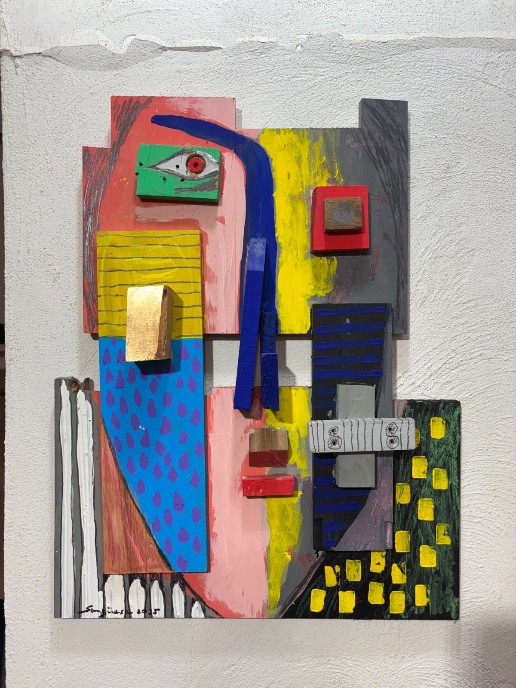
Los cinco seleccionados que tendrán la oportunidad de exponer y vender sus obras durante estos días son: Héctor Corral Ruiz (Fotografía análoga y estenopeica(, Miranda Couture (Artes visuales / materiales no convencionales), Héczar Gómez Santiago (Grabado en linóleo) Ismael Martínez (Pintura al óleo) y María José Kelly (Pintura y artes plásticas).

BADA es un proyecto internacional que nació en Buenos Aires, Argentina, ciudad donde se originó la feria y de donde proviene su nombre: Buenos Aires Directo de Artista. Allá la feria se prepara para celebrar su edición número 14. Esta sexta edición en México es posible gracias al apoyo de Banco Azteca.

Entre los invitados destacados a la edición mexicana se fotógrafa Lourdes Almeida, el pintor y muralista Juan Manuel Guillén. De acuerdo con los organizadores, el espírituo de este encuentro artístico es desarrollarse bajo un modelo que elimina intermediarios y reúne venta directa de obra, artistas internacionales, participaciones especiales, talleres, subastas y propuestas gastronómicas en un entorno incluyente y abierto para todos.

Otra característica de la versión mexicana es que reunirá a más de 200 artistas que fueron seleccionados entre más de tres mil propuestas provenientes de Argentina, Bélgica, Chile, Colombia, Estados Unidos, El Salvador, España, Francia, Guatemala, Israel, México, Marruecos, Países Bajos y Panamá, de tal forma que el público podrá encontrar obras originales en formatos pequeños y variados, con precios que no superan los 2 mil 500 pesos mexicanos. “Queremos que todas las personas tengan la posibilidad de llevarse una obra original. Muchas de las personas que visitan BADA adquieren aquí su primera obra de arte, y ese es uno de nuestros principales objetivos: acercarte al arte, hacerlo parte de tu vida y acompañarte a iniciar o ampliar tu colección”, declaró Ana Spinetto, directora general de BADA.

BADA Mexico and Banco Azteca announced the five artists selected for the “Art for All” 2026 call for entries, which is part of its sixth edition, taking place from February 5th to 8th at Campo Marte in Mexico City.

The five selected artists, who will have the opportunity to exhibit and sell their work during these days, are: Héctor Corral Ruiz (Analog and Pinhole Photography), Miranda Couture (Visual Arts / Unconventional Materials), Héczar Gómez Santiago (Linoleum Print), Ismael Martínez (Oil Painting), and María José Kelly. (Painting and Visual Arts). BADA is an international project that originated in Buenos Aires, Argentina, the city where the fair was born and from which it takes its name: Buenos Aires Directo del Artista (Buenos Aires Direct from the Artist). There, the fair is preparing to celebrate its 14th edition. This sixth edition in Mexico is made possible thanks to the support of Banco Azteca.

Among the featured guests at the Mexican edition are photographer Lourdes Almeida and painter and muralist Juan Manuel Guillén. According to the organizers, the spirit of this artistic gathering is to operate under a model that eliminates intermediaries and brings together direct sales of artwork, international artists, special participations, workshops, auctions, and culinary offerings in an inclusive and open environment for all.

Another feature of the Mexican version is that it will bring together more than 200 artists selected from over three thousand submissions from Argentina, Belgium, Chile, Colombia, the United States, El Salvador, Spain, France, Guatemala, Israel, Mexico, Morocco, the Netherlands, and Panama. This will allow the public to find original works in small and large formats. varied, with prices not exceeding 2,500 Mexican pesos. “We want everyone to have the opportunity to take home an original work. Many of the people who visit BADA acquire their first piece of art here, and that is one of our main objectives: to bring you closer to art, make it part of your life, and accompany you in starting or expanding your collection,” stated Ana Spinetto, general director of BADA.

Una de las piezas de Antonio Fink / One of Antonio Fink’s pieces. Foto. CORTESÍA

SECCIÓN DEDICADA AL FUTBOL

En el marco del año mundialista, la exposición Arte Futbol presenta una selección de obras que abordan el futbol como una de las expresiones culturales más presentes en la vida cotidiana. Más allá del espectáculo deportivo, el futbol se entiende como un fenómeno que atraviesa identidades, emociones y formas de pertenencia. Para la ocasión se han reunido a artistas cuyas obras exploran la relación entre la pasión deportiva, la creatividad y la cultura popular, en un espacio donde las piezas se exhiben y se venden de forma directa. La selección estuvo a cargo de un jurado especializado, con la participación de Carlos L. Guerrero.


Los artistas ganadores de la convocatoria Arte Futbol son: Antonio Fink, Aldo Aníbal Vercellino, Mauricio Andrés Valenti, Federico de Paola y Diego García Stern.

SECTION DEDICATED TO FOOTBALL

Within the framework of the World Cup year, the Art Football exhibition presents a selection of works that address football as one of the most present cultural expressions in everyday life. Beyond the sporting spectacle, football is understood as a phenomenon that transcends identities, emotions, and forms of belonging. For this occasion, artists whose works explore the relationship between sporting passion, creativity, and popular culture have been brought together in a space where the pieces are exhibited and sold directly. The selection was made by a specialized jury, with the participation of Carlos L. Guerrero.

The winning artists of the The members of the Arte Futbol call for entries are: Antonio Fink, Aldo Aníbal Vercellino, Mauricio Andrés Valenti, Federico de Paola and Diego García Stern.

SECCIÓN ÍCARO, ARTE, INCLUSIÓN Y TRANSFORMACIÓN SOCIAL

La Sección Ícaro incluye a toda una segunda generación de emprendimientos para industrias crativas impulsada por Arte & Cultura del Centro Ricardo B. Salinas Pliego, en colaboración con Banco Azteca y México Territorio Creativo / Design Week México.

Los proyectos participantes han formado parte de un programa de capacitación y acompañamiento enfocado en fortalecer propuestas creativas con visión de negocio, profesionalización y acceso a nuevos públicos.

También se contará con la participación de Mi Valedor, un proyecto de inclusión social que acompaña a personas en situación de calle, migrantes, adultos mayores y personas con discapacidad.

A través de talleres de expresión plástica, cuidado de la salud mental y procesos editoriales y artísticos, Mi Valedor impulsa el arte como una herramienta de comunicación, autoexploración y reconocimiento. Las obras creadas serán exhibidas y puestas a la venta, explicadas por sus propios autores, generando un espacio de diálogo directo y visibilidad para voces que encuentran una oportunidad real de transformación en el arte.

Del mismo modo, la Asociación de Pintores con la Boca y con el Pie volverá a participar en la feria con la presencia de Omar Ríos Martínez, Rosa María de Guadalupe Escalante Berea, Jesús García Zapata y Emilia Corona, artistas cuya obra amplía las nociones tradicionales de técnica, cuerpo y proceso creativo. Presente en México desde 1963, la asociación promueve la independencia económica y el desarrollo profesional de sus integrantes a partir de la comercialización de su obra.

ICARUS SECTION, ART, INCLUSION, AND SOCIAL TRANSFORMATION

The Icarus Section features a second generation of creative industry ventures, supported by the Art & Culture program of the Ricardo B. Salinas Pliego Center, in collaboration with Banco Azteca and Mexico Territorio Creativo / Design Week Mexico.

The participating projects have been part of a training and mentoring program focused on strengthening creative proposals with a business vision, professionalization, and access to new audiences.

Also participating is Mi Valedor, a social inclusion project that supports people experiencing homelessness, migrants, senior citizens, and people with disabilities.

Through workshops in visual arts, mental health care, and editorial and artistic processes, Mi Valedor promotes art as a tool for communication, self-exploration, and recognition. The works created will be exhibited and offered for sale, explained by their creators, generating a space for direct dialogue and visibility for voices that find a real opportunity for transformation in art.

Similarly, the Association of Mouth and Foot Painting Artists will once again participate in the fair with the presence of Omar Ríos Martínez, Rosa María de Guadalupe Escalante Berea, Jesús García Zapata, and Emilia Corona, artists whose work expands traditional notions of technique, body, and creative process. Present in Mexico since 1963, the association promotes the economic independence and professional development of its members through the sale of their artwork.

Pieza de Nivada Swiss que participa en La sala del tiempo / Nivada Swiss piece participating in The Time Room. Foto. CORTESÍA

COLECCIONISMO, CIRCULACIÓN, NUEVOS PÚBLICOS Y EXPERIENCIAS QUE AMPLÍAN LA FERIA PARA TODAS LAS EDADES

En esta edición mexicana se presenta la primera subasta Pop Up Subastas × BADA, un proyecto desarrollado en colaboración con Pop Up Subastas que busca acercar el coleccionismo a nuevos públicos y primeros compradores. Pensada como una experiencia abierta y pedagógica, la subasta propone un espacio donde el acto de adquirir una obra se convierte también en un proceso de aprendizaje sobre el valor, la trayectoria y la circulación del arte.

Más allá de la exhibición de arte, en este marco se presenta La sala del tiempo, una colaboración entre Nivada Swiss y José Luis Cuevas, con el apoyo de la Fundación y Museo José Luis Cuevas que propone un espacio de encuentro entre el arte y la relojería. A partir de la pregunta “¿qué es el tiempo?”, distintos artistas exploran el concepto desde múltiples miradas, construyendo un recorrido donde las obras dialogan con la esencia y legado de la marca.

Grupo Fila Dixon contará con un estand donde presentará una amplia variedad de materiales para artistas, dirigidos tanto a estudiantes y personas aficionadas como a creadores profesionales. El espacio ofrecerá talleres gratuitos de dibujo y pintura, orientados al aprendizaje, experimentación y acercamiento directo a los procesos artísticos.

Chrome Lab llegará a la feria con una muestra que convierte el aprendizaje en obra y la técnica en lenguaje artístico. La exposición presenta piezas creadas por artistas destacados, donde la plata se utiliza como recurso estético para transformar superficies, volúmenes y lecturas visuales dentro del arte contemporáneo.

A estas exploraciones se suma la participación del IES MODA, que presentará la intervención performativa “La llegada al campo”: un desfile a través de los pasillos de la feria como una obra colectiva de arte en movimiento. Un cruce entre moda, performance, vestuario experimental y escultura viva para reinterpretar, desde un imaginario simbólico y contemporáneo, la cultura del futbol y la identidad mexicana en el contexto previo al Mundial.

Mattel participará en BADA con su Kids Zone, un espacio especialmente creado para acercar a los niños al mundo del arte a través del juego y la creatividad. Como cada año, los menores de 12 años tendrán entrada gratuita y podrán disfrutar de una experiencia presentada por Mattel, con áreas dedicadas a Barbie, Hot Wheels, Fisher-Price y HW Brickshop, donde encontrarán actividades diseñadas para despertar la imaginación y permitir que los pequeños vivan una experiencia única dentro de la exposición.

Además, la zona gastronómica, producida y curada por Gastronómanos, reunirá una selección de conceptos icónicos de la escena culinaria actual. Con la participación de Cuina, La Cabrera, Vino y se fue, Runnegth, Gelatoscopio y Sepia Cucina Italiana, este espacio se concibe como un punto de encuentro donde la experiencia de la feria se extiende más allá de las obras y se vive en comunidad.

Boletos 2×1 hasta el 30 de enero en: https://feria-de-arte-bada-mexico-2026.boletia.com. Mayor información en bada.com.mx

COLLECTING, CIRCULATION, NEW AUDIENCES, AND EXPERIENCES THAT EXPAND THE FAIR FOR ALL AGES

This Mexican edition features the first Pop Up Auction × BADA, a project developed in collaboration with Pop Up Auctions that aims to bring collecting closer to new audiences and first-time buyers. Conceived as an open and educational experience, the auction offers a space where the act of acquiring a work of art also becomes a learning process about the value, history, and circulation of art.

Beyond the art exhibition, this event also presents The Time Room, a collaboration between Nivada Swiss and José Luis Cuevas, with the support of the José Luis Cuevas Foundation and Museum, which proposes a space for the convergence of art and watchmaking. Starting with the question «What is time?», various artists explore the concept from multiple perspectives, constructing a journey where the works engage with the essence and legacy of the brand.

Grupo Fila Dixon will have a booth showcasing a wide variety of art supplies, geared towards students, hobbyists, and professional artists alike. The space will offer free drawing and painting workshops focused on learning, experimentation, and direct engagement with artistic processes.

Chrome Lab will arrive at the fair with an exhibition that transforms learning into art and technique into artistic language. The exhibition features pieces created by prominent artists, where silver is used as an aesthetic resource to transform surfaces, volumes, and visual interpretations within contemporary art.

Adding to these explorations is the participation of IES MODA, which will present the performative intervention “The Arrival at the Field”: a parade through the fair’s aisles as a collective work of art in motion. A fusion of fashion, performance, experimental costumes, and living sculpture, it reinterprets, from a symbolic and contemporary perspective, the culture of soccer and Mexican identity in the context of the World Cup.

Mattel will participate in BADA with its Kids Zone, a space specially created to introduce children to the world of art through play and creativity. As in previous years, children under 12 will have free admission and can enjoy an experience presented by Mattel, with areas dedicated to Barbie, Hot Wheels, Fisher-Price, and HW Brickshop, where they will find activities designed to spark their imagination and allow them to have a unique experience within the exhibition.

In addition, the gastronomic area, produced and curated by Gastronómanos, will bring together a selection of iconic concepts from the current culinary scene. With the participation of Cuina, La Cabrera, Vino y se fue, Runnegth, Gelatoscopio, and Sepia Cucina Italiana, this space is conceived as a meeting point where the fair experience extends beyond the artworks and is enjoyed as a community.

2-for-1 tickets until January 30th at: https://feria-de-arte-bada-mexico-2026.boletia.com. More information at bada.com.mx

LETRAS. Michael Sledge sugiere que Edward James y Plutarco Gastelum idearon juntos el Jardín Escultórico de Xilitla


El escritor estadunidense reconstruye en su novela Las Pozas, los años de creación que James compartió con Plutarco Gastelum y Marina en uno de los sitios artísticos más icónicos del México del Siglo XX

Las Pozas de Michael Sledge, fue editado en 2025 por Dharma Books / Las Pozas was published in 2025 by Dharma Books. Foto: ENRIQUE VÁZQUEZ

Enrique Vázquez Lozano / Guadalajara

En la perspectiva del escritor Michael Sledge autor de la novela Las Pozas, editada por Dharma Books, Plutarco Gastelum es el mexicano que diseñó y construyó junto con Edward James el Jardín Escultórico de Xilitla en San Luis Potosí durante la década de los años 40 y del cuál, “los historiadores deberían investigar más su vida para retribuirle este mérito de co creador”.

Esa es una de las conclusiones a las que llegó Sledge luego de siete años de investigación y escritura del libro mencionado. “Fue un gran reto, tuve muchos comienzos falsos, sobre todo porque la información acerca de Edward James es poca”, dijo el autor.

Las Pozas reconstruye la historia de Edward James, mecenas del surrealismo, quien huyendo de un escandaloso divorcio llegó a México y se refugió en la Huasteca Potosina en donde conoció y trabajó al lado de Plutarco Gastélum. Conforme transcurrió el tiempo, la creciente cercanía entre Plutarco y Marina, una mujer del lugar, desató tensiones que terminaron arrastrándolos hacia un accidente devastador que cambió para siempre el destino de su creación.

El escritor estadunidense que reside en Oaxaca, detalló: “El reto de realizar este libro fue convertir la experiencia de apreciar un lugar como lo es el Jardín Escultórico, conocer esa historia trágica de James, Gastelum y Marina y ensamblar todo con palabras. Tuve muchos comienzos falsos porque la única información sobre James son sus dos autobiografías que requieren una evaluación objetiva y cuidadosa. Además de esos documentos consideré analizar todas las esculturas como si fuesen archivos y eso me ayudó a imaginar con más claridad cómo vivieron James, Gastelum y Marina. Encontré que entre James y Gastelum hubo una colaboración creativa de muchos años. Escribir este libro significó reencontrarme con la Historia del arte y su apreciación, fue muy emocionante porque no soy pintor, yo pienso en la palabra. Me parece que el libro llegó en un momento histórico en que el Surrealismo está siendo más valorado que cuando surgió. Me parece que el Surrealismo nos parece más importante hoy porque vivimos en un mundo que no tiene mucha lógica”.

De acuerdo con Sledge, Plutarco Gastelum, era originario de Cuernavaca, ahí conoció a James y se hizo su director de obras en Xilitla. “Cuando llegaron al lugar, no había nada, levantar todo el jardín les llevó varios años, vivían en dos cajones de madera que aún subsisten. Una de las pruebas más contundentes de que Gastelum fungió como un cocreador al lado de James es que cuando conocí dichos refugios, encontré que es espacio de madera que habitó James tenía forma de cubo, mientras que el espacio de Gastelum lo construyó en forma de diamante, casi inhabitable. Esa fue una pista que me condujo a deducir que la creatividad no vino sólo de James para crear dicho jardín con esa genialidad, un aspecto que pude constatar al mirar con más detenimiento cada pieza del ahora Jardín Escultórico Edward James, Las Pozas”.

From the perspective of writer Michael Sledge, author of the novel Las Pozas, published by Dharma Books, Plutarco Gastelum is the Mexican who designed and built the Xilitla Sculpture Garden in San Luis Potosí with Edward James during the 1940s, and whose life, according to Sledge, “historians should investigate further to give him the credit he deserves as co-creator.”

This is one of the conclusions Sledge reached after seven years of research and writing the aforementioned book. “It was a great challenge; I had many false starts, especially because there is so little information about Edward James,” said the author.

Las Pozas reconstructs the story of Edward James, patron of Surrealism, who, fleeing a scandalous divorce, arrived in Mexico and took refuge in the Huasteca Potosina region, where he met and worked alongside Plutarco Gastélum. As time passed, the growing closeness between Plutarco and Marina, a local woman, unleashed tensions that ultimately led to a devastating accident that forever changed the fate of their creation.

The American writer, who resides in Oaxaca, explained: “The challenge of writing this book was to transform the experience of appreciating a place like the Sculpture Garden, learning the tragic story of James, Gastelum, and Marina, and assembling it all with words. I had many false starts because the only information about James comes from his two autobiographies, which require objective and careful evaluation. In addition to those documents, I considered analyzing all the sculptures as if they were archives, and that helped me imagine more clearly how James, Gastelum, and Marina lived. I discovered that there was a creative collaboration between James and Gastelum that lasted for many years. Writing this book meant reconnecting with the history of art and its appreciation; it was very exciting because I am not a painter, I think in terms of words. It seems to me that the book has arrived at a historical moment when Surrealism is being valued more than when it first emerged. I think Surrealism seems more important to us today because we live in a world that doesn’t have much logic.”

According to Sledge, Plutarco Gastelum was originally from Cuernavaca, where he met James and became his construction manager in Xilitla. “When they arrived at the site, there was nothing there. Building the entire garden took them several years. They lived in two wooden crates that still stand. One of the most compelling pieces of evidence that Gastelum acted as a co-creator alongside James is that when I visited these shelters, I found that James’s wooden structure was cube-shaped, while Gastelum’s was diamond-shaped, almost uninhabitable. That was a clue that led me to deduce that the creativity didn’t come solely from James to create such a brilliant garden, an aspect I was able to confirm by looking more closely at each piece of what is now the Edward James Sculpture Garden, Las Pozas.”