LITERATURE. FIL Guadalajara will celebrate 40 years with Italy as Guest of Honor
El programa de 2026 contará con la presencia de Salman Rushdie, Siri Hustvedt y Alessandro Baricco, entre más de 900 autores, así como con un amplio programa literario, científico, artístico y editorial del 28 de noviembre al 1 de diciembre en diferentes lugares de Guadalajara.
The 2026 program will feature the presence of Salman Rushdie, Siri Hustvedt and Alessandro Baricco, among more than 900 authors, as well as a broad literary, scientific, artistic and editorial program from November 28th to December 1st in different locations in Guadalajara
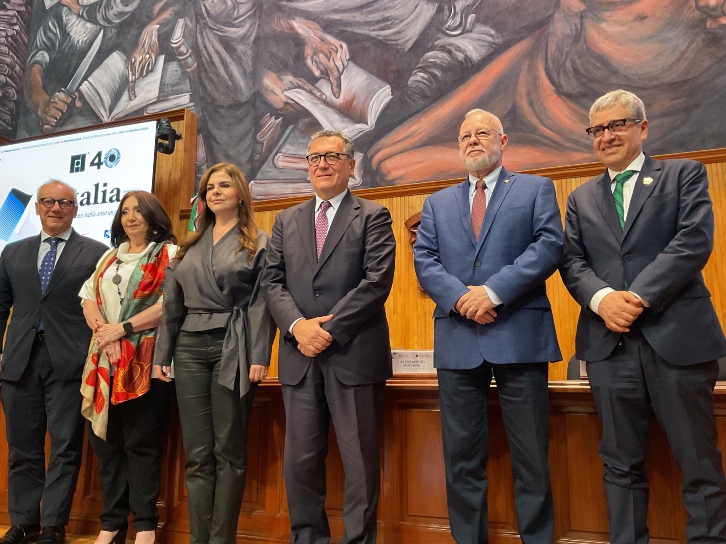
Enrique Vázquez Lozano / Guadalajara

La Feria Internacional del Libro de Guadalajara (FIL) celebrará su edición 40 del 28 de noviembre al 6 de diciembre, en Expo Guadalajara y otros recintos de la ciudad, con más de tres mil actividades, más de 900 escritores de 41 países y la participación de Italia como Invitado de Honor, según anunció Marisol Schulz, directora de dicho encuentro literario.
Bajo la frase de Umberto Eco “El mundo nos habla como un gran libro”, la delegación italiana regresará a la Feria después de 18 años, con 61 autores, más de 30 editoriales y un pabellón de mil 200 metros cuadrados que albergará ocho mil 200 libros en italiano y traducciones al español. Su presencia incluirá literatura, exposiciones, conciertos, cine, gastronomía y actividades académicas. El programa general incluye más de 3,000 actividades culturales, profesionales, artísticas y de formación de lectores, con la presentación de más de 620 lanzamientos editoriales.
Schulz compartióque la edición 40 refleja una Feria que continúa creciendo y abriendo espacios para la literatura, el pensamiento, las artes y la formación de lectores y añadió que este año los ingresos totales fueron de 131, millones 258 mil 454 de pesos mexicanos y los egresos fueron de 128 millones 100 mil 379 pesos mexicanos lo que da una utilidad relativa de 3 millones 185 mil 075 pesos.
Entre los más de 900 autores invitados procedentes de 41 países que representan 18 lenguas distintas figuran Salman Rushdie, Claudia Piñeiro, Laura Restrepo, Luis García Montero, Santiago Roncagliolo, Siri Hustvedt y Alessandro Baricco, quien inaugurará el Salón Literario Carlos Fuentes. Gioconda Belli recibirá el Premio FIL de Literatura en Lenguas Romances 2026.
La programación contempla también la presentación de más de 650 títulos, además de homenajes y reconocimientos a figuras y proyectos del ámbito literario, editorial, periodístico y cultural. También habrá encuentros dedicados a la poesía, el cuento y las literaturas de distintas regiones del mundo.
Como parte de los festejos, la Feria rendirá homenaje a Juan Rulfo, a 40 años de su fallecimiento, con una mesa conmemorativa en la que participarán los hijos del escritor y el autor Élmer Mendoza, además de que habrá un pabellón inmersivo inspirado en el universo de Pedro Páramo. Asimismo, el programa FIL Pensamiento reunirá a casi 190 especialistas de 22 países en más de 70 foros y actividades sobre temas sociales, políticos y culturales. Respecto a los premios que otorga el encuentro: Ediciones Ekaré recibirá el Homenaje al mérito editorial; Arturo Zamora Jiménez recibirá el Homenaje al bibliófilo José Luis Martínez; Filiberto Felipe Martínez Arellano será acreedor al Homenaje al bibliotecario y José Ignacio Solórzano (Jis) recibirá el Homenaje de caricatura La Catrina; en tanto que el Homenaje nacional de periodismo cultural Fernando Benítez será para el periodista José Luis Martínez S.
El público infantil y juvenil tendrá una programación especial. En Mil Jóvenes se contará con la presencia de Gioconda Belli; David Uclés y Benito Taibo; Eduardo Matos Moctezuma; María Baranda y Julieta Venegas, quien también presentará su primer libro, titulado Norteña. Memorias del comienzo. FIL Niños ofrecerá mil 357 sesiones de talleres de lectura y escritura, además de espectáculos de teatro, música, títeres, circo y danza. También se celebrará la décima edición del Salón del Cómic y la Novela Gráfica, con 43 autores y 61 editoriales.
En el ámbito profesional, más de dos mil 800 editoriales ocuparán los 43 mil metros cuadrados de Expo Guadalajara. Se prevé la participación de más de 18 mil profesionales de la cadena del libro en foros especializados, encuentros de libreros, editores, traductores y bibliotecarios.
The International Book Fair of Guadalajara (FIL) will celebrate on the 40th edition of November 28th to December 6th, at Expo Guadalajara and other city venues, with more than three thousand activities, more than 900 writers from 41 countries and Italy’s participation as an Invited of Honor, announced Marisol Schulz, director of this literary event.
According to Umberto Eco’s phrase “The world speaks to us like a great book”, the Italian delegation will return to the Feria after 18 years, with 61 authors, more than 30 editorials and a pabellón of 200 square meters which will house more than 200 books in Italian and translations into Spanish. Your presence will include literature, exhibitions, concerts, cinema, gastronomy and academic activities. The general program includes more than 3,000 cultural, professional, artistic and reader training activities, with the presentation of more than 620 editorial submissions.
Schulz shared the 40th edition reflects a holiday that continues to grow and open up spaces for literature, thought, art and the training of readers and furthermore that this year the total admissions were 131,000 258 million 454 pesos Mexicans and income were 128 million 100 million 379 Mexican pesos which gives a relative use of 3 million 185 million 075 pesos.
More than 900 invited authors from 41 countries representing 18 distinct languages include Salman Rushdie, Claudia Piñeiro, Laura Restrepo, Luis García Montero, Santiago Roncagliolo, Siri Hustvedt and Alessandro Baricco, who will inaugurate the Carlos Fuentes Literary Hall. Gioconda Belli will receive the FIL Prize for Literature in Languages Romances 2026.
The program also includes the presentation of more than 650 titles, as well as home articles and recognition of figures and projects from the literary, editorial, periodical and cultural fields. There will also be places dedicated to poetry, writing and literature from distinct regions of the world.
As part of the celebrations, the Feria will return home to Juan Rulfo, 40 years of his fall, with a commemorative table in which the children of the writer and the author Élmer Mendoza will participate, as well as having an immersive pabellón inspired by the universe of Pedro Páramo. Asimism, the FIL Pensamiento program will bring together 190 specialists from 22 countries in more than 70 forums and activities on social, political and cultural themes. Respect to the prizes that award the setting: Ekaré Editions will receive the Homepage for editorial merit; Arturo Zamora Jiménez will receive the Homenaje from the bibliophile José Luis Martínez; Filiberto Felipe Martínez Arellano will be a supporter of the home of the librarian and José Ignacio Solórzano (JIS) will receive the home of the caricature La Catrina; so much so that the national home of cultural periodism Fernando Benítez will be for the journalist José Luis Martínez S.
The children and youth audience will receive a special programme. En Mil Jóvenes will count with the presence of Gioconda Belli; David Uclés and Benito Taibo; Eduardo Matos Moctezuma; María Baranda and Julieta Venegas, who will also present their first book, titled Norteña. Memorias del commienzo. FIL Niños will offer 357 sessions of reading and writing stories, as well as theater, music, theater, circus and dance performances. The tenth edition of the Comic and Graphic Novela Fair will also be celebrated, with 43 authors and 61 editorials.
In the professional field, more than two million 800 editorials will cover the 43 million square meters of Expo Guadalajara. The participation of more than 18 million professionals in the book calendar is expected in specialized forums, booksellers, editors, translators and librarians.
LA OFERTA ITALIANA
Alessandro Modiano, embajador de Italia en México, enfatizó que la FIL de Guadalajara es un hito en el fortalecimiento de las relaciones entre Italia y México, dos países que tienen varios denominadores en común como una gran cultura y los retos de enfrentar al crimen organizado y la migración. Por su parte Filippo La Rosa, Vice Director General para la Diplomacia Pública y Cultural) en el Ministerio de Asuntos Exteriores y de la Cooperación Internacional de Italia (MAECI), la FIL de Guadalajara es un refugio para fortalecer la cultura con el diálogo entre los pueblos que no tiene nacionalidad y que es preciso proteger
La delegación italiana estará integrada por 61 autores y autoras, entre ellos Alessandro Baricco, Andrea Bajani, Viola Ardone, Helena Janeczek, Mario Desiati, Stefania Auci, Maurizio de Giovanni, Giulia Caminito, Federica Manzon, Milo Manara, Bruno Arpaia y Olga Campofreda; más de 30 editoriales y un pabellón de mil 200 metros cuadrados que tendrá 8 mil 200 libros en italiano y traducciones al español. Como parte del programa se incluyen once exposiciones entre las que destacan Caravaggio, en el Museo de las Artes de la UdeG, e Identidades italianas. La Colección Farnesina, de arte contemporáneo en el Museo Cabañas, una muestra sobre los Etruscos y otra dedicada a Carlo Collodi además de conciertos con artistas como Levante, paolo Fresu Deil Quartet, Mario Biondi, La Niña (Carola Moccia), el Trió de Jazz Radici de Ada Montellanicao, Ambrogio Sparagna &Orchestra Popolare Italiana y Camilla Pisani, además del tradicional festival gastronómico diseñado por Marco Carboni. Karla Planter Pérez, rectora de la UdeG, subrayó que en su edición 40 la FIL sigue siendo la casa de la palabra, donde una comunidad global de lectores acude cada año para encontrar la riqueza y la diversidad literaria, y los contrastes del pensamiento universal. Al respecto José Trinidad Padilla López, presidente de la FIL Guadalajara dijo sentirse satisfecho de que la FIL Guadalajara ha sido una feria que ha demostrado a lo largo de 40 años que “el libro es la mayor herramienta de emancipación para el pensamiento libre”. El programa completo puede consultarse en el sitio https://www.fil.com.mx/info/informacion.asp
THE ITALIAN OFFER
Alessandro Modiano, ambassador of Italy to Mexico, emphasized that the FIL of Guadalajara is a success in the strength of relations between Italy and Mexico, two countries that have various denominations in common as a great culture and the reasons for tackling organized crime and migration. By Filippo La Rosa, Deputy Director General for Public and Cultural Diplomacy in the Ministry of Foreign Affairs and International Cooperation of Italy (MAECI), the FIL of Guadalajara is a refuge to strengthen culture with the dialogue between communities that do not hold nationality and that must be protected
The Italian delegation will be made up of 61 authors, including Alessandro Baricco, Andrea Bajani, Viola Ardone, Helena Janeczek, Mario Desiati, Stefania Auci, Maurizio de Giovanni, Giulia Caminito, Federica Manzon, Milo Manara, Bruno Arpaia and Olga Campofreda; more than 30 editorials and a pabellón of mil 200 square meters which will lead to 8 mil 200 books in Italian and translations into Spanish.As part of the program, once exhibits are included between those that stand out in Caravaggio, in the Museo de las Artes de la UdeG, and Italian Identities. The Farnesina Collection, of contemporary art in the Cabañas Museum, a museum about the Etruscans and others dedicated to Carlo Collodi also with concerts with artists such as Levante, Paolo Fresu of the Quartet, Mario Biondi, La Niña (Carola Moccia), the Jazz Trió Radici de Ada Montellanicao, Ambrogio Sparagna &Orchestra Popolare Italiana and Camilla Pisani, at the traditional gastronomy festival designed by Marco Carboni. Karla Planter Pérez, rector of UdeG, stated that in issue 40 the FIL continues to be the home of the word, where a global community of readers strives every year to encounter literary diversity and diversity, and the contrasts of universal thought. In respect of José Trinidad Padilla López, president of the FIL Guadalajara, I am satisfied that the FIL Guadalajara has had a holiday that has demonstrated over 40 years that “the book is the greatest emancipation tool for free thinking”. The complete program can be consulted at the website https://www.fil.com.mx/info/informacion.asp