
ART. Activities of the 39th Guadalajara International Book Fair (FIL) begin with four exhibitions
Vendrán las mujeres – 150 años de lucha en las calles de Barcelona y la trilogía del colectivo Cabosanroque pueden apreciarse en el Museo Cabañas, mientras que Los libros de Barcelona. Diseño y edición y Espacio Onírico se encuentran en el Museo de las Artes de la Universidad de Guadalajara
«Women Will Come – 150 Years of Struggle in the Streets of Barcelona» and the trilogy by the Cabosanroque collective can be seen at the Cabañas Museum, while «The Books of Barcelona: Design and Publishing» and «Dreamlike Space» are on display at the Museum of Arts of the University of Guadalajara.


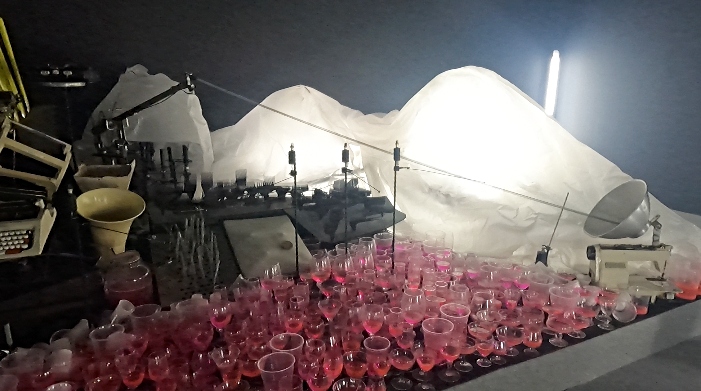
Aspectos de las exposiciones que la Delegación de Barcelona en la 39 FIL ha instalado en el Museo Cabañas /Aspects of the exhibitions that the Barcelona Delegation at the 39th FIL has installed in the Cabañas Museum.. Foto. ENRIQUE VÁZQUEZ
Enrique Vázquez Lozano y José Márquez / Guadalajara

Las actividades de la edición 39 de la Feria Internacional del Libro de Guadalajara iniciaron este viernes 28 de noviembre con la inauguración de cuatro exposiciones que permanecerán durante tres meses en el Museo Cabañas y el Museo de las Artes de la Universidad de Guadalajara.
Durante el mediodía una comitiva integrada por Sergio Barrera Sepúlveda Director General de Asuntos Internacionales, Ingrid Guardiola, Curadora de la exposición Vendrán las mujeres, José Trinidad Padilla López Presidente de la Feria Internacional del Libro de Guadalajara, pablo pérez guerreira, Consejero Político de la Embajada de España en México, Jaume Collboni, Alcalde de Barcelona, Pablo Lemus Navarro, gobernador de Jalisco, Héctor Raúl Solís Gadea, Vicerrector de la UdeG, Anna Guitart, Curadora del Programa Literario y Cultural de Barcelona, Marisol Schulz Manault, directora de la Feria Internacional del Libro de Guadalajara, Laia Torrents Artista Colectivo Cabosanroque y Susana Chávez Brandon, directora del Museo Cabañas, se dio cita en el Museo Cabañas para inaugurar Vendrán las mujeres – 150 años de lucha en las calles de Barcelona y la trilogía del colectivo Cabosanroque, tres instalaciones independientes sobre las figuras de Mercè Rodoreda, Joan Brossa i Jacint Verdaguer.
LLEGADA DE LAS MUJERES Y UNA TRILOGÍA DE INSTALACIONES A UN MUSEO CABAÑAS BAÑADO DE SOL
En la muestra Vendrán las mujeres – 150 años de lucha en las calles de Barcelona el público puede apreciar desde ayer y hasta el 1 de marzo de 2026, una rica y variada información que cuenta las luchas, resistencias y ocupación del espacio urbano realizada por mujeres que han habitado dicha ciudad en los últimos 150 años, tanto artistas como escritoras, activistas, y destacadas expositoras en diversas disciplinas artísticas, toda concentrada en videos, carteles, piezas de memoria urbana, en gráfica histórica en diversos formatos, videos, audios e instalaciones.
La narrativa hace referencia a las diversas etapas históricas desde la República, la Guerra Civil y el exilio, la Posguerra y la Transición Democrática, y el siglo actual.
Al respecto Marisol Schulz compartió: “Es inspirador encontrar los nombres tan queridos y reconocidos como los de las escritoras Carmen Laforet, Cristina Peri Rossi, Mercè Rodoreda, Montserrat Roig, Rosa Regàs, la periodista Maruja Torres o la entrañable editora Esther Tusquets”, además de otras figuras como la pintora Remedios Varo, que también es mexicana.
La exposición, que ha sido comisariada por Mita Casacuberta, Ingrid Guardiola, Anna Maria Iglesia, y
coordinada por Ingrid Guardiola, se presenta primero en México y después se abrirá en Barcelona, lo
mismo que ocurrirá con Los libros de Barcelona. Diseño y edición. Las otras dos muestras pudieron
visitarse primero en Barcelona.
La segunda muestra inaugurada que puede admirarse hasta el 28 de febrero de 2026 en el Museo Cabaña es la trilogía dels Cabosanroque, tres instalaciones independientes sobre las figuras de Mercè Rodoreda, Joan Brossa i Jacint Verdaguer.
El colectivo Cabosanroque, formado por Laia Torrents Carulla y Roger Aixut Sampietro logró a partir de la exploración del sonido, el ruido y la sonoridad del catalán, tres piezas multimedia que podrían compararse con un teatro donde no hay actores ni manipuladores sino sólo un montón de objetos que se mueven solos y que crean paisajes cambiantes y atmósferas inquietantes en donde la belleza convive con objetos grotescos.
En el acto inaugural Anna Guitart, y Susana Chávez Brandon agradecieron al colectivo Cabosanroque “su pasión y compromiso creativo hacia el proyecto”.
The activities of the 39th Guadalajara International Book Fair began this Friday, November 28, with the opening of four exhibitions that will remain on display for three months at the Cabañas Museum and the Museum of Arts of the University of Guadalajara.
At midday, a delegation comprised of Sergio Barrera Sepúlveda, Director General of International Affairs; Ingrid Guardiola, curator of the exhibition «The Women Will Come»; José Trinidad Padilla López, President of the Guadalajara International Book Fair; Pablo Pérez Guerreira, Political Counselor of the Embassy of Spain in Mexico; Jaume Collboni, Mayor of Barcelona; Pablo Lemus Navarro, Governor of Jalisco; Héctor Raúl Solís Gadea, Vice-Rector of the University of Guadalajara; Anna Guitart, Curator of the Literary and Cultural Program of Barcelona; Marisol Schulz Manault, Director of the Guadalajara International Book Fair; Laia Torrents, artist of the Cabosanroque Collective; and Susana Chávez Brandon, Director of the Cabañas Museum, met at the Cabañas Museum to inaugurate «The Women Will Come – 150 Years of Struggle in the Streets of Barcelona» and the Cabosanroque collective’s trilogy, three independent installations about the figures of Mercè Rodoreda, Joan Brossa and Jacint Verdaguer.
THE ARRIVAL OF WOMEN AND A TRILOGY OF INSTALLATIONS AT A SUN-DRENCHED CABINS MUSEUM
In the exhibition «The Women Will Come – 150 Years of Struggle in the Streets of Barcelona,» the public can appreciate, from yesterday until March 1, 2026, a rich and varied collection of information recounting the struggles, resistance, and occupation of urban space by women who have lived in Barcelona over the last 150 years. This includes artists, writers, activists, and prominent figures in various artistic disciplines, all presented in videos, posters, urban memory pieces, historical graphics in various formats, videos, audio recordings, and installations.
The narrative references the various historical periods, from the Republic, the Civil War and exile, the Post-War period and the Democratic Transition, to the present century.
Regarding this, Marisol Schulz shared: “It’s inspiring to find such beloved and renowned names as those of the writers Carmen Laforet, Cristina Peri Rossi, Mercè Rodoreda, Montserrat Roig, Rosa Regàs, the journalist Maruja Torres, and the cherished editor Esther Tusquets,” in addition to other figures like the painter Remedios Varo, who is also Mexican.
The exhibition, curated by Mita Casacuberta, Ingrid Guardiola, and Anna Maria Iglesia, and coordinated by Ingrid Guardiola, is being presented first in Mexico and will later open in Barcelona, as will the exhibition «The Books of Barcelona: Design and Publishing.» The other two exhibitions were first shown in Barcelona.
The second exhibition to open, on view until February 28, 2026, at the Cabaña Museum, is the Cabosanroque trilogy, three independent installations based on the figures of Mercè Rodoreda, Joan Brossa, and Jacint Verdaguer.
The Cabosanroque collective, formed by Laia Torrents Carulla and Roger Aixut Sampietro, created three multimedia pieces through an exploration of sound, noise, and the Catalan language. These pieces could be compared to a theater where there are no actors or puppeteers, only a multitude of objects that move on their own, creating shifting landscapes and unsettling atmospheres where beauty coexists with grotesque objects.
At the opening event, Anna Guitart and Susana Chávez Brandon thanked the Cabosanroque collective for “their passion and creative commitment to the project.”
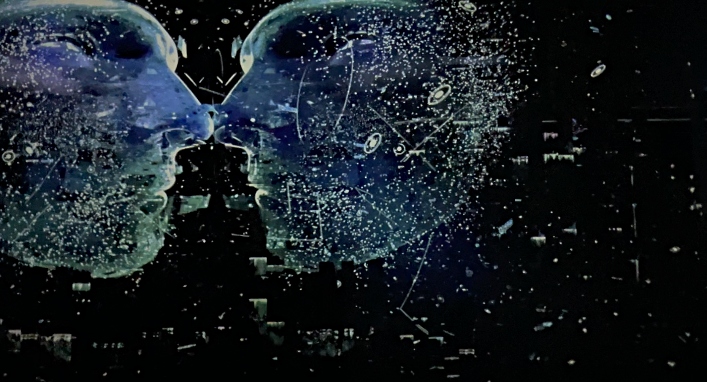
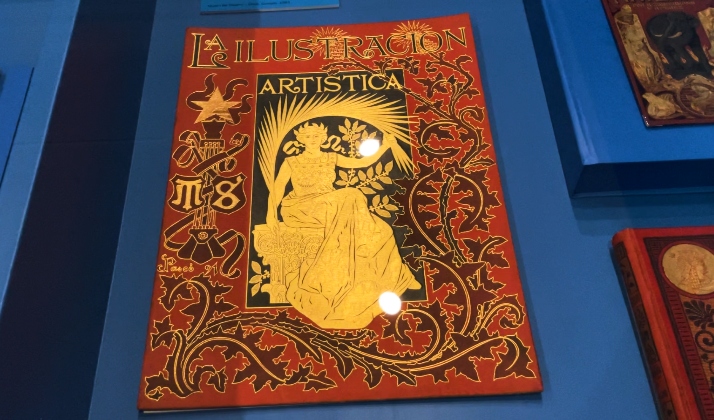
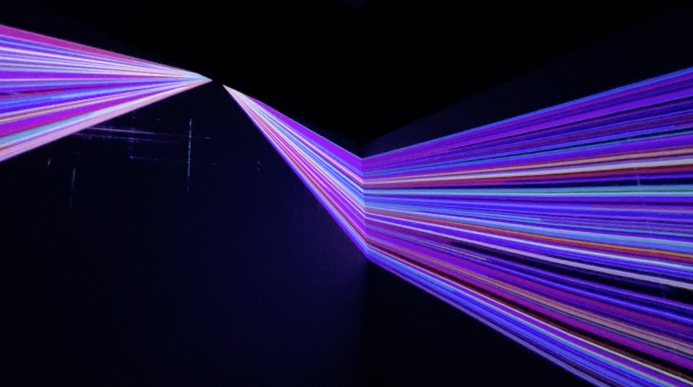

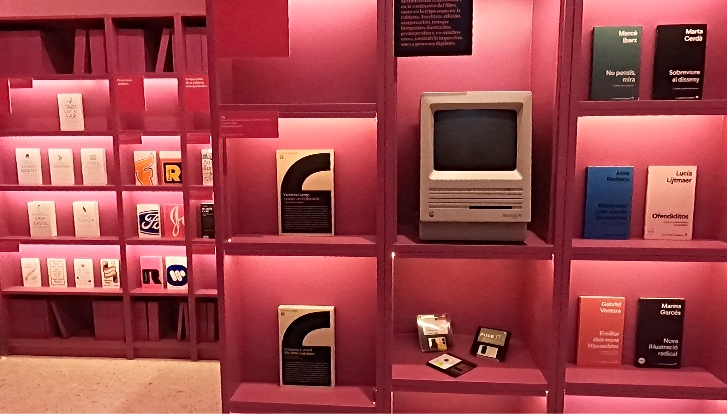
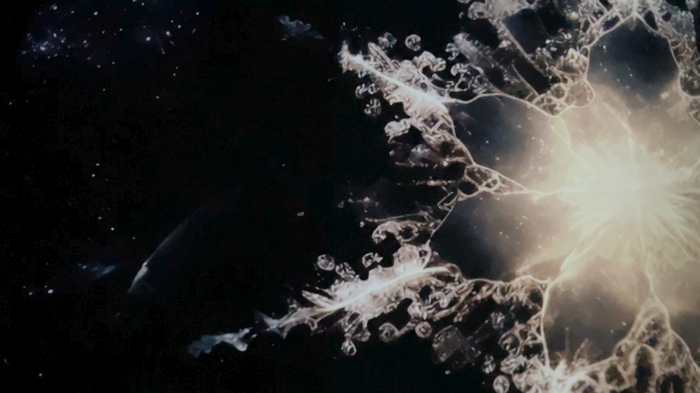
Aspectos de los audiovisuales inmersivos que se pueden apreciar en el MUSA de la UdeG/ Highlights of the immersive audiovisual displays that can be seen at the MUSA (Museum of the Arts) of the University of Guadalajara. Fotos: EV
ENTRE LIBROS DE SIGLO XVIII Y ATMÓSFERAS DIGITALES INMERSIVAS
Por la noche, el MUSA abrió sus puertas a las inauguraciones de Los libros de Barcelona. Diseño y edición y Espacio Onírico. Un viaje inmersivo por la Creatividad Digital de Cataluña.
Enric Jardí, diseñador gráfico y curador, esta muestra que permanecerá hasta el 1 de marzo de 2026 está dedicada a explorar la tradición editorial de la ciudad y el papel del diseño como elemento central de su identidad cultural. La exposición presenta una selección de más de trescientos libros en los que la cubierta se convierte en el elemento de diseño capaz de personalizar colecciones enteras y convertirse en uno de los elementos más importantes de determinadas editoriales. La exhibición fue organizada por Disseny Hub Barcelona y el MUSA.
En otra sala además se puede apreciar Espacio Onírico, Un viaje inmersivo por la Creatividad Digital de
Cataluña, muestra proyectos de Blit, Desilence, Eyesberg, Masso, Onionlab i Sevi Iko Dømochevsky; seis artistas y estudios catalanes con una trayectoria consolidada en el campo de la creatividad digital.
Las diferentes obras son nativas inmersivas y exploran una amplia gama de temáticas, abordando cuestiones actuales que impactan en nuestra sociedad, como el cambio climático y nuestra relación con la tecnología. La exhibición que permanecerá hasta el 8 de enero de 2026, fue producida por el Departamento de Cultura de la Generalidad de Cataluña, a través de la Dirección General de Innovación y Cultura Digital. Mayor información en los sitios https://museocabanas.jalisco.gob.mx/ y https://www.musaudg.mx/
BETWEEN 18TH-CENTURY BOOKS AND IMMERSIVE DIGITAL ATMOSPHERES
In the evening, MUSA opened its doors to the inaugurations of «The Books of Barcelona: Design and Publishing» and «Dreamlike Space: An Immersive Journey Through Digital Creativity in Catalonia.»
Enric Jardí, graphic designer and curator, explained that this exhibition, which will run until March 1, 2026, is dedicated to exploring the city’s publishing tradition and the role of design as a central element of its cultural identity. The exhibition presents a selection of more than three hundred books in which the cover becomes the design element capable of personalizing entire collections and become one of the most important elements of certain publishing houses. The exhibition was organized by Disseny Hub Barcelona and MUSA.
In another room, visitors can also experience «Dreamlike Space: An Immersive Journey Through Digital Creativity in Catalonia,» showcasing projects by Blit, Desilence, Eyesberg, Masso, Onionlab, and Sevi Iko Dømochevsky. Six Catalan artists and studios with established careers in the field of digital creativity are featured.
The diverse works are immersive narratives that explore a wide range of themes, addressing current issues impacting our society, such as climate change and our relationship with technology. The exhibition, which will run until January 8, 2026, was produced by the Department of Culture of the Government of Catalonia, through the Directorate General of Innovation and Digital Culture. More information can be found at https://museocabanas.jalisco.gob.mx/ and https://www.musaudg.mx/



 balsiaproducciones.com.mx