Suscríbete para seguir leyendo
Suscríbete para obtener acceso al contenido íntegro de esta entrada y demás contenido exclusivo para suscriptores.

TV. THE SUPER BOWL HALFTIME SHOW: A SPACE OF CULTURAL RECOGNITION
Columna de Opinión
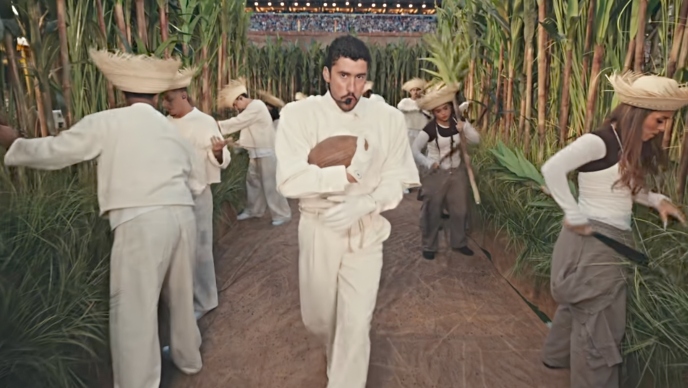
Fotograma de la transmisión del Halftime Show del Super Bowl protagonizado por Bad Bunny. Foto. ESPECIAL.
Por Enrique Vázquez, escritor y periodista

Guadalajara, Jalisco, 10 de febrero de 2026
El Halftime Show del Super Bowl constituye uno de los ejemplos más representativos de territorialidad simbólica, contemporánea. Aunque físicamente sucede en un estadio durante un partido de futbol americano, ocurre de manera simultánea en millones de hogares, plataformas digitales, redes sociales, medios de comunicación y comunidades de fans distribuidas por todo el planeta.
El Super Bowl, parece que ya no pertenece a una ciudad ni siquiera a Estados Unidos. Debido al impacto que genera a escala mundial, su naturaleza asemeja más a la de una red global de significados.
La transformación comenzó en 1993 con la presentación de Michael Jackson durante el Super Bowl XXVII. Hasta entonces, los espectáculos de medio tiempo eran vistos como una pausa recreativa dentro del partido. Sin embargo, con la aparición del llamado Rey del Pop se generaron niveles de atención comparables e incluso superiores a algunos momentos del propio encuentro deportivo. La NFL y todo su equipo de marketing comprendió que poseía un producto cultural independiente capaz de movilizar audiencias globales.
A partir de entonces, el artista dejó de ser un acompañamiento para convertirse en un activo estratégico. Se podría mencionar que desde 1993 a 2004, el espectáculo se consolidó con la presencia de figuras de alcance internacional como Diana Ross, Gloria Estefan, Aerosmith, U2, Shania Twain y Janet Jackson. De un año a otro las coberturas mediáticas generarron narrativas culturales que trascendían el evento deportivo.
Tras la controversia protagonizada por Janet Jackson y Justin Timberlake en 2004, la NFL apostó por artistas considerados seguros y de prestigio consolidado que en la perspectiva de los organizadores fueran capaces de “proteger”, la marca NFL, como: Paul McCartney, The Rolling Stones, Prince, Tom Petty, Bruce Springsteen y The Who.
Dicha controversia no fue menor. Recordemos que durante el espectáculo de medio tiempo del Super Bowl XXXVIII en 2004, Timberlake, al interpretar la canción “Rock Your Body”, desgarró parcialmente el vestuario de Jackson en el último momento de la actuación, dejando brevemente expuesto su pecho en televisión en vivo. El incidente fue transmitido a millones de espectadores y generó una enorme polémica en Estados Unidos, tanto por el contenido como por su emisión sin censura inmediata. Posteriormente se conoció como “wardrobe malfunction” (fallo de vestuario), término que entró en el debate mediático y regulatorio sobre los límites de la televisión en vivo.
La controversia tuvo consecuencias significativas: multas a la cadena CBS, un endurecimiento de las normas de decencia en la televisión estadounidense y un impacto desproporcionado en la carrera de Janet Jackson, quien enfrentó mayores sanciones mediáticas que Timberlake, lo que abrió también un debate sobre desigualdad de género y racial en la industria del entretenimiento.
A partir de 2013 con Beyoncé, Bruno Mars, Katy Perry, Coldplay, Lady Gaga, Shakira, Jennifer Lopez y The Weeknd, el éxito dejó de medirse únicamente en ratings televisivos El espectáculo pasó a evaluarse mediante reproducciones digitales, tendencias globales, memes, interacciones sociales y consumo bajo demanda. El Halftime Show se transformó en un acontecimiento transmedia, de manera que en 2023 con la llegada de Apple Music como patrocinador principal se consolidó una nueva lógica cultural. Celebridades como Rihanna, Usher, Kendrick Lamar y Bad Bunny representan ya comunidades culturales completas, además de ser estrellas musicales son símbolos identitarios capaces de movilizar territorios simbólicos globales.
A partir de los últimos cinco años, una de las principales transformaciones que ha experimentado el espectáculo es que ya no vende canciones, en su lugar comercializa identidad. Rihanna convirtió su actuación de 2023 en una declaración sobre maternidad, autonomía y regreso artístico. Kendrick Lamar, en 2025, articuló discursos relacionados con memoria afroamericana, representación racial y cultura urbana y Bad Bunny, en 2026, llevó el español, Puerto Rico y la identidad latina al centro del evento más visto de Estados Unidos.
Es decir, estos artistas han funcionado como nodos que articulan comunidades dispersas geográficamente pero unidas por referencias culturales compartidas.
El fenómeno económico del Super Bowl se comporta como una plataforma multinivel en la que convergen: Derechos de transmisión, publicidad global, turismo, streaming, patrocinios, apuestas deportivas y mercadotecnia musical.
Un dato que demuestra esta aseveración es que en 2026, un anuncio de treinta segundos alcanzó precios cercanos a los 10 millones de dólares. Actualmente el Halftime Show es el punto de convergencia de todas estas industrias y uno de los espacios de mayor generación de valor simbólico del planeta.
.
Guadalajara, Jalisco, February 10th, 2026.
The Super Bowl Halftime Show is one of the most representative examples of contemporary symbolic territoriality. Although it physically takes place in a stadium during an American football game, it occurs simultaneously in millions of homes, digital platforms, social networks, media outlets, and fan communities distributed across the globe.
The Super Bowl no longer seems to belong to a single city, or even to the United States. Due to its global impact, its nature is more akin to a global network of meanings.
The transformation began in 1993 with Michael Jackson’s performance during Super Bowl XXVII. Until then, halftime shows were seen as a recreational break within the game. However, with the appearance of the so-called King of Pop, levels of attention were generated that were comparable to, and even surpassed, some moments of the sporting event itself. The NFL and its entire marketing team understood that they possessed an independent cultural product capable of mobilizing global audiences.
From then on, the artist ceased to be a mere accompaniment and became a strategic asset. It could be said that from 1993 to 2004, the halftime show solidified its reputation with the presence of internationally renowned figures such as Diana Ross, Gloria Estefan, Aerosmith, U2, Shania Twain, and Janet Jackson. From one year to the next, media coverage generated cultural narratives that transcended the sporting event itself.
Following the controversy involving Janet Jackson and Justin Timberlake in 2004, the NFL opted for artists considered reliable and with established prestige who, in the organizers’ view, would be able to «protect» the NFL brand, such as Paul McCartney, The Rolling Stones, Prince, Tom Petty, Bruce Springsteen, and The Who.
This controversy was significant. During the halftime show of Super Bowl XXXVIII in 2004, Timberlake, while performing «Rock Your Body,» partially tore Jackson’s costume at the very end of the performance, briefly exposing her breast on live television. The incident was broadcast to millions of viewers and generated enormous controversy in the United States, both for its content and for its uncensored airing. It later became known as a “wardrobe malfunction,” a term that entered the media and regulatory debate about the limits of live television.
The controversy had significant consequences: fines for CBS, a tightening of decency standards on American television, and a disproportionate impact on Janet Jackson’s career, who faced greater media backlash than Timberlake. This also sparked a debate about gender and racial inequality in the entertainment industry.
Starting in 2013 with Beyoncé, Bruno Mars, Katy Perry, Coldplay, Lady Gaga, Shakira, Jennifer Lopez, and The Weeknd, success ceased to be measured solely by television ratings. Entertainment began to be evaluated through digital streams, global trends, memes, social media interactions, and on-demand consumption. The Halftime Show has transformed into a transmedia event, and in 2023, with Apple Music becoming the main sponsor, a new cultural dynamic was solidified. Celebrities like Rihanna, Usher, Kendrick Lamar, and Bad Bunny now represent entire cultural communities; beyond being musical stars, they are identity symbols capable of mobilizing global symbolic territories.
Over the last five years, one of the main transformations the show has undergone is that it no longer sells songs, but rather markets identity. Rihanna turned her 2023 performance into a statement about motherhood, autonomy, and artistic comeback. Kendrick Lamar, in 2025, articulated discourses related to African American memory, racial representation, and urban culture, and Bad Bunny, in 2026, brought Spanish, Puerto Rico, and Latin identity to the forefront of the most-watched event in the United States.
In other words, these artists have functioned as nodes that connect geographically dispersed communities united by shared cultural references. The Super Bowl economic phenomenon functions as a multi-level platform where broadcasting rights, global advertising, tourism, streaming, sponsorships, sports betting, and music marketing converge.
One statistic that demonstrates this assertion is that in 2026, a thirty-second commercial reached prices close to $10 million. Currently, the Halftime Show is the point of convergence for all these industries and one of the spaces with the greatest generation of symbolic value on the planet.
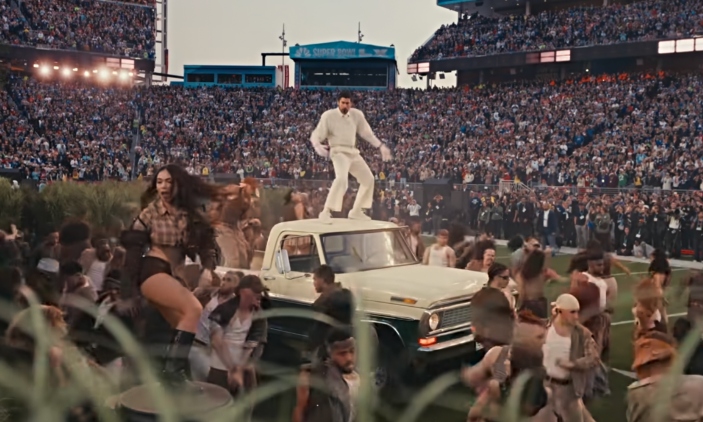
Especialmente significativo resulta el caso de Bad Bunny, cuyo espectáculo se convirtió en el cuarto más visto de la historia y estableció récords de interacción digital posteriores al evento.
El territorio del Super Bowl ya no es únicamente el estadio donde se juega el partido, este se ha ampliado a los confines del TikTok, YouTube, Instagram, Spotify, las plataformas de streaming, los medios de comunicación y los mercados publicitarios que llegan a las comunidades culturales que reinterpretan permanentemente el acontecimiento.
En dicho territorio los artistas representan comunidades, lenguas, memorias, identidades y formas de pertenencia. En él, las marcas, industrias culturales, plataformas tecnológicas y audiencias negocian significados colectivos a escala planetaria.
La verdadera magnitud del fenómeno reside, no en los millones de espectadores que lo observan cada año, sino en la capacidad que posee el acontecimiento para construir un espacio compartido de reconocimiento cultural entre personas que habitan territorios distintos, hablan lenguas diferentes y viven realidades diversas. Durante el Half Time del Superbowl cada integrante de la audiencia participa de una misma experiencia simbólica global.
.
Especially significant is the case of Bad Bunny, whose performance became the fourth most-watched in history and set records for digital engagement after the event.
The Super Bowl’s territory is no longer just the stadium where the game is played; it has expanded to encompass TikTok, YouTube, Instagram, Spotify, streaming platforms, media outlets, and advertising markets, reaching cultural communities that constantly reinterpret the event.
In this territory, artists represent communities, languages, memories, identities, and forms of belonging. Here, brands, cultural industries, technology platforms, and audiences negotiate collective meanings on a global scale.
The true magnitude of the phenomenon lies not in the millions of viewers who watch it each year, but in the event’s capacity to construct a shared space of cultural recognition among people who inhabit different territories, speak different languages, and live diverse realities. During the Super Bowl halftime show, every member of the audience participates in the same global symbolic experience.
Especialmente significativo resulta el caso de Bad Bunny, cuyo espectáculo se convirtió en el cuarto más visto de la historia y estableció récords de interacción digital posteriores al evento.
El territorio del Super Bowl ya no es únicamente el estadio donde se juega el partido, este se ha ampliado a los confines del TikTok, YouTube, Instagram, Spotify, las plataformas de streaming, los medios de comunicación y los mercados publicitarios que llegan a las comunidades culturales que reinterpretan permanentemente el acontecimiento.
En dicho territorio los artistas representan comunidades, lenguas, memorias, identidades y formas de pertenencia. En él, las marcas, industrias culturales, plataformas tecnológicas y audiencias negocian significados colectivos a escala planetaria.
La verdadera magnitud del fenómeno reside, no en los millones de espectadores que lo observan cada año, sino en la capacidad que posee el acontecimiento para construir un espacio compartido de reconocimiento cultural entre personas que habitan territorios distintos, hablan lenguas diferentes y viven realidades diversas. Durante el Half Time del Superbowl cada integrante de la audiencia participa de una misma experiencia simbólica global.
LOS DIEZ SHOWS CON MAYOR ASISTENCIA PRESENCIAL.
Aunque el impacto mediático suele medirse por audiencia global, la asistencia física continúa siendo un indicador relevante. Los diez espectáculos con mayor asistencia en estadio han sido:
The Black Eyed Peas (2011): 103,219 asistentes.
Michael Jackson (1993): 98,374 asistentes.
Paul McCartney (2005): 78,125 asistentes.
Diana Ross (1996): 76,347 asistentes.
Stevie Wonder y Gloria Estefan (1999): 74,803 asistentes.
Prince (2007): 74,512 asistentes.
Tony Bennett y Patti LaBelle (1995): 74,107 asistentes.
The Who (2010): 74,059 asistentes.
U2 (2002): 72,922 asistentes.
The Judds, Tanya Tucker, Clint Black y Travis Tritt (1994): 72,817 asistentes.
LOS DIEZ SHOWS CON MAYOR IMPACTO MEDIÁTICO
La audiencia global es hoy la medida más representativa del alcance cultural, de manera que los diez espectáculos más vistos hasta 2026 han sido:
Kendrick Lamar (2025): 133.5 millones de espectadores.
Michael Jackson (1993): 133.4 millones.
Usher (2024): 129.3 millones.
Benito Antonio Martínez Ocasio, Bad Bunny (2026): 128.2 millones.
Rihanna (2023): 121 millones.
Katy Perry (2015): 118.5 millones.
Lady Gaga (2017): 117.5 millones.
Coldplay, Beyoncé y Bruno Mars (2016): 115.5 millones.
Bruno Mars (2014): 115.3 millones.
Beyoncé (2013): 110.8 millones.
.
Especially significant is the case of Bad Bunny, whose performance became the fourth most-watched in history and set records for digital engagement after the event.
The Super Bowl’s territory is no longer just the stadium where the game is played; it has expanded to encompass TikTok, YouTube, Instagram, Spotify, streaming platforms, media outlets, and advertising markets, reaching cultural communities that constantly reinterpret the event.
In this territory, artists represent communities, languages, memories, identities, and forms of belonging. Here, brands, cultural industries, technology platforms, and audiences negotiate collective meanings on a global scale.
The true magnitude of the phenomenon lies not in the millions of viewers who watch it each year, but in the event’s capacity to construct a shared space of cultural recognition among people who inhabit different territories, speak different languages, and live diverse realities. During the Super Bowl halftime show, every member of the audience participates in the same global symbolic experience.
THE TEN HIGHEST-ATTENDED SHOWS.
Although media impact is usually measured by global audience, physical attendance remains a relevant indicator. The ten highest-attended stadium shows have been:
The Black Eyed Peas (2011): 103,219 attendees.
Michael Jackson (1993): 98,374 attendees.
Paul McCartney (2005): 78,125 attendees.
Diana Ross (1996): 76,347 attendees.
Stevie Wonder and Gloria Estefan (1999): 74,803 attendees.
Prince (2007): 74,512 attendees.
Tony Bennett and Patti LaBelle (1995): 74,107 attendees.
The Who (2010): 74,059 attendees.
U2 (2002): 72,922 attendees.
The Judds, Tanya Tucker, Clint Black, and Travis Tritt (1994): 72,817 attendees.
THE TEN SHOWS WITH THE GREATEST MEDIA IMPACT
Global audience is now the most representative measure of cultural reach, and the ten most-watched shows up to 2026 were:
Kendrick Lamar (2025): 133.5 million viewers.
Michael Jackson (1993): 133.4 million.
Usher (2024): 129.3 million.
Benito Antonio Martínez Ocasio, Bad Bunny (2026): 128.2 million.
Rihanna (2023): 121 million.
Katy Perry (2015): 118.5 million.
Lady Gaga (2017): 117.5 million.
Coldplay, Beyoncé, and Bruno Mars (2016): 115.5 million.
Bruno Mars (2014): 115.3 million.
Beyoncé (2013): 110.8 million.
El contenido y las opiniones expresadas en este texto son responsabilidad exclusiva
CONSULTA AQUÍ OTRAS COLUMNAS DE ENRIQUE VÁZQUEZ LOZANO