Archivo de la categoría: CULTURA

ARTE. Inician actividades de la edición 39 de la FIL Guadalajara con cuatro exposiciones


Vendrán las mujeres – 150 años de lucha en las calles de Barcelona y la trilogía del colectivo Cabosanroque pueden apreciarse en el Museo Cabañas, mientras que Los libros de Barcelona. Diseño y edición y Espacio Onírico se encuentran en el Museo de las Artes de la Universidad de Guadalajara

Aspectos de las exposiciones que la Delegación de Barcelona en la 39 FIL ha instalado en el Museo Cabañas /Aspects of the exhibitions that the Barcelona Delegation at the 39th FIL has installed in the Cabañas Museum.. Foto. ENRIQUE VÁZQUEZ

Enrique Vázquez Lozano y José Márquez / Guadalajara

Las actividades de la edición 39 de la Feria Internacional del Libro de Guadalajara iniciaron este viernes 28 de noviembre con la inauguración de cuatro exposiciones que permanecerán durante tres meses en el Museo Cabañas y el Museo de las Artes de la Universidad de Guadalajara.

Durante el mediodía una comitiva integrada por Sergio Barrera Sepúlveda Director General de Asuntos Internacionales, Ingrid Guardiola, Curadora de la exposición Vendrán las mujeres, José Trinidad Padilla López Presidente de la Feria Internacional del Libro de Guadalajara, pablo pérez guerreira, Consejero Político de la Embajada de España en México, Jaume Collboni, Alcalde de Barcelona, Pablo Lemus Navarro, gobernador de Jalisco, Héctor Raúl Solís Gadea, Vicerrector de la UdeG, Anna Guitart, Curadora del Programa Literario y Cultural de Barcelona, Marisol Schulz Manault, directora de la Feria Internacional del Libro de Guadalajara, Laia Torrents Artista Colectivo Cabosanroque y Susana Chávez Brandon, directora del Museo Cabañas, se dio cita en el Museo Cabañas para inaugurar Vendrán las mujeres – 150 años de lucha en las calles de Barcelona y la trilogía del colectivo Cabosanroque, tres instalaciones independientes sobre las figuras de Mercè Rodoreda, Joan Brossa i Jacint Verdaguer.

LLEGADA DE LAS MUJERES Y UNA TRILOGÍA DE INSTALACIONES A UN MUSEO CABAÑAS BAÑADO DE SOL

En la muestra Vendrán las mujeres – 150 años de lucha en las calles de Barcelona el público puede apreciar desde ayer y hasta el 1 de marzo de 2026, una rica y variada información que cuenta las luchas, resistencias y ocupación del espacio urbano realizada por mujeres que han habitado dicha ciudad en los últimos 150 años, tanto artistas como escritoras, activistas, y destacadas expositoras en diversas disciplinas artísticas, toda concentrada en videos, carteles, piezas de memoria urbana, en gráfica histórica en diversos formatos, videos, audios e instalaciones.

La narrativa hace referencia a las diversas etapas históricas desde la República, la Guerra Civil y el exilio, la Posguerra y la Transición Democrática, y el siglo actual.

Al respecto Marisol Schulz compartió: “Es inspirador encontrar los nombres tan queridos y reconocidos como los de las escritoras Carmen Laforet, Cristina Peri Rossi, Mercè Rodoreda, Montserrat Roig, Rosa Regàs, la periodista Maruja Torres o la entrañable editora Esther Tusquets”, además de otras figuras como la pintora Remedios Varo, que también es mexicana.

La exposición, que ha sido comisariada por Mita Casacuberta, Ingrid Guardiola, Anna Maria Iglesia, y
coordinada por Ingrid Guardiola, se presenta primero en México y después se abrirá en Barcelona, lo
mismo que ocurrirá con Los libros de Barcelona. Diseño y edición. Las otras dos muestras pudieron
visitarse primero en Barcelona.

La segunda muestra inaugurada que puede admirarse hasta el 28 de febrero de 2026 en el Museo Cabaña es la trilogía dels Cabosanroque, tres instalaciones independientes sobre las figuras de Mercè Rodoreda, Joan Brossa i Jacint Verdaguer.

El colectivo Cabosanroque, formado por Laia Torrents Carulla y Roger Aixut Sampietro logró a partir de la exploración del sonido, el ruido y la sonoridad del catalán, tres piezas multimedia que podrían compararse con un teatro donde no hay actores ni manipuladores sino sólo un montón de objetos que se mueven solos y que crean paisajes cambiantes y atmósferas inquietantes en donde la belleza convive con objetos grotescos.

En el acto inaugural Anna Guitart, y Susana Chávez Brandon agradecieron al colectivo Cabosanroque “su pasión y compromiso creativo hacia el proyecto”.

The activities of the 39th Guadalajara International Book Fair began this Friday, November 28, with the opening of four exhibitions that will remain on display for three months at the Cabañas Museum and the Museum of Arts of the University of Guadalajara.

At midday, a delegation comprised of Sergio Barrera Sepúlveda, Director General of International Affairs; Ingrid Guardiola, curator of the exhibition «The Women Will Come»; José Trinidad Padilla López, President of the Guadalajara International Book Fair; Pablo Pérez Guerreira, Political Counselor of the Embassy of Spain in Mexico; Jaume Collboni, Mayor of Barcelona; Pablo Lemus Navarro, Governor of Jalisco; Héctor Raúl Solís Gadea, Vice-Rector of the University of Guadalajara; Anna Guitart, Curator of the Literary and Cultural Program of Barcelona; Marisol Schulz Manault, Director of the Guadalajara International Book Fair; Laia Torrents, artist of the Cabosanroque Collective; and Susana Chávez Brandon, Director of the Cabañas Museum, met at the Cabañas Museum to inaugurate «The Women Will Come – 150 Years of Struggle in the Streets of Barcelona» and the Cabosanroque collective’s trilogy, three independent installations about the figures of Mercè Rodoreda, Joan Brossa and Jacint Verdaguer.

THE ARRIVAL OF WOMEN AND A TRILOGY OF INSTALLATIONS AT A SUN-DRENCHED CABINS MUSEUM

In the exhibition «The Women Will Come – 150 Years of Struggle in the Streets of Barcelona,» the public can appreciate, from yesterday until March 1, 2026, a rich and varied collection of information recounting the struggles, resistance, and occupation of urban space by women who have lived in Barcelona over the last 150 years. This includes artists, writers, activists, and prominent figures in various artistic disciplines, all presented in videos, posters, urban memory pieces, historical graphics in various formats, videos, audio recordings, and installations.

The narrative references the various historical periods, from the Republic, the Civil War and exile, the Post-War period and the Democratic Transition, to the present century.

Regarding this, Marisol Schulz shared: “It’s inspiring to find such beloved and renowned names as those of the writers Carmen Laforet, Cristina Peri Rossi, Mercè Rodoreda, Montserrat Roig, Rosa Regàs, the journalist Maruja Torres, and the cherished editor Esther Tusquets,” in addition to other figures like the painter Remedios Varo, who is also Mexican.

The exhibition, curated by Mita Casacuberta, Ingrid Guardiola, and Anna Maria Iglesia, and coordinated by Ingrid Guardiola, is being presented first in Mexico and will later open in Barcelona, ​​as will the exhibition «The Books of Barcelona: Design and Publishing.» The other two exhibitions were first shown in Barcelona.

The second exhibition to open, on view until February 28, 2026, at the Cabaña Museum, is the Cabosanroque trilogy, three independent installations based on the figures of Mercè Rodoreda, Joan Brossa, and Jacint Verdaguer.

The Cabosanroque collective, formed by Laia Torrents Carulla and Roger Aixut Sampietro, created three multimedia pieces through an exploration of sound, noise, and the Catalan language. These pieces could be compared to a theater where there are no actors or puppeteers, only a multitude of objects that move on their own, creating shifting landscapes and unsettling atmospheres where beauty coexists with grotesque objects.

At the opening event, Anna Guitart and Susana Chávez Brandon thanked the Cabosanroque collective for “their passion and creative commitment to the project.”

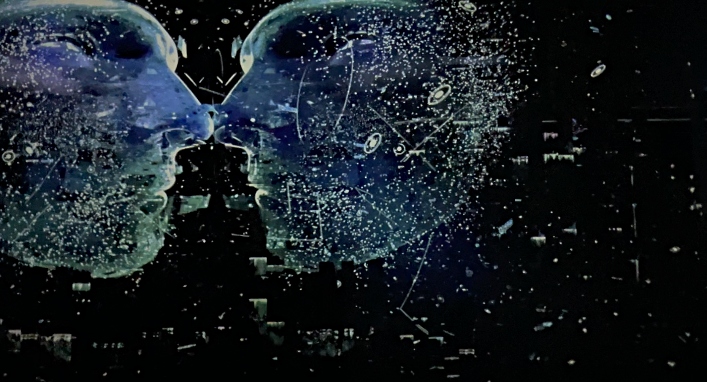
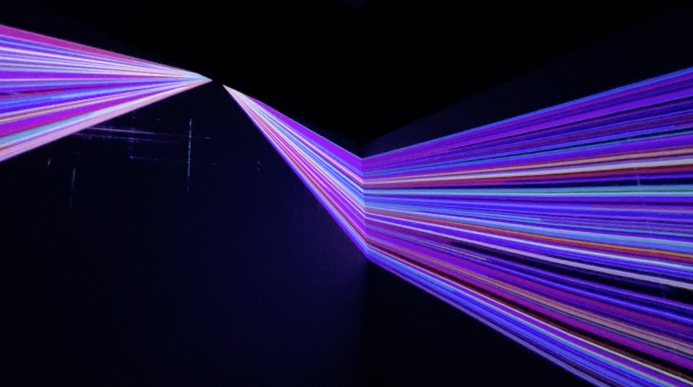
Aspectos de los audiovisuales inmersivos que se pueden apreciar en el MUSA de la UdeG/ Highlights of the immersive audiovisual displays that can be seen at the MUSA (Museum of the Arts) of the University of Guadalajara. Fotos: EV
ENTRE LIBROS DE SIGLO XVIII Y ATMÓSFERAS DIGITALES INMERSIVAS

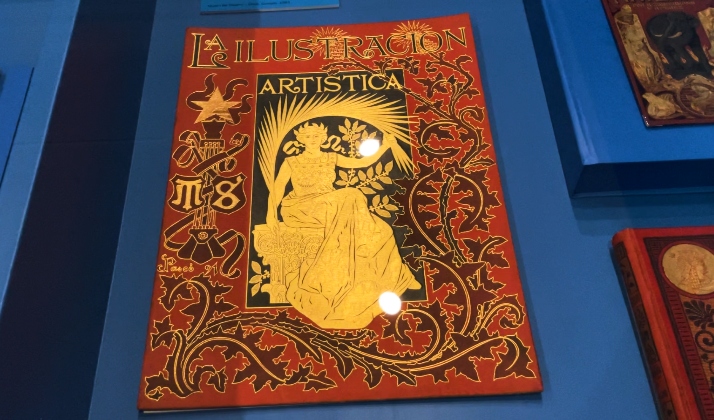
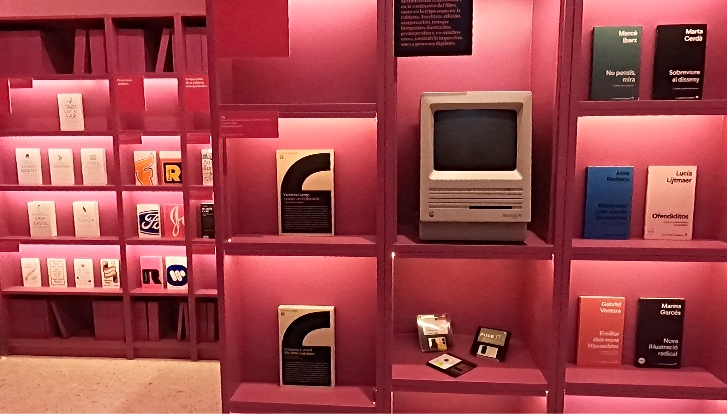
Por la noche, el MUSA abrió sus puertas a las inauguraciones de Los libros de Barcelona. Diseño y edición y Espacio Onírico. Un viaje inmersivo por la Creatividad Digital de Cataluña.

Enric Jardí, diseñador gráfico y curador, esta muestra que permanecerá hasta el 1 de marzo de 2026 está dedicada a explorar la tradición editorial de la ciudad y el papel del diseño como elemento central de su identidad cultural. La exposición presenta una selección de más de trescientos libros en los que la cubierta se convierte en el elemento de diseño capaz de personalizar colecciones enteras y convertirse en uno de los elementos más importantes de determinadas editoriales. La exhibición fue organizada por Disseny Hub Barcelona y el MUSA.

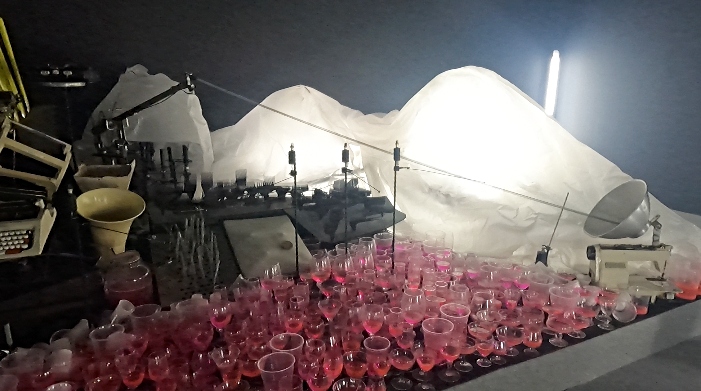
En otra sala además se puede apreciar Espacio Onírico, Un viaje inmersivo por la Creatividad Digital de

Cataluña, muestra proyectos de Blit, Desilence, Eyesberg, Masso, Onionlab i Sevi Iko Dømochevsky; seis artistas y estudios catalanes con una trayectoria consolidada en el campo de la creatividad digital.

Las diferentes obras son nativas inmersivas y exploran una amplia gama de temáticas, abordando cuestiones actuales que impactan en nuestra sociedad, como el cambio climático y nuestra relación con la tecnología. La exhibición que permanecerá hasta el 8 de enero de 2026, fue producida por el Departamento de Cultura de la Generalidad de Cataluña, a través de la Dirección General de Innovación y Cultura Digital. Mayor información en los sitios https://museocabanas.jalisco.gob.mx/  y https://www.musaudg.mx/

BETWEEN 18TH-CENTURY BOOKS AND IMMERSIVE DIGITAL ATMOSPHERES

In the evening, MUSA opened its doors to the inaugurations of «The Books of Barcelona: Design and Publishing» and «Dreamlike Space: An Immersive Journey Through Digital Creativity in Catalonia.»

Enric Jardí, graphic designer and curator, explained that this exhibition, which will run until March 1, 2026, is dedicated to exploring the city’s publishing tradition and the role of design as a central element of its cultural identity. The exhibition presents a selection of more than three hundred books in which the cover becomes the design element capable of personalizing entire collections and become one of the most important elements of certain publishing houses. The exhibition was organized by Disseny Hub Barcelona and MUSA.

In another room, visitors can also experience «Dreamlike Space: An Immersive Journey Through Digital Creativity in Catalonia,» showcasing projects by Blit, Desilence, Eyesberg, Masso, Onionlab, and Sevi Iko Dømochevsky. Six Catalan artists and studios with established careers in the field of digital creativity are featured.

The diverse works are immersive narratives that explore a wide range of themes, addressing current issues impacting our society, such as climate change and our relationship with technology. The exhibition, which will run until January 8, 2026, was produced by the Department of Culture of the Government of Catalonia, through the Directorate General of Innovation and Digital Culture. More information can be found at https://museocabanas.jalisco.gob.mx/ and https://www.musaudg.mx/


CIENCIA. La Noche de las Estrellas 2025 celebra el Centenario del desarrollo de la Mecánica Cuántica


La edición 17 de este encuentro de divulgación científica se realiza el 29 de noviembre en 120 sedes de México y Guatemala

En Guadalajara se pondrán a disposición 35 telescopios para observar el espacio/ In Guadalajara, 35 telescopes will be available for observing space.Foto. CORTESÍA

Enrique Vázquez Lozano / Guadalajara

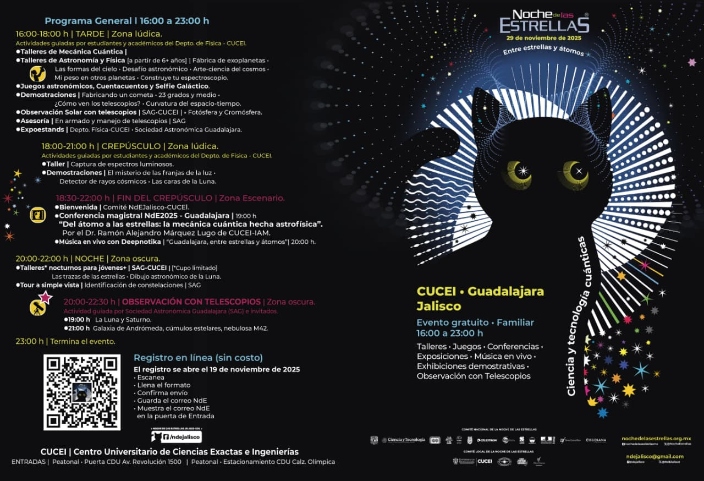
La Noche de las estrellas se realiza este 29 de noviembre en todo el país y en Guatemala, con un total de 120 sedes y por décimo séptima ocasión consecutiva, la fiesta astronómica más importante de América Latina, de las cuáles en Guadalajara la sede será el Centro Universitario de Ciencias Exactas e Ingenierías de la Universidad de Guadalajara de las 16:00 a las 22:00 horas, según anunció en entrevista Gerardo Rizo, colaborador de Balsia Producciones y miembro de la Mesa Directiva de la Sociedad Astronómica de Guadalajara (SAG), una de las asociaciones organizadores desde 2009.

Entre las particularidades de este año es que se celebra el Año Internacional de la Ciencia y la Tecnología Cuánticas a 100 años del inicio del desarrollo de esta ciencia que en palabras de Rizo: “está revolucionando nuestra comprensión del cosmos y transformando nuestra vida diaria con tecnologías como la criptografía y la medicina avanzada. En este 2025, a 100 años del inicio del desarrollo de la física cuántica, astrónomos profesionales y aficionados, divulgadores de la ciencia, estudiantes y profesores de carreras científicas, así como el público en general, se reunirán para observar el cielo, disfrutar de la ciencia y celebrar la forma en la que la ciencia y las tecnologías cuánticas han impactado nuestra vida”.

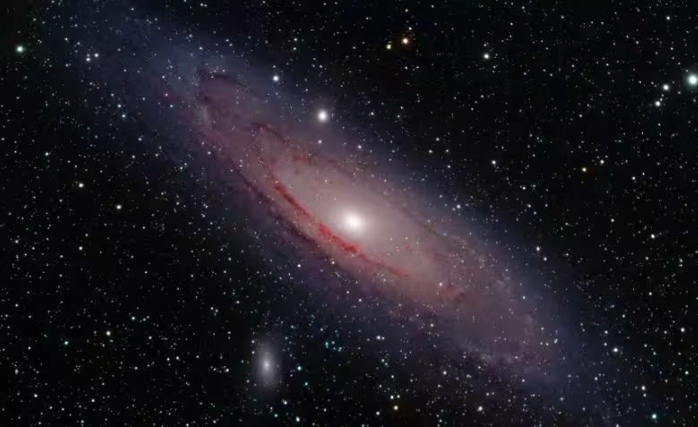
Rizo compartió que “en Guadalajara al ser sede el CUCEI de la UdeG, participarán alumnos y profesores del con la realización de diversos talleres simultáneos relacionados con la Física Cuántica, de diferentes niveles, algunos ideados para niños y otros para expertos. La conferencia central la dará Alejandro Márquez Lugo sobre Física cuántica. Se espera contar con 35 telescopios para realizar observación de las 20:00 a las 23:00 horas en que finalizará el evento y aunque no se podrá ver objetos de cielo profundo, debido a que el cielo contaminado en ciudad no lo permite, sí será posible ver Saturno, la luna, la nebulosa de Orión y la Galaxia Andrómeda. Estamos preparados para recibir hasta 3 mil 500 personas que fue la afluencia que tuvimos el año pasado”.

También se hará una actividad titulada Dibuja la luna. Habrá tres telescopios disponibles para quienes quieran dibujar la luna y al final los organizadores sellarán su dibujo para que constate que lo hicieron en el momento”. Otras actividades que destacan en el programa entre charlas y cuentacuentos, son la participación de grupos de rock de profesores del CUCEI y el grupo Deepnótika que compuso un tema original para este encuentro”.

Starry Night takes place this November 29th throughout Mexico and Guatemala, with a total of 120 venues. For the seventeenth consecutive year, it is the most important astronomical event in Latin America. In Guadalajara, the venue will be the University Center for Exact Sciences and Engineering of the University of Guadalajara, from 4:00 PM to 10:00 PM, as announced in an interview by Gerardo Rizo, collaborator of Balsia Productions and member of the Board of Directors of the Astronomical Society of Guadalajara (SAG), one of the organizing associations since 2009.

Among the special features of this year is the celebration of the International Year of Quantum Science and Technology. One hundred years since the beginning of the development of this science, which, in Rizo’s words, “is revolutionizing our understanding of the cosmos and transforming our daily lives with technologies such as cryptography and advanced medicine. In 2025, the centenary of the beginning of quantum physics, professional and amateur astronomers, science communicators, students and professors of science disciplines, as well as the general public, will gather to observe the sky, enjoy science, and celebrate how quantum science and technologies have impacted our lives.”

Rizo shared that “in Guadalajara, with the CUCEI (University of Guadalajara’s Center for Exact Sciences and Engineering) hosting the event, students and professors will participate in various simultaneous workshops related to Quantum Physics, at different levels, some designed for children and others for experts. The keynote address will be given by Alejandro Márquez Lugo on Quantum Physics. We expect to have 35 telescopes available for observation from 8:00 PM to 11:00 PM, when the event will conclude. Although deep-sky objects will not be visible due to the city’s light pollution, it will be possible to see Saturn, the moon, the Orion Nebula, and the Andromeda Galaxy. We are prepared to receive up to 3,500 people, which was the attendance we had last year.”

An activity titled “Draw the Moon” will also be offered. Three telescopes will be available for those who want to draw the moon, and at the end, the organizers will stamp their drawings to verify that they were done on the spot. Other highlights of the program, in addition to talks and storytelling, include performances by rock bands made up of professors from CUCEI and the group Deepnótika, who composed an original song for this event.

PROGRAMA

ACTIVIDADES QUE SE REALIZARÁN EN OTRAS ENTIDADES

En la Ciudad de México y su área conurbada habrá doce sedes para la atención del público: Las Islas de Ciudad Universitaria, UNAM, con actividades de las 15 a las 22 horas; el Planetario Luis Enrique Erro y el Museo Tezozomoc, ambos del IPN, también con el horario mencionado. El Museo de Historia Natural (Chapultepec); el Bosque de Tláhuac; el plantel San Lorenzo Tezonco de la Universidad Autónoma de la Ciudad de México (Iztapalapa); la Casa de la Cultura del Parque Naucalli; el Tecnológico de Estudios Superiores (TecNM) de Ecatepec; el parque de la Torre Naranja de Geovillas de Santa Bárbara en Ixtapaluca; el Planetario Digital de Chimalhuacán; el Centro Cultural Mexiquense Bicentenario de Texcoco; y el Museo Chinampaxóchitl (Parque ecológico de Xochimilco).

NOCHE DE LAS ESTRELLAS 2025 ENTRE ESTRELLAS Y ÁTOMOS

Este año fue declarado por la ONU como el Año Internacional de la Ciencia y la Tecnología Cuánticas para conmemorar el centenario del inicio del desarrollo de la mecánica cuántica. En 1925 Werner Heisenberg publicó la primera formulación de una teoría que sentó la base para entender el comportamiento de los fenómenos a escala atómica y subatómica. En la década de 1920, personajes como Heisenberg, Erwin Schrödinger, Max Born, Wolfgang Pauli y Louis de Brougli desarrollaron los principios que en 2025 han pasado de ser ideas interesantes a formar uno de los pilares de la física contemporánea y dar lugar a nuevas tecnologías que hemos incorporado en nuestra vida cotidiana. El desarrollo de los transistores, que son la base del funcionamiento de nuestros celulares, es un claro ejemplo de estas tecnologías.

Por otro lado, la ciencia cuántica ha sido esencial para la comprensión de los fenómenos fundamentales del Universo. La mecánica cuántica es la única herramienta que permite describir los procesos que hacen que las estrellas, como nuestro Sol, brillen, así como los procesos que ocurrieron en los instantes posteriores al Big Bang cuando se formaron los primeros átomos en el Universo. La ciencia cuántica también es esencial para el entendimiento de la fenomenología de los objetos cósmicos más enigmáticos, los agujeros negros.

Además, en este 2025 tenemos muchas otras cosas que celebrar. En primer lugar a dos mujeres muy importantes en el desarrollo de la astronomía: 275 aniversario del natalicio de Caroline Herschel, la primera mujer en obtener un puesto de astrónoma profesional remunerado y contribuir en el descubrimiento e identificación de miles de objetos; y el 100 aniversario del natalicio de Nancy Roman, primera Jefa de Astronomía de la NASA y quien fue fundamental para poner en órbita al Telescopio Espacial Hubble, instrumento que revolucionó nuestra visión del Universo. En segundo lugar, celebramos tres aniversarios de transformaciones en nuestra comprensión del universo: 60 aniversario del descubrimiento de la Radiación Cósmica de Fondo, que muestra la luz de las primeras etapas del Universo; los 10 años del descubrimiento de las Ondas Gravitacionales, una predicción de la Teoría de la Relatividad General formulada por Albert Einstein; y el décimo aniversario de la inauguración del Observatorio de Rayos Gamma HAWC, el cual pone a México en el escenario del estudio del Universo en las más altas energías.

Rizo agregó: “Asimismo, en México celebramos el 700 aniversario de la fundación de la Gran Tenochtitlan, que algunos investigadores relacionan con la ocurrencia de un eclipse total de Sol observable desde lo que hoy es la CDMX; y el 235 aniversario del descubrimiento de la Piedra del Sol, un compendio de siglos de observación astronómica”.

ACTIVITIES TAKING PLACE IN OTHER ENTITIES

In Mexico City and its metropolitan area, there will be twelve venues open to the public: Las Islas at Ciudad Universitaria, UNAM, with activities from 3:00 p.m. to 10:00 p.m.; the Luis Enrique Erro Planetarium and the Tezozomoc Museum, both part of the IPN, also with the aforementioned hours. The Museum of Natural History (Chapultepec); the Tláhuac Forest; the San Lorenzo Tezonco campus of the Autonomous University of Mexico City (Iztapalapa); the Naucalli Park Cultural Center; the Technological Institute of Higher Studies (TecNM) of Ecatepec; the Orange Tower Park in Geovillas de Santa Bárbara, Ixtapaluca; the Chimalhuacán Digital Planetarium; the Bicentennial Cultural Center of the State of Mexico in Texcoco; and the Chinampaxóchitl Museum (Xochimilco Ecological Park).

NIGHT OF THE STARS 2025: BETWEEN STARS AND ATOMS

This year was declared by the UN as the International Year of Quantum Science and Technology to commemorate the centenary of the beginning of the development of quantum mechanics. In 1925, Werner Heisenberg published the first formulation of a theory that laid the foundation for understanding the behavior of phenomena at the atomic and subatomic scale. In the 1920s, figures such as Heisenberg, Erwin Schrödinger, Max Born, Wolfgang Pauli, and Louis de Brougli developed the principles that, by 2025, had gone from being interesting ideas to forming one of the pillars of contemporary physics and giving rise to new technologies that we have incorporated into our daily lives. The development of transistors, which are the basis of the operation of our cell phones, is a clear example of these technologies.

On the other hand, quantum science has been essential for understanding the fundamental phenomena of the Universe. Quantum mechanics is the only tool that allows us to describe the processes that make stars, like our Sun, shine, as well as the processes that occurred in the moments after the Big Bang when the first atoms formed in the Universe. Quantum science is also essential for understanding the phenomenology of the most enigmatic cosmic objects: black holes.

Furthermore, in 2025 we have many other things to celebrate. First, two very important women in the development of astronomy: the 275th anniversary of the birth of Caroline Herschel, the first woman to hold a paid professional astronomy position and contribute to the discovery and identification of thousands of objects; and the 100th anniversary of the birth of Nancy Roman, NASA’s first Chief of Astronomy, who was instrumental in launching the Hubble Space Telescope, an instrument that revolutionized our view of the Universe. Secondly, we celebrate three anniversaries of transformations in our understanding of the universe: the 60th anniversary of the discovery of the Cosmic Microwave Background Radiation, which reveals the light from the early stages of the Universe; the 10th anniversary of the discovery of Gravitational Waves, a prediction of the Theory of General Relativity formulated by Albert Einstein; and the 10th anniversary of the inauguration of the HAWC Gamma Ray Observatory, which places Mexico at the forefront of studying the Universe at the highest energies.

Rizo added: “Likewise, in Mexico we celebrate the 700th anniversary of the founding of Great Tenochtitlan, which some researchers link to the occurrence of a total solar eclipse visible from what is now Mexico City; and the 235th anniversary of the discovery of the Sun Stone, a compendium of centuries of astronomical observation.”

Una de las actividades será Dibuja la luna / One of the activities will be Draw the moon. Foto /CORTESÍA

ORGANIZADORES Y ALCANCE


La Noche de las Estrellas es un proyecto de la Academia Mexicana de Ciencias (AMC), la Universidad Nacional Autónoma de México (UNAM), el Instituto de Astronomía de la UNAM (IA), el Instituto Politécnico Nacional (IPN), el Instituto Nacional de Astrofísica, Óptica y Electrónica (INAOE), la Asociación Mexicana de Planetarios (AMPAC), las Sociedades Astronómicas de la Noche de las Estrellas (SANDE) y ahora apoyado por la nueva Secretaría de Ciencia, Humanidades, Tecnología e Innovación (SECIHTI). Cuenta, además, con la colaboración especial de la Embajada de Francia en México, así como de la Federación de Alianzas Francesas, de la revista digital Obsidiana y con el patrocinio en el ámbito nacional de Celestron (Victorinox México) y de Kosmos Scientific. Todos ellos nos invitan a no perdernos la oportunidad de conocer el fascinante mundo de la ciencia.

A lo largo de las dieciseis ediciones pasadas, la Noche de las Estrellas ha atendido a más de cuatro millones de personas, que han sido atendidos con el apoyo de cerca de 85 mil voluntarios y más de 22 mil telescopios.

Mayor información puede encontrarse en el sitio: https://www.nochedelasestrellas.org.mx/ , Facebook: @nochedelasestrellasmx, twitter @NocheEstrellas, en el correo

ORGANIZERS AND SCOPE


The Night of the Stars is a project of the Mexican Academy of Sciences (AMC), the National Autonomous University of Mexico (UNAM), the UNAM Institute of Astronomy (IA), the National Polytechnic Institute (IPN), the National Institute of Astrophysics, Optics and Electronics (INAOE), the Mexican Association of Planetariums (AMPAC), the Night of the Stars Astronomical Societies (SANDE), and is now supported by the new Secretariat of Science, Humanities, Technology and Innovation (SECIHTI). It also has the special collaboration of the French Embassy in Mexico, as well as the Federation of Alliances Française, the digital magazine Obsidiana, and national sponsorship from Celestron (Victorinox Mexico) and Kosmos Scientific. All of them invite us not to miss this opportunity to explore the fascinating world of science.

Over the past sixteen editions, the Night of the Stars has served more than four million people, thanks to the support of nearly 85,000 volunteers and over 22,000 telescopes.

More information can be found at: https://www.nochedelasestrellas.org.mx/, Facebook: @nochedelasestrellasmx, Twitter: @NocheEstrellas, or by email at nochedelasestrellas.oficial@gmail.com