
Literature. The 2025 FIL Prize for Literature in Romance Languages goes to Amin Maalouf
El autor de Samarcanda y León Africano, dijo sentirse satisfecho de haber obtenido esta distinción se pronunció a favor de la migración entre países y recordó que muchos de los males del mundo se deben a la crisis de identidad que vive la mayor parte de la población
The author of Samarcanda and African Lion said he was pleased to have received this distinction. He spoke out in favor of migration between countries and noted that many of the world’s ills are due to the identity crisis experienced by the majority of the population.

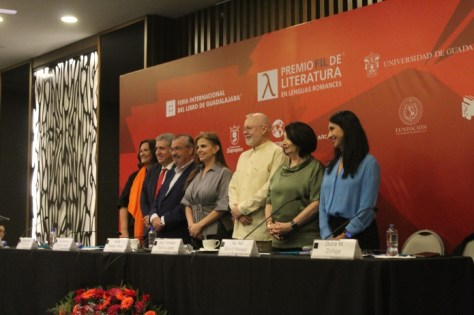
Amin Maloof sostuvo una charla virtual con organizadores de la FIL Guadalajara y periodistas/Amin Maalouf held a virtual chat with the organizers of the Guadalajara International Book Fair and journalists. Fotos: ENRIQUE VÁZQUEZ
Enrique Vázquez Lozano / Guadalajara
Amin Maalouf obtuvo el Premio FIL de Literatura en Lenguas Romances 2025, por ser “una de las voces más importantes de nuestro tiempo”, según estableció en el acta correspondiente, un jurado integrado por Alain Mabanckou de República del Congo, Carmen Alemany de España, Francisco Noa de Mozambique, Jerónimo Pizarro de Colombia, Lucía Melgar de México, Massimo Rizzante de Italia y Xavi Ayén de España.
En su veredicto, los especialistas indicaron que la obra del escritor franco-libanés, quien recibirá el galardón el próximo 29 de noviembre en la ceremonia inaugural de la Feria Internacional del Libro de Guadalajara, “tiene un lugar esencial en la literatura contemporánea porque explora con gran lucidez las fracturas y los mestizajes del mundo moderno”.
Maalouf, nacido en Beirut (1949) y afincado en Francia desde hace ya varios años, agradeció al jurado su decisión, dijo sentirse muy contento y recordó que la crisis del mundo se debe mucho a la crisis de identidad, ya que la identidad es el camino para reconocer nuestro lugar en el mundo y desde ahí trabajar juntos en solidaridad. Al haber crisis de identidad es más difícil que haya solidaridad entre los individuos y esto genera que no exista un orden mundial digno.
El también premio Príncipe de Asturias de Letras 2010 y autor de Samarcanda y León Africano compartió que la manera en que los países desarrolladores del mundo ejercen la gobernanza lo hacen de manera desequilibrada. “Hemos alcanzado el umbral de la incompetencia. Lo que me preocupa es la manera de organizar la sociedad, las relaciones entre humanos. Es necesario encontrar un equilibrio… es necesaria la movilidad entre países, dijo, que la migración no debería verse como un aspecto negativo entre las naciones”.
El anuncio se dio a conocer este lunes 1 de septiembre en una conferencia de prensa en la ciudad de Guadalajara, México, que estuvo presidida por Karla Planter Pérez, rectora general de la Universidad de Guadalajara; Luis Gerardo Ascencio Rubio, secretario de Cultura de Jalisco; Héctor Raúl Solís Gadea y Dulce María Zúñiga, presidente y directora del Premio FIL de Literatura en Lenguas Romances, respectivamente; Carmen Alemany Bay, representante del Jurado del Premio FIL 2025, así como Trinidad Padilla López y Marisol Schulz Manaut, presidente y directora general de la Feria Internacional del Libro de Guadalajara.
En esta edición el Premio FIL de Literatura en Lenguas Romances recibió un total de 63 candidaturas. Considerando las coincidencias, ya que algunas instituciones y jurados propusieron al mismo autor o autora, el total de escritores a evaluar fue de 48. Las lenguas representadas fueron seis: española, francesa, italiana, portuguesa, gallega y catalana. En cuanto a los países de los autores se registraron 18: España, El Salvador, Colombia, México, Argentina, Nicaragua, Cuba, Chile, Japón, Líbano, Francia, Senegal, Marruecos, Guinea, Italia, Cabo Verde, Brasil y Portugal.
Durante la lectura del acta del Jurado, Carmen Alemany Bay dijo que las novelas y los ensayos del escritor franco-libanés “exploran la memoria y el exilio, a la vez que rechazan la cerrazón nacionalista o religiosa. Maalouf da voz a los desarraigados y viajeros de distintas épocas y muestra que nuestras identidades múltiples están constituidas de estratos, de cruces y pasajes, más que de muros. Su pensamiento humanista, crítico y generoso, ilumina nuestra época atravesada por conflictos entre culturas y memorias y nos recuerda que la esperanza reside en el reconocimiento de nuestras herencias compartidas”.
Amin Maalouf es reconocido como uno de los escritores más brillantes en la actualidad de las letras francesas. Ha incursionado en la novela, el ensayo y el periodismo. Miembro de la Academia Francesa desde 2011, Maalouf ha sido galardonado con múltiples premios, destacando por su defensa del diálogo intercultural, entre ellos se encuentra el Premio Goncourt al mejor libro de geopolítica, así como el Premio Príncipe de Asturias. Su obra ha sido traducida a más de cuarenta idiomas. Entre ellas destacan León el Africano, Samarcanda, Los jardines de luz, Orígenes, Identidades asesinas y El naufragio de las civilizaciones.
El Premio FIL de Literatura en Lenguas Romances está dotado con 150 mil dólares y se entrega como reconocimiento al conjunto de una obra de creación en cualquier género literario. La asociación civil que lo convoca cada año está conformada por la Universidad de Guadalajara, el Gobierno del Estado de Jalisco, los gobiernos de Guadalajara y de Zapopan, Fundación Universidad de Guadalajara AC, Arca Continental, Fibra Educa y Bancomext. Desde su primera edición en 1991 lo han recibido autores como Nicanor Parra, Olga Orozco, Fernando del Paso, Margo Glantz, Emmanuel Carrère, Claudio Magris, Ida Vitale, Diamela Eltit, Mircea Cãrtãrescu y Coral Bracho, entre otras grandes figuras de la literatura contemporánea.
Mayor información en Mayor información en https://www.fil.com.mx/.
Amin Maalouf won the 2025 FIL Prize for Literature in Romance Languages for being «one of the most important voices of our time,» according to the corresponding minutes of a jury composed of Alain Mabanckou from the Republic of the Congo, Carmen Alemany from Spain, Francisco Noa from Mozambique, Jerónimo Pizarro from Colombia, Lucía Melgar from Mexico, Massimo Rizzante from Italy, and Xavi Ayén from Spain.
In their verdict, the experts indicated that the work of the French-Lebanese writer, who will receive the award on November 29 at the opening ceremony of the Guadalajara International Book Fair, «has an essential place in contemporary literature because it explores with great lucidity the fractures and fusions of the modern world.»
Maalouf, born in Beirut (1949) and living in France for several years, thanked the jury for their decision, said he was very pleased, and noted that the global crisis is largely due to the identity crisis, since identity is the path to recognizing our place in the world and from there working together in solidarity. When there is an identity crisis, solidarity among individuals is more difficult, and this leads to the lack of a dignified world order.
The 2010 Prince of Asturias Award winner for Literature and author of Samarcanda and African Lion shared that the way the world’s developing countries exercise governance is unbalanced. “We have reached the threshold of incompetence. What worries me is the way we organize society, the relationships between humans. We need to find a balance… mobility between countries is necessary,” he said, adding that migration should not be seen as a negative aspect between nations.
The announcement was made this Monday, September 1, at a press conference in Guadalajara, Mexico, presided over by Karla Planter Pérez, Rector General of the University of Guadalajara; Luis Gerardo Ascencio Rubio, Secretary of Culture of Jalisco; Héctor Raúl Solís Gadea and Dulce María Zúñiga, president and director of the FIL Prize for Literature in Romance Languages, respectively; Carmen Alemany Bay, representative of the 2025 FIL Prize Jury; as well as Trinidad Padilla López and Marisol Schulz Manaut, president and director general of the Guadalajara International Book Fair.
This year, the FIL Prize for Literature in Romance Languages received a total of 63 nominations. Considering the overlap, as some institutions and juries nominated the same author, the total number of writers to be evaluated was 48. Six languages were represented: Spanish, French, Italian, Portuguese, Galician, and Catalan. Eighteen authors were registered as authors: Spain, El Salvador, Colombia, Mexico, Argentina, Nicaragua, Cuba, Chile, Japan, Lebanon, France, Senegal, Morocco, Guinea, Italy, Cape Verde, Brazil, and Portugal.
During the reading of the jury’s report, Carmen Alemany Bay said that the French-Lebanese writer’s novels and essays «explore memory and exile, while rejecting nationalist or religious isolation. Maalouf gives voice to the uprooted and travelers of different eras and shows that our multiple identities are made up of layers, intersections, and passages, rather than walls. His humanistic, critical, and generous thought illuminates our era, riven by conflicts between cultures and memories, and reminds us that hope lies in recognizing our shared heritages.»
Amin Maalouf is recognized as one of the most brilliant writers of French literature today. He has worked in novels, essays, and journalism. A member of the Académie française since 2011, Maalouf has received numerous awards, notable for his advocacy of intercultural dialogue. These include the Prix Goncourt for best book on geopolitics and the Prince of Asturias Award. His work has been translated into more than 40 languages. These include Leo Africanus, Samarkand, Gardens of Light, Origins, Murderous Identities, and The Shipwreck of Civilizations.
The FIL Prize for Literature in Romance Languages is endowed with $150,000 and is awarded to a body of work in any literary genre. The civil association that organizes the prize each year is made up of the University of Guadalajara, the Government of the State of Jalisco, the governments of Guadalajara and Zapopan, the University of Guadalajara Foundation AC, and Arca Continental, Fibra Educa and Bancomext. Since its first edition in 1991, it has been received by authors such as Nicanor Parra, Olga Orozco, Fernando del Paso, Margo Glantz, Emmanuel Carrère, Claudio Magris, Ida Vitale, Diamela Eltit, Mircea Cãrtãrescu and Coral Bracho, among other great figures of contemporary literature.
More information: https://www.fil.com.mx/.



 balsiaproducciones.com.mx