
MÚSICA. Maná logró convocar a 170 mil fans en La Minerva
MUSIC. Maná drew 170,000 fans to La Minerva.

18 de junio /June 18th 2026

Más de 170 mil personas asistieron a La Minerva a escuchar a Maná, en el marco de las actividades rumbo a la Copa Mundial 2026 la noche del 17 de junio, según informó el gobierno del Estado de Jalisco.
La banda tapatía ofreció un concierto gratuito que combinó nostalgia, identidad y celebración colectiva en la antesala del encuentro entre México y Corea. El evento tuvo un costo de 15. 5 millones de pesos. Trascendió que rechazaron el pago y decidieron donar la totalidad de ese dinero para campañas masivas de reforestación y cuidado ambiental en Guadalajara y Puerto Vallarta.
Desde temprana hora, miles de asistentes ocuparon calles y glorietas para formar parte de una velada que tuvo ambiente de final mundialista. Con Fher Olvera, Alex González, Sergio Vallín y Juan Calleros sobre el escenario, la agrupación repasó los himnos que han marcado generaciones. Temas como “Vivir sin aire”, “Labios compartidos”, “En el muelle de San Blas”, “Rayando el sol” y “Oye mi amor” fueron coreados por una multitud que permaneció en el sitio hasta cerca de la medianoche.
More than 170,000 people attended a concert at La Minerva on the night of June 17, as part of the activities leading up to the 2026 World Cup, according to the Jalisco state government.
The Guadalajara-based band offered a free concert that combined nostalgia, identity, and collective celebration in the lead-up to the Mexico-Korea match. The event cost 15.5 million pesos. It was reported that they refused payment and decided to donate the entire amount to massive reforestation and environmental conservation campaigns in Guadalajara and Puerto Vallarta.
From early in the day, thousands of attendees filled the streets and roundabouts to be part of an evening that had the atmosphere of a World Cup final. With Fher Olvera, Alex González, Sergio Vallín, and Juan Calleros on stage, the group revisited the anthems that have marked generations. Songs like “Vivir sin aire,” “Labios compartidos,” “En el muelle de San Blas,” “Rayando el sol,” and “Oye mi amor” were sung along to by a crowd that remained at the site until nearly midnight.
CINE. Murió Daveigh Chase
FILM. Daveigh Chase Dies

18 de junio /June 18th 2026
El mundo del entretenimiento lamenta la muerte de la actriz estadounidense Daveigh Chase, quien falleció a los 35 años el pasado 16 de junio de 2026 en un hospital de Los Ángeles. De acuerdo con reportes médicos, la intérprete sufrió complicaciones derivadas de una meningitis bacteriana que desencadenó una severa sepsis y un posterior fallo multiorgánico. La artista era reconocida internacionalmente por dar vida a Samara Morgan en la película de terror The Ring y por ser la voz original de Lilo en el clásico animado Lilo & Stitch.
Durante sus últimos años, Chase permaneció alejada de Hollywood y enfrentó una profunda crisis personal. Fuentes cercanas señalaron que vivía en condiciones precarias en Skid Row, una de las zonas más vulnerables de Los Ángeles, mientras luchaba contra severas adicciones.
Tras su fallecimiento surgió una nueva polémica cuando su exmánager, John Ryan Jr., denunció como fraudulenta una campaña de recaudación de fondos impulsada por la pareja de la actriz. Asimismo, reveló que durante una década se desconoció el paradero de Chase, situación que motivó la producción de un documental titulado Finding Lilo, proyecto que ahora buscará honrar y preservar su legado artístico.
The entertainment world mourns the death of American actress Daveigh Chase, who passed away at the age of 35 on June 16, 2026, in a Los Angeles hospital. According to medical reports, the actress suffered complications from bacterial meningitis that led to severe sepsis and subsequent multiple organ failure. She was internationally recognized for her portrayal of Samara Morgan in the horror film The Ring and for being the original voice of Lilo in the animated classic Lilo & Stitch.
During her final years, Chase remained out of the public eye and faced a profound personal crisis. Sources close to her indicated that she was living in precarious conditions in Skid Row, one of the most vulnerable areas of Los Angeles, while battling severe addictions.
Following her death, a new controversy arose when her former manager, John Ryan Jr., denounced a fundraising campaign launched by the actress’s partner as fraudulent. He also revealed that Chase’s whereabouts were unknown for a decade, a situation that motivated the production of a documentary titled Finding Lilo, a project that will now seek to honor and preserve his artistic legacy.
MEDIOS. Jeremy Clarkson anunció que tiene cáncer
MEDIA. Jeremy Clarkson Announces He Has Cancer

17 de junio /June 17th 2026
El reconocido presentador británico Jeremy Clarkson reveló públicamente que fue diagnosticado con un agresivo cáncer de próstata, noticia que compartió durante el episodio final de la quinta temporada de la serie Clarkson’s Farm. El conductor de 66 años explicó que la enfermedad fue detectada en una etapa temprana tras una revisión médica de rutina y una biopsia posterior.
Como parte del tratamiento, Clarkson se sometió a una cirugía para extirpar aproximadamente el 10% de la próstata afectada por el tumor. Aunque los especialistas actuaron con rapidez, el periodista confesó que una parte del procedimiento presentó complicaciones, obligándolo a permanecer hospitalizado bajo observación médica.
El también exconductor de Top Gear señaló que recibió el diagnóstico original en mayo de 2025 mientras grababa la serie, por lo que gran parte del tratamiento ocurrió meses antes de la emisión del episodio. Con su característico humor, dejó en duda su regreso para una futura temporada del programa. La noticia generó reacciones de apoyo, incluida la fundación Prostate Cancer UK, que agradeció su contribución para crear conciencia sobre la importancia de los chequeos preventivos en hombres mayores de 50 años.
The renowned British presenter Jeremy Clarkson publicly revealed that he was diagnosed with an aggressive form of prostate cancer, a fact he shared during the season finale of Clarkson’s Farm. The 66-year-old explained that the disease was detected at an early stage following a routine medical check-up and a subsequent biopsy.
As part of his treatment, Clarkson underwent surgery to remove approximately 10% of his prostate affected by the tumor. Although the specialists acted quickly, the journalist confessed that part of the procedure presented complications, requiring him to remain hospitalized under medical observation.
The former Top Gear presenter noted that he received the original diagnosis in May 2015 while filming the series, meaning that much of his treatment took place months before the episode aired. With his characteristic humor, he left his return for a future season of the show uncertain. The news generated supportive reactions, including from the Prostate Cancer UK foundation, which thanked him for his contribution to raising awareness about the importance of preventative check-ups in men over 50.
CINE Y TV. Estrenan Citizen Vigilante
FILM AND TV. Citizen Vigilante Premieres
17 de junio /June 17th 2026
La controversia acompaña el estreno de Citizen Vigilante (2026), el nuevo thriller de acción dirigido por el cineasta alemán Uwe Boll, una figura acostumbrada a desafiar a la crítica y a la industria. La película es protagonizada por Armie Hammer, quien regresa al cine tras varios años alejado de Hollywood, acompañado por Thomas Jane y Amanda Plummer.
La historia que puede disfrutarse a partir del 19 de junio, sigue a un exmilitar estadounidense que, desencantado con el sistema de justicia europeo, emprende una cruzada personal contra la delincuencia y la corrupción. Sin embargo, la representación de grupos criminales integrados mayoritariamente por inmigrantes provocó fuertes acusaciones de xenofobia y discursos de odio.
Las autoridades alemanas rechazaron otorgarle clasificación por edades, bloqueando su estreno comercial en ese país. Ante esta situación, Uwe Boll decidió distribuir gratuitamente la película a través de la red social X, una estrategia que impulsó su alcance internacional y reavivó el debate sobre la censura, la libertad de expresión y las nuevas formas de exhibición digital.
Entre críticas que la califican como una provocación ideológica y espectadores que defienden su mirada sobre la inseguridad, Citizen Vigilante se ha convertido en uno de los títulos más polémicos del año.
Controversy surrounds the premiere of Citizen Vigilante (2026), the new action thriller directed by German filmmaker Uwe Boll, a figure accustomed to challenging critics and the industry. The film stars Armie Hammer, who returns to cinema after several years away from Hollywood, alongside Thomas Jane and Amanda Plummer.
The story, which can be enjoyed starting June 19, follows a former US soldier who, disillusioned with the European justice system, embarks on a personal crusade against crime and corruption. However, the portrayal of criminal groups made up mostly of immigrants provoked strong accusations of xenophobia and hate speech.
German authorities refused to give it an age rating, blocking its commercial release in that country. Faced with this situation, Uwe Boll decided to distribute the film for free through the social network X, a strategy that boosted its international reach and reignited the debate about censorship, freedom of expression, and new forms of digital exhibition.
Between critics who describe it as an ideological provocation and viewers who defend its perspective on insecurity, Citizen Vigilante has become one of the most controversial titles of the year.
LETRAS. Murió Carlo Ginzburg
LITERATURE. Carlo Ginzburg Dies
17 de junio /June 17th 2026
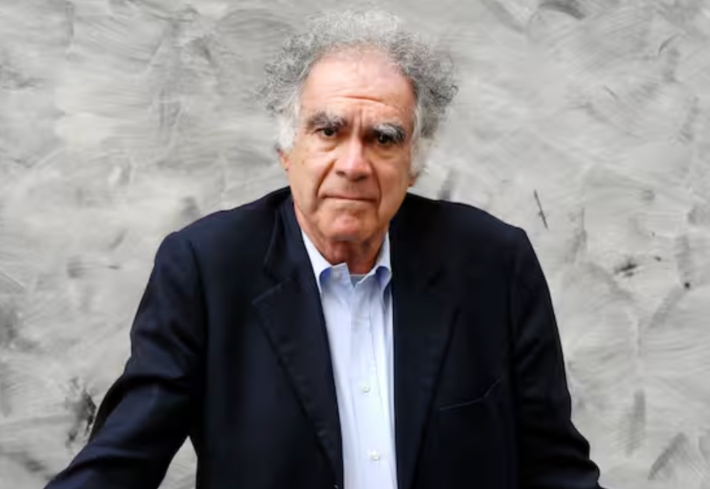
La historiografía mundial despide a una de sus figuras más influyentes. El historiador italiano Carlo Ginzburg falleció el 17 de junio de 2026 en Bolonia a los 87 años, dejando un legado que transformó la manera de interpretar el pasado y comprender las voces olvidadas de la historia.
Reconocido como uno de los padres de la microhistoria, Ginzburg revolucionó las ciencias sociales al demostrar que el estudio de individuos y comunidades aparentemente marginales puede revelar complejas estructuras culturales y sociales. Su obra más emblemática, El queso y los gusanos (1976), reconstruyó la visión del mundo de Menocchio, un molinero del siglo XVI perseguido por la Inquisición, convirtiéndose en un referente imprescindible para historiadores de todo el mundo.
También desarrolló el célebre “paradigma indiciario”, método que compara la labor del historiador con la de un detective que sigue pistas para reconstruir realidades ocultas. Profesor en universidades de Europa y Estados Unidos, su influencia marcó generaciones de investigadores. Su muerte provoca hoy un profundo reconocimiento internacional a una vida dedicada a descifrar la memoria humana.
World historiography mourns the loss of one of its most influential figures. The Italian historian Carlo Ginzburg died on June 17, 2026, in Bologna at the age of 87, leaving behind a legacy that transformed the way we interpret the past and understand the forgotten voices of history.
Recognized as one of the fathers of microhistory, Ginzburg revolutionized the social sciences by demonstrating that the study of seemingly marginal individuals and communities can reveal complex cultural and social structures. His most emblematic work, The Cheese and the Worms (1976), reconstructed the worldview of Menocchio, a 16th-century miller persecuted by the Inquisition, becoming an essential reference for historians worldwide.
He also developed the celebrated «evidential paradigm,» a method that compares the work of the historian to that of a detective following clues to reconstruct hidden realities. A professor at universities in Europe and the United States, his influence shaped generations of researchers. His death today provokes profound international recognition of a life dedicated to deciphering human memory.
ARTE. Heritage Auctions subastó piezas arqueológicas mexicanas
ART. Heritage Auctions Auctioned Mexican Archaeological Pieces
17 de junio /June 17th 2026
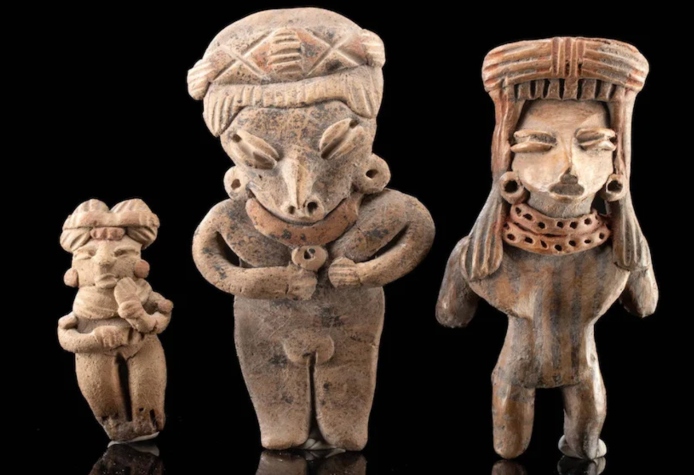
La subasta de 121 piezas arqueológicas y bienes precolombinos mexicanos, realizada el 17 de junio de 2026 por la casa Heritage Auctions en Dallas, Texas, reavivó la controversia internacional sobre la comercialización del patrimonio cultural de México. Integrada en la venta de Arte Etnográfico, Indígena Americano, Precolombino y Tribal, la puja reunió objetos atribuidos a las culturas maya, mexica, teotihuacana, olmeca y mezcala, despertando el rechazo de especialistas y autoridades mexicanas que desde hace años impulsan acciones para frenar este tipo de operaciones y promover la repatriación de bienes históricos.
Entre las piezas más llamativas del catálogo destacaron una máscara del dios Sol y una máscara monumental de Teotihuacan, además de esculturas, figuras ceremoniales y objetos rituales con un alto valor histórico. La subasta contempló una recaudación estimada superior a los 500 mil dólares, con varias obras valuadas en decenas de miles de dólares, reflejando el creciente interés del mercado internacional por el arte prehispánico.
El evento volvió a poner sobre la mesa el debate sobre la propiedad y el destino del patrimonio cultural latinoamericano, en medio de los constantes reclamos del Gobierno de México para detener la venta de piezas que considera parte de su identidad histórica. Mientras casas de subastas sostienen que los objetos pertenecen a colecciones privadas adquiridas legalmente, las autoridades mexicanas insisten en que estos bienes representan un legado irremplazable que debe permanecer bajo resguardo público.
En paralelo, organismos internacionales como el Consejo Internacional de Museos (ICOM) y la UNESCO reforzaron iniciativas para promover la protección, conservación y acceso al patrimonio cultural, impulsando el diálogo sobre la importancia de preservar la memoria histórica frente a su creciente comercialización en el mercado global.
The auction of 121 archaeological and pre-Columbian Mexican artifacts, held on June 17, 2026, by Heritage Auctions in Dallas, Texas, reignited the international controversy surrounding the commercialization of Mexico’s cultural heritage. Part of the sale of Ethnographic, Indigenous American, Pre-Columbian, and Tribal Art, the auction included objects attributed to the Maya, Mexica, Teotihuacan, Olmec, and Mezcala cultures, sparking outrage among specialists and Mexican authorities who have been advocating for years to halt these types of transactions and promote the repatriation of historical artifacts.
Among the most striking pieces in the catalog were a mask of the Sun god and a monumental mask from Teotihuacan, as well as sculptures, ceremonial figures, and ritual objects of significant historical value. The auction was expected to raise over $500,000, with several works valued at tens of thousands of dollars, reflecting the growing international market interest in pre-Hispanic art.
The event reignited the debate surrounding the ownership and fate of Latin American cultural heritage, amidst the Mexican government’s repeated calls to halt the sale of pieces it considers part of its historical identity. While auction houses maintain that the objects belong to legally acquired private collections, Mexican authorities insist that these artifacts represent an irreplaceable legacy that must remain under public protection.
Meanwhile, international organizations such as the International Council of Museums (ICOM) and UNESCO strengthened initiatives to promote the protection, conservation, and access to cultural heritage, fostering dialogue on the importance of preserving historical memory in the face of its increasing commercialization in the global market.

