
CINE. La cinta Sheep in the Box ha tenido buena aceptación en pantallas comerciales
FILM. Sheep in the Box has been well-received in commercial theaters.

“Sheep in the Box”, el nuevo filme de Hirokazu Koreeda que explora el duelo y la inteligencia artificial
El reconocido director japonés Hirokazu Koreeda vuelve a explorar los vínculos familiares y las emociones humanas en Sheep in the Box (Hako no naka no hitsuji), su más reciente película, estrenada mundialmente en la Competencia Oficial del Festival de Cannes 2026.
Ambientada en un Japón de futuro cercano, la historia sigue a Kensuke Komoto, un carpintero, y Otone, una arquitecta, quienes intentan reconstruir sus vidas tras la muerte de su único hijo, ocurrida dos años antes. Su duelo toma un giro inesperado cuando la empresa de inteligencia artificial Rebirth les entrega una réplica androide del niño, creada a partir de fotografías, videos y las huellas digitales de su vida.
El androide, llamado Kakeru, reproduce la apariencia y los recuerdos del hijo fallecido, pero su existencia está condicionada por límites tecnológicos. Uno de ellos es que no puede alejarse más de 30 metros de sus padres; de hacerlo, se apaga por completo. Este elemento se convierte en una metáfora sobre el miedo a una nueva pérdida, la incapacidad de desprenderse de los seres queridos y los límites de la protección.
La cinta está protagonizada por Daigo como Kensuke, Haruka Ayase en el papel de Otone y Rimu Kuwaki como Kakeru. Tras su paso por Cannes, Sheep in the Box llegó a salas selectas de Nueva York y Los Ángeles el pasado 24 de julio.
La película ha generado opiniones divididas entre la crítica internacional. Mientras algunos especialistas cuestionaron su desarrollo, otros destacaron la delicadeza con la que Koreeda aborda el duelo, la identidad y la relación entre tecnología y espiritualidad.
Con esta historia de ciencia ficción íntima, el cineasta plantea una pregunta inquietante: ¿puede una réplica tecnológica aliviar la ausencia de quien hemos perdido o solo prolonga el dolor de dejarlo ir?
“Sheep in the Box,” the new film by Hirokazu Koreeda, explores grief and artificial intelligence.
Renowned Japanese director Hirokazu Koreeda once again explores family bonds and human emotions in Sheep in the Box (Hako no naka no hitsuji), his latest film, which premiered in the Official Competition at the 2026 Cannes Film Festival.
Set in a near-future Japan, the story follows Kensuke Komoto, a carpenter, and Otone, an architect, as they attempt to rebuild their lives following the death of their only child two years earlier. Their grieving process takes an unexpected turn when the artificial intelligence company Rebirth delivers an android replica of the boy, created using photographs, videos, and the digital footprints of his life.
The android, named Kakeru, reproduces the appearance and memories of the deceased son, yet his existence is governed by technological limitations. One such constraint is that he cannot venture more than 30 meters away from his parents; doing so causes him to shut down completely. This element serves as a metaphor for the fear of further loss, the inability to let go of loved ones, and the limits of protection.
The film stars Daigo as Kensuke, Haruka Ayase as Otone, and Rimu Kuwaki as Kakeru. Following its run at Cannes, Sheep in the Box opened in select theaters in New York and Los Angeles on July 24.
The film has drawn mixed reactions from international critics. While some experts questioned its narrative development, others praised the delicacy with which Koreeda addresses grief, identity, and the relationship between technology and spirituality.
With this intimate science-fiction story, the filmmaker poses a haunting question: can a technological replica ease the void left by a lost loved one, or does it merely prolong the pain of letting go?
SOCIAL MEDIA. Muere Alfredo Alonso, “El Chaparro”, comediante de El Rey de las Bromas
SOCIAL MEDIA. Alfredo Alonso, “El Chaparro”—comedian from El Rey de las Bromas—dies

El comediante mexicano Alfredo Alonso, conocido como “El Chaparro”, falleció a los 60 años mientras se encontraba en plena gira de presentaciones. El integrante del popular canal de YouTube El Rey de las Bromas murió de manera inesperada el pasado miércoles 26 de agosto de 2026.
La noticia fue confirmada por su mánager y equipo de trabajo, quienes informaron sobre el fallecimiento y solicitaron respeto para sus familiares y seres queridos. Hasta el momento, no se ha dado a conocer la causa de muerte, por lo que sus allegados han pedido privacidad ante el difícil momento.
La noticia causó sorpresa entre sus seguidores, especialmente porque horas antes de que se confirmara su fallecimiento, Alonso había compartido en redes sociales un video en el que aparecía bailando y conviviendo alegremente con otros colegas durante la gira.
Tras su muerte, las presentaciones que tenía programadas quedaron suspendidas hasta nuevo aviso.
Originario de la sierra de San Luis Potosí, Alfredo Alonso construyó una historia de superación antes de alcanzar la popularidad en internet. En sus primeros años llegó a vender dulces en las calles, hasta que su carisma y sentido del humor lo llevaron a incorporarse a El Rey de las Bromas, donde conquistó a millones de seguidores mediante sketches y videos de comedia.
Con el tiempo, “El Chaparro” también desarrolló proyectos y presentaciones independientes, llevando su humor a distintos escenarios del país.
Su inesperada partida generó numerosas muestras de cariño y mensajes de despedida de seguidores y compañeros, quienes recordaron su trayectoria y la alegría que transmitía a través de sus personajes y ocurrencias.
Mexican comedian Alfredo Alonso, known as “El Chaparro,” passed away at the age of 60 while in the midst of a performance tour. A member of the popular YouTube channel El Rey de las Bromas, he died unexpectedly on Wednesday, August 26, 2026.
The news was confirmed by his manager and team, who announced the passing and asked for respect for his family and loved ones. As of now, the cause of death has not been disclosed, and those close to him have requested privacy during this difficult time.
The news came as a shock to his followers, particularly because, just hours before his death was confirmed, Alonso had shared a video on social media showing him dancing and happily socializing with colleagues during the tour.
Following his death, his scheduled performances have been suspended until further notice.
Originally from the mountainous region of San Luis Potosí, Alfredo Alonso built a story of personal triumph before achieving internet fame. In his early years, he sold candy on the streets until his charisma and sense of humor led him to join El Rey de las Bromas, where he won over millions of followers with his sketches and comedy videos.
Over time, “El Chaparro” also developed independent projects and live shows, bringing his brand of humor to stages across the country.
His unexpected passing prompted an outpouring of affection and farewell messages from followers and colleagues, who remembered his career and the joy he shared through his characters and witty antics.
PATRIMONIO. Roban Tesoro de Villena en España
HERITAGE. Villena Treasure Stolen in Spain

Gran parte del Tesoro de Villena, considerado uno de los conjuntos de orfebrería de la Edad de Bronce más importantes de Europa, fue robado durante la madrugada del 27 de agosto de 2026 del Museo de Villena (MUVI), en Alicante, España.
El asalto habría sido ejecutado por al menos seis delincuentes encapuchados, quienes lograron completar la operación en apenas cuatro minutos. De acuerdo con las primeras investigaciones, los responsables utilizaron una falsa alarma en el polideportivo municipal para distraer a los cuerpos de seguridad antes de irrumpir en el museo.
Los ladrones arrancaron un ventanal lateral y emplearon vehículos de alta gama, sistemas de visión nocturna y mazas para acceder a la cámara acorazada. Del recinto sustrajeron la mayoría de las 66 piezas originales que integran el tesoro, compuesto por casi 10 kilogramos de materiales preciosos, entre ellos oro de alta pureza, plata, ámbar y hierro meteorítico. También fueron robadas tres coronas de la Virgen y el Niño.
Sin embargo, algunas piezas fueron abandonadas. Entre ellas destaca un brazalete de hierro meteorítico, considerado una de las piezas de mayor valor científico del conjunto debido a su origen extraterrestre. También quedaron en el museo tres copas de plata y un brazalete de oro.
La Guardia Civil y la Policía Judicial mantienen abierta una investigación con alcance internacional. Aunque el valor asegurado de la colección ronda los cinco millones de euros, su importancia histórica y científica es incalculable.
Uno de los principales temores es que los responsables intenten fundir las piezas de oro para vender el metal. Esta posibilidad, conocida como el “síndrome de la pieza caliente”, podría provocar la pérdida irreversible de un patrimonio arqueológico único.
El robo ha causado consternación entre las autoridades y habitantes de Villena, mientras continúa la búsqueda de los responsables y de las piezas sustraídas
A large portion of the Villena Treasure—considered one of the most important Bronze Age gold collections in Europe—was stolen from the Villena Museum (MUVI) in Alicante, Spain, during the early hours of August 27, 2026.
The heist was reportedly carried out by at least six hooded criminals who managed to complete the operation in just four minutes. According to preliminary investigations, the perpetrators triggered a false alarm at the municipal sports center to distract security forces before breaking into the museum.
The thieves tore out a large side window and used high-end vehicles, night-vision equipment, and sledgehammers to gain access to the secure vault. They made off with the majority of the 66 original pieces that make up the treasure—a collection comprising nearly 10 kilograms of precious materials, including high-purity gold, silver, amber, and meteoric iron. Three crowns belonging to the Virgin and Child were also stolen.
However, some pieces were left behind. Notable among these is a meteoric iron bracelet, considered one of the collection’s most scientifically valuable items due to its extraterrestrial origin. Three silver cups and a gold bracelet also remained in the museum.
The Civil Guard and the Judicial Police are conducting an ongoing international investigation. Although the collection’s insured value is around five million euros, its historical and scientific importance is incalculable.
A major concern is that the perpetrators might attempt to melt down the gold pieces to sell the metal. This scenario—known as «hot piece syndrome»—could result in the irreversible loss of a unique archaeological treasure.
The theft has caused dismay among the authorities and residents of Villena as the search for the perpetrators and the stolen artifacts continues.
LETRAS. Murió Péter Nadas
LITERATURE. Péter Nádas Dies

El escritor, dramaturgo y fotógrafo húngaro Péter Nádas murió este miércoles 26 de agosto de 2026, a los 83 años, en su domicilio de Gombosszeg, al oeste de Hungría. La noticia fue confirmada por su familia y su agente literaria, Anett Orosz, dejando a la literatura europea contemporánea sin una de sus voces más innovadoras.
La causa de muerte no fue especificada. Nádas arrastraba diversos problemas de salud y años atrás sufrió un grave infarto, experiencia que inspiró su aclamada obra Muerte propia (2004). Su último libro, Mis amigos muertos, fue publicado en 2025.
Durante décadas, el autor fue considerado un firme candidato al Premio Nobel de Literatura. Su obra se distinguió por una minuciosa exploración psicológica, descripciones detalladas y una mirada crítica sobre los traumas políticos y sociales del siglo XX.
Su gran obra fue Historias paralelas (2005), monumental novela de más de mil 200 páginas que le tomó 18 años escribir y en la que entrelazó episodios relacionados con el nazismo, el régimen comunista y la caída del Muro de Berlín. También destacan Libro del recuerdo (1986) y sus memorias Detalles brillantes.
Nacido en Budapest en 1942, en una familia judía, Nádas sobrevivió a la Segunda Guerra Mundial y quedó huérfano siendo joven. Antes de dedicarse de lleno a la narrativa, trabajó como fotoperiodista y reportero. Desde su literatura y postura pública, mantuvo además una crítica constante al poder político húngaro y al gobierno de Viktor Orbán.
Hungarian writer, playwright, and photographer Péter Nádas died on Wednesday, August 26, 2026, at the age of 83, at his home in Gombosszeg, western Hungary. The news was confirmed by his family and his literary agent, Anett Orosz, leaving contemporary European literature without one of its most innovative voices.
The cause of death was not specified. Nádas had been struggling with various health issues and had suffered a severe heart attack years earlier—an experience that inspired his acclaimed work Own Death (2004). His final book, My Dead Friends, was published in 2025.
For decades, the author was considered a strong contender for the Nobel Prize in Literature. His work was distinguished by meticulous psychological exploration, detailed descriptions, and a critical perspective on the political and social traumas of the 20th century.
His magnum opus was Parallel Stories (2005), a monumental novel of over 1,200 pages that took him 18 years to write and in which he intertwined episodes related to Nazism, the communist regime, and the fall of the Berlin Wall. Other notable works include A Book of Memories (1986) and his memoirs, Shining Details.
Born in Budapest in 1942 into a Jewish family, Nádas survived World War II and was orphaned at a young age. Before dedicating himself fully to fiction, he worked as a photojournalist and reporter. Through both his writing and his public stance, he maintained a constant critique of Hungarian political power and the government of Viktor Orbán.
LETRAS. Angela Davis y Gina Dent abarrotaron la UNAM con diálogo sobre feminismo y abolición
LITERATURE. Angela Davis and Gina Dent drew a packed house at UNAM for a dialogue on feminism and abolition

Angela Davis y Gina Dent abarrotaron la UNAM durante un diálogo magistral realizado el 26 de agosto de 2026 en la Sala Miguel Covarrubias, como parte de la FILUNI 2026. El encuentro generó largas filas, una gran afluencia y protestas estudiantiles dentro y fuera del recinto.
Las académicas presentaron la edición en español de Abolición, feminismo, ¡ahora!, publicada por Libros UNAM, el CIEG UNAM y U-Tópicas. La obra cuestionó al sistema industrial-carcelario y a la policía como respuestas frente a la violencia de género, al considerar que estas estructuras podían reproducir lógicas racistas y estatales.
Durante su intervención, Davis sostuvo que el feminismo abolicionista representaba una vía para enfrentar el capitalismo y el colonialismo. Ante el panorama de violencia internacional, lanzó además un mensaje de esperanza: “La desesperanza no es una opción. Nosotros generamos esperanza”.
El encuentro también quedó marcado por la protesta. Colectivos estudiantiles irrumpieron antes de la conferencia para denunciar la criminalización del exalumno de Filosofía conocido como Shevek, detenido en Jalisco por daños a la propiedad relacionados con una protesta universitaria. También se escucharon consignas de madres buscadoras, colectivos trans y grupos que reclamaban romper relaciones con Israel.
La transmisión oficial generó críticas en redes sociales luego de que algunos asistentes denunciaron una supuesta censura de las protestas al desviar las cámaras de las pancartas.
La visita de Davis trascendió además el ámbito universitario: Clara Brugada, jefa de Gobierno de la Ciudad de México, le entregó las llaves de la ciudad como reconocimiento a su trayectoria contra el racismo.
Angela Davis and Gina Dent drew a capacity crowd at UNAM during a keynote dialogue held on August 26, 2026, at the Miguel Covarrubias Hall as part of FILUNI 2026. The event drew long lines and a massive turnout, alongside student protests both inside and outside the venue.
The scholars presented the Spanish edition of Abolition. Feminism. Now., published by Libros UNAM, CIEG UNAM, and U-Tópicas. The work challenged the prison-industrial complex and policing as responses to gender-based violence, arguing that these structures can perpetuate racist and state-driven logics.
During her remarks, Davis maintained that abolitionist feminism offered a path to confront capitalism and colonialism. Amidst the backdrop of international violence, she also offered a message of hope: «Hopelessness is not an option. We generate hope.»
The event was also marked by protest. Student collectives interrupted proceedings prior to the lecture to denounce the criminalization of a former Philosophy student known as «Shevek,» who had been detained in Jalisco for property damage linked to a university protest. Chants were also heard from «searching mothers» (mothers of the disappeared), trans collectives, and groups demanding a severance of ties with Israel.
The official broadcast sparked criticism on social media after some attendees alleged censorship of the protests, claiming cameras were deliberately turned away from the protest banners.
Davis’s visit extended beyond the university setting; Clara Brugada, Head of Government of Mexico City, presented her with the keys to the city in recognition of her lifelong work against racism.
PATRIMONIO. Crecen cazadores de tesoros en Turquía
HERITAGE. Treasure hunters on the rise in Turkey
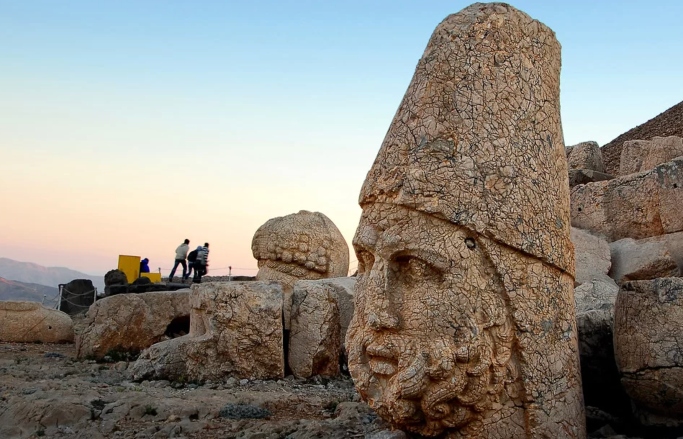
La crisis económica de Turquía ha disparado la actividad de cazadores de tesoros clandestinos, convirtiendo el saqueo arqueológico en una amenaza creciente para el patrimonio histórico del país y del mundo. La inflación, la pérdida de valor de la lira y el desempleo han llevado a miles de personas a buscar oro, monedas y reliquias antiguas como una vía de ingresos rápidos.
El problema afecta especialmente a yacimientos aún sin excavar, incluidos sitios vinculados con las culturas armenia, romana y griega. Reportes periodísticos también han documentado presuntos sobornos a miembros de la gendarmería para permitir excavaciones ilegales y evitar la intervención de otras autoridades.
Turquía calcula que intercepta cerca de un millón de piezas arqueológicas cada año destinadas al contrabando, principalmente monedas antiguas, aunque se desconoce el verdadero tamaño económico del mercado negro. Si bien existe un sistema legal para solicitar permisos de búsqueda, las restricciones para obtenerlos en terrenos con valor cultural o ambiental han contribuido a mantener una parte de la actividad fuera de la ley.
Las autoridades han intensificado los operativos. En Estambul, una investigación contra una red de tráfico en el Gran Bazar terminó con decenas de detenidos y el decomiso de joyas, lingotes y 267 objetos históricos, cuyo valor superaría los 30 millones de dólares.
En contraste, las excavaciones científicas continúan revelando tesoros. En Notion, investigadores de la Universidad de Michigan encontraron monedas de oro persas de más de 2,500 años. Mientras tanto, Karahantepe ha aportado estructuras con rostros humanos de unos 12,000 años, nuevos testimonios sobre las sociedades prehistóricas
Turkey’s economic crisis has fueled a surge in clandestine treasure hunting, turning archaeological looting into a growing threat to the country’s—and the world’s—historical heritage. Inflation, the depreciation of the lira, and unemployment have driven thousands of people to search for gold, coins, and ancient relics as a source of quick income.
The problem particularly affects unexcavated sites, including those linked to Armenian, Roman, and Greek cultures. Press reports have also documented alleged bribes paid to gendarmerie members to permit illegal excavations and prevent intervention by other authorities.
Turkey estimates that it intercepts nearly a million archaeological artifacts destined for smuggling each year—primarily ancient coins—though the true economic scale of the black market remains unknown. While a legal system for obtaining search permits exists, restrictions on securing them for land with cultural or environmental value have contributed to keeping some of this activity outside the law.
Authorities have stepped up enforcement operations. In Istanbul, an investigation into a trafficking network at the Grand Bazaar resulted in dozens of arrests and the seizure of jewelry, bullion, and 267 historical artifacts, with a combined value estimated to exceed $30 million.
In contrast, scientific excavations continue to reveal treasures. At Notion, researchers from the University of Michigan discovered Persian gold coins dating back more than 2,500 years. Meanwhile, Karahantepe has yielded structures featuring human faces that date back some 12,000 years, offering new insights into prehistoric societies.

